Brazil Importers
Companies controlling the importing entity, destination region, customs route, inventory and local market responsibilities.
Brazil Electric Fan Sourcing Plan
Build a seasonal fan order from a defined Brazil sales region, selling window and warehouse-ready date. Compare controlled 18-inch, 3-in-1 and solar catalog routes, then freeze the exact 127V or 220V identity, Brazilian plug, Inmetro and PBE evidence, Portuguese OEM packing, carton basis and inspection scope.
Wholesale only. MOQ starts from 1000 PCS. Public prices are not displayed.
Buyer Qualification
Companies controlling the importing entity, destination region, customs route, inventory and local market responsibilities.
Buyers supplying appliance shops, regional wholesalers and dealers through a planned assortment and receiving schedule.
Purchasing teams requiring approved Portuguese artwork, barcode, importer identity, PBE label control and repeat-order records.
Businesses ready to approve exact construction, electrical identity, label evidence, packaging and inspection criteria.
Importers who work backward from a local selling window and warehouse-ready date rather than ordering after the window starts.
MOQ starts from 1000 PCS. Retail and one-piece orders are not supported. Exact model mix and OEM scope require confirmation.
A decision-ready Brazil fan inquiry begins with the importing company, destination state or sales region, channel, intended selling window and local warehouse-ready date. Then confirm exact model code or catalog route, quantity, range role, fan type and size, motor and blade architecture, voltage, frequency, Brazilian plug and cord, rated label, required Inmetro and PBE evidence, Portuguese OEM artwork, importer information, individual box, master carton, destination port, trade term, sample approval, inspection and after-sales scope.
Do not compare suppliers until these fields describe the same commercial version. A catalog line showing AC220-240V is not automatically a Brazil-ready 220V model. A 3-in-1 title does not define the packed components. A loading figure does not guarantee container quantity. The factory can coordinate current product records, samples, technical files, packing data and production evidence. The importer and qualified Brazilian parties confirm local certification, customs, tax and market-entry responsibilities.
Fan orders are time sensitive, but the factory should not claim one universal hot season for every Brazil region. The importer should provide the target selling period, the date stock must be available in the local warehouse and the latest acceptable arrival. Build backward through destination handling, customs, carrier schedule, cargo handoff, container loading, pre-shipment inspection, packing, production, artwork release, evidence approval, sample approval and purchase-order release.
Assign an owner, evidence requirement and deadline to each milestone. Keep a separate contingency for artwork corrections, sample retest, certification questions, component approval, vessel changes and destination clearance. Use the fan import timing guide, warehouse-ready planning route and reorder cutoff guide. The timeline is a controlled planning baseline and does not constitute an arrival commitment.
Brazil sales region / sales channel / target selling window / warehouse-ready date / latest acceptable arrival / destination port / evidence route / artwork release / sample approval / inspection / production and carrier assumptions.
Give each route a commercial role: entry 18-inch model, core standing fan, flexible 3-in-1 route, solar direction or a deliberate step-up model. State whether it will move through distributors, appliance shops, supermarkets, promotional programs or an established private label. A controlled range prevents similar models from competing for the same shelf position and concentrates artwork, certification work, spare parts and inventory on chosen versions.
Use the fan model selection route, first-order SKU mix guide, product selection matrix and retail assortment guide. Market observations are buyer inputs, not proof that one model is automatically popular, profitable or suitable.
The records below support product discovery. They are not current quotations, Brazil certifications, performance promises or final packing sheets. Confirm the current sample, signed specification, electrical version, evidence route and packing before purchase release. Where no public model code exists, retain the catalog-page identity instead of inventing one.
Published model code 18BR. Catalog direction: AC220-240V, Plastic PP 18-inch, two units per carton and a 40HQ reference of 2600. Power, exact Brazil voltage and current packing require confirmation.
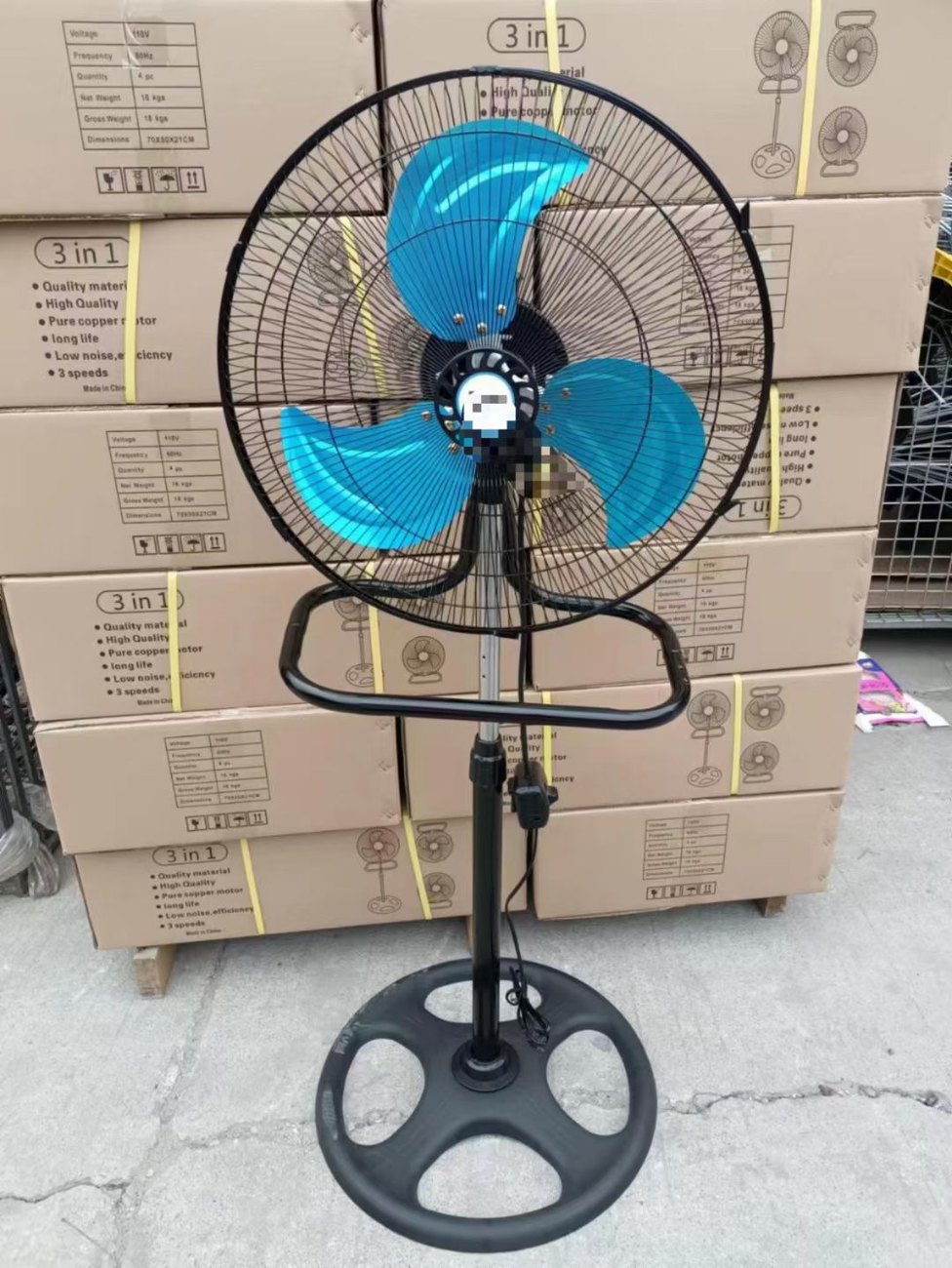
Catalog route without a public model code. Published references include AC220-240V and Plastic PP 18-inch. Freeze exact functions, power, base or mounting set, packed components and Brazil version.
Catalog route without a public model code. Published references include AC220-240V and Plastic PP 18-inch. Keep it separate until construction, controls, electrical identity and packing are approved.
Catalog route without a public model code. Published references include AC220-240V, plastic construction, two units per carton and a 40HQ reference of 2600. Confirm the actual version and carton.
Published direction: 220V, 50-60Hz, 30W, two units per carton, net weight 4.4kg, gross weight 5.2kg and carton 640 x 190 x 610mm. Published 20HQ and 40HQ references are 925 and 1850.
Review all published fan models. Exclude incomplete records from a quotation until missing construction, electrical, packing and evidence fields are verified.
The signed specification should identify motor reference and construction direction, blade diameter and material, blade count, guard construction and spacing, shaft and fixing method, oscillation mechanism, tilt adjustment, height or mounting system, base or stand, speed steps, switches or controls, wiring, cord, plug, rated label, fasteners and every supplied accessory. Convert any 3-in-1 title into a written list of configurations and carton contents.
Inspect fit and clearances on the approved sample. Record any proposed motor, blade, guard, switch, capacitor, wiring, plug or material substitution before approval. Use the motor and component control guide, guard, blade and stability route, functional inspection guide and component change process.
Confirm whether the intended model is 127V, 220V or a technically reviewed dual-voltage version, together with frequency, Brazilian plug, cord and rated label. Official Inmetro guidance for the Portaria 299/2021 scope identifies domestic table, wall, pedestal fans and air circulators operating at 127V, 220V or dual voltage. This is a scope statement, not proof that a catalog model is already certified or available in every version.
The plug and socket system follows ABNT NBR 14136. Confirm the exact plug, pin and current basis, cord, product rating and approved sample. Keep the sample, nameplate, plug, cord, Portuguese manual, certification evidence, PBE label and production record under the same electrical version. Do not change only the artwork. Use the fan electrical configuration guide and supplier evidence pack.
Official Inmetro guidance states that Portaria Inmetro No. 299 of 2021 regulates domestic table, wall and pedestal fans, air circulators and products sold for those uses, with safety and energy-efficiency requirements addressed through certification. The certification is carried out by an Inmetro-accredited product certification body, not directly by Inmetro. Covered products require certification and the Etiqueta PBE before legal sale in Brazil.
Keep product safety, energy-efficiency results, certificate identity and PBE label data linked to the same exact model and electrical version. Ask the Brazil importer and accredited local parties which samples, technical documents, laboratory route, labels and authorization are required. Do not place an Inmetro or PBE mark into OEM artwork until the responsible parties authorize its use for that exact model.
Official references include the Inmetro fan regulation summary, published certification scope, certification and PBE explanation and the official PBE fan tables.
Portuguese OEM artwork can include product logo, control labels, model reference, rated label, warnings, assembly instructions, manual, barcode, importer or distributor identity, individual box, color direction and master-carton marks. The buyer provides accurate destination text and approves translation, importer information and claims. The factory should not invent legal wording, certification marks, efficiency data or performance statements.
Build an artwork register showing file, model, electrical version, PBE data source, dieline, revision, date and approver. Compare the printed proof against the approved product and carton contents. Use the OEM Electric Fan Manufacturer Program, fan OEM packing guide, artwork approval workflow and OEM program route before mass printing.
Compare exact model, product version, individual packing, units per carton, master-carton dimensions, net and gross weight, certification and labeling work, inspection, inland handling, freight basis, destination charges, duties and taxes assessed by qualified parties, local delivery, finance and after-sales reserve. A lower unit price can lose its advantage through carton volume, damage, evidence rework or late warehouse arrival.
The 18BR, P61 and P66 pages publish loading references, but these are not guaranteed shipment quantities. Recalculate with current carton data, order mix and loading plan. For P66, the published carton is 640 x 190 x 610mm with two units per carton, but all current fields still require purchase-order confirmation. Use the fan loading guide, carton and CBM route, transit-damage control and fan landed-cost guide.
The sample file should identify model or catalog route, revision, motor and relevant components, blade, guard, oscillation, stand or base, controls, fasteners, electrical label, 127V or 220V identity, Brazilian plug, cord, color, logo, PBE label status, Portuguese artwork and packing. Photos should show the complete supplied set and identifying details. Record retained-sample custody where applicable.
A practical inspection can cover identity, assembly, appearance, guard fixing, blade clearance, fasteners, stability, height or tilt adjustment, oscillation, speed steps, controls, cord and plug, labels, observed noise and vibration, agreed operating cycles, accessories, Portuguese manual, barcode, box and carton. The test method, sampling basis and acceptance criteria should be written for the exact order.
Use the fan sample approval guide, pre-shipment sampling route, batch traceability guide and shipment release control. Connect inspection and loading evidence through the real fan shipment page, fan proof hub and container loading route.
Discuss model-specific parts only where compatibility and local service responsibility are clear. Possible items may include blade, guard, switch, knob, fastener, oscillation-related part, cord or plug, but the actual list must match the approved revision. Record part identity, compatible model, quantity, packing and replacement responsibility. Unidentified parts do not create an after-sales system.
At destination, reconcile container number, seal, cartons, units and visible condition before distribution. Use the arrival receiving guide, fan spare-parts route and repeat-order review. Before reordering, compare current product, components, electrical version, certificate and PBE identity, artwork, packing, inspection and receiving records with the previous approved order.
Public prices are not displayed because model, construction, electrical identity, certification and PBE work, OEM packing, inspection, timing, destination and trade term change the quotation basis. Send one complete request so the sales team can identify unresolved fields and prepare a comparable scope.
Submit BRAZILFAN1000 through the private RFQ form so your model, quantity, Brazil electrical version, packing, timing and destination stay together in one buyer brief. Wholesale only. MOQ starts from 1000 PCS. No public prices, retail orders or one-piece orders.
No blanket certification is claimed. The exact fan type, model, electrical identity and required Inmetro and PBE route must be confirmed before order release.
Do not assume this. Define the intended 127V, 220V or technically reviewed dual-voltage version by destination and approved product evidence.
Yes, after the buyer supplies and approves accurate translation, importer details, barcode, warnings, claims, PBE data and artwork files.
No. It is a catalog reference. Confirm current carton, units per carton, model mix, container plan and loading method.
No. The buyer and factory can build a dated control plan, while approvals, production, carriers, customs and destination handling require current confirmation.
No. Private quotation follows confirmation of exact model, quantity, electrical version, evidence, OEM scope, timing, destination and trade term.
Saved Private RFQ
Use the private form first so the sales review is based on the same model, quantity, destination region, selling window, electrical identity, OEM packing and port. The submitted brief is saved for follow-up; WhatsApp remains available for live discussion after the commercial basis is recorded.
MOQ starts from 1000 PCS. Exact model mix, colors, packing and OEM scope require current confirmation.
Send the selling window, warehouse-ready date and destination port so the order path can be reviewed.
Model, components, electrical identity, Inmetro and PBE evidence, artwork, carton and inspection must describe the same order.
Price is prepared after exact route, quantity, evidence scope, OEM work, timing, port and trade term are fixed.
Long-Term Market Development
Use this route when your team can share channel evidence, target landed-cost logic, inventory and service constraints, and a repeat-order plan. Yaoyuan can coordinate the selected electric fan version, OEM files, supplier resources, inspection and replenishment decisions. Demand, exclusivity, delivery, sales volume and margin are not promised before both parties review the evidence and responsibilities.