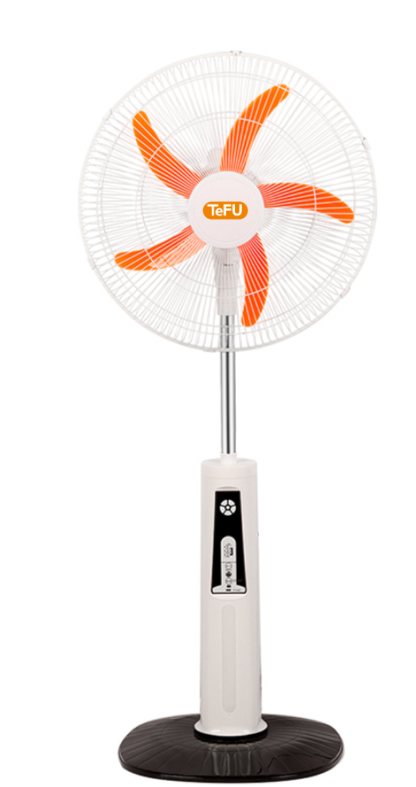
Direct Answer
Choose an electric fan direction from the buyer's channel, local electrical requirement, use case, price ladder, carton handling, seasonal window and after-sales capability. Compare only controlled model versions. For a first order, assign each SKU a role, approve samples and packing, confirm saleable landed-cost assumptions, and limit unproven variants. The six catalog models on this page show standard 18-inch, 3-in-1 and solar directions; specifications marked for confirmation are not public promises.
Start with the Market Route, Not a Feature List
An importer supplying regional wholesalers may prioritize durable construction, simple operation, carton efficiency and repeat availability. An appliance dealer may need a clearer model ladder and visible product differences. A supermarket may require barcode, shelf-ready color box, manual language, controlled carton marks and campaign deadlines. An OEM brand may need artwork approval, component control and service planning.
Write the route to market before selecting models. State the country, customer type, expected selling period, normal sales channel, intended price position and service route. Do not assume that one fan fits every dealer or region. A clear sourcing plan helps prevent an assortment that looks broad in a catalog but fragments stock and cash after arrival.
Local sales forecasts, competitor prices and demand are buyer-controlled information. Yaoyuan Electric can discuss available model and factory scope, but public content cannot guarantee a product's local sales result.
Control the Exact Model Identity
Use the product name together with model code, image, electrical version, color, function, accessories, packaging revision and approval record. Similar-looking 18-inch fans can have different structures, carton data or components. A general request such as "same fan as before" is not enough for a repeatable quotation or production instruction.
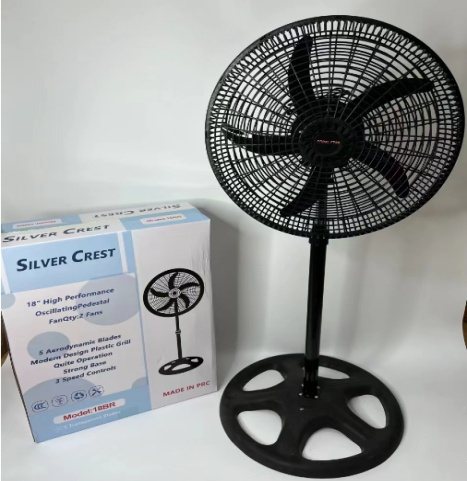
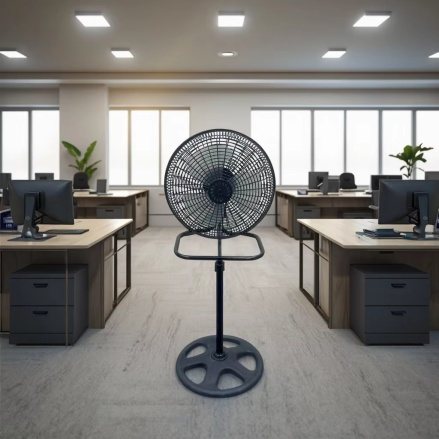
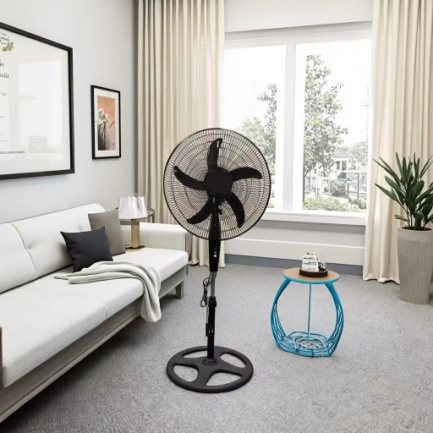
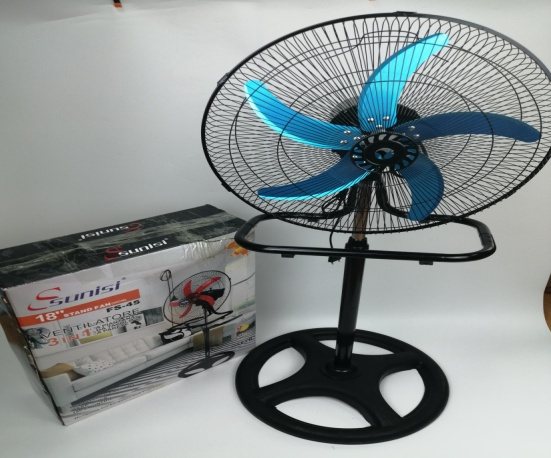
The product cards above connect to six real catalog routes: 18BR, P55, P56, P61, P62 and P66. Only data shown on the current controlled page should be treated as published information. Where power, model code or another field says "confirm," request the current configuration before commercial comparison.
Keep quoted, sampled, approved, ordered, inspected and received identities linked. If a component, electrical setting, accessory or carton changes, record the revision and its effect on cost, MOQ, timing, inspection and service compatibility.
Compare Three Fan Directions
Standard 18-Inch
A focused route for buyers prioritizing familiar fan structure, wholesale distribution and controlled carton planning. Compare 18BR and P56 only after confirming the current version.
3-in-1 Direction
A multi-position direction represented by P55 and P61. Confirm the physical configuration, included parts, assembly instructions, packing protection and channel explanation before approval.
Solar Direction
P62 and P66 represent solar fan directions. Confirm the complete current system, electrical interface, included accessories, charging assumptions and after-sales plan; the word "solar" alone is not a specification.
These are model directions, not a universal ranking. The right choice depends on the actual market brief and controlled configuration. Do not compare a basic AC fan, a multi-position fan and a solar direction only by unit price because the commercial and service scope differs.
Evaluate Standard 18-Inch Models
The standard 18-inch direction can support wholesalers and appliance dealers seeking a recognizable product class. Published data for 18BR includes AC220-240V, Plastic PP 18-inch material description, 2 units per carton and a listed 40HQ quantity of 2600. Treat loading data as catalog planning information and reconfirm it against the released carton and order mix.
P56 is another 18-inch catalog direction with AC220-240V and Plastic PP 18-inch description, while its current power and other commercial fields require confirmation. The importer should compare structure, controls, color direction, carton protection, actual electrical version and channel position rather than assuming the two models are interchangeable.
For a first assortment, define whether both models serve different channel or price roles. If they compete for the same dealer and customer, two shallow stock pools may be weaker than one controlled core SKU.
Evaluate 3-in-1 Fan Models
P55 and P61 represent 3-in-1 directions. A multi-position product can give dealers a stronger selling explanation, but it also requires clear assembly, parts control and packaging protection. Confirm exactly which positions or structures apply to the current model; do not infer functions from the category name alone.
Published data for P61 includes AC220-240V, plastic material description, 2 units per carton and a listed 40HQ quantity of 2600. P55 shows AC220-240V and Plastic PP 18-inch description, with additional configuration fields to be confirmed. Current sample and quotation control the order.
Review the assembly route, guard and blade protection, base or stand components, fasteners, instructions and carton movement. A model that is attractive in the showroom can still create receiving or after-sales cost if parts are difficult to identify or cartons do not protect the structure through the actual route.
Evaluate Solar Fan Models
P62 and P66 are catalog solar fan directions. Published data lists a 40HQ quantity of 1700 and 1 unit per carton for P62. P66 lists 30W, 220V, 2 units per carton and a 40HQ quantity of 1850. Reconfirm current carton and product configuration before using these figures for a shipment plan.
For solar-related sourcing, define the complete system: fan, panel or charging input where applicable, battery or energy-storage direction where applicable, cables, adapters, controls, indicators, protection, accessories and instructions. Confirm which parts are included and which are not. Do not advertise operating time, charging time or system performance without controlled evidence for the exact version.
The buyer should also plan service and spare-part handling for the local channel. Solar positioning may support certain markets, but demand, energy conditions, consumer behavior and resale economics require current local verification.
Confirm Voltage, Frequency and Plug Before Price
Country name alone is not a complete electrical specification. State rated voltage, frequency, plug standard and any local cord, label or manual requirement. Confirm whether the selected model supports that version and whether a change affects materials, MOQ, testing, evidence or timing.
Do not use a plug adapter to hide an unresolved product configuration. The product rating, cord and plug, controls, packaging and instructions should describe the approved version consistently. Evidence for one model or voltage does not automatically cover every fan in the catalog.
Keep a signed or otherwise controlled sample record before production. The sample should connect to the quotation and purchase order so electrical and visual approvals do not drift.
Use Carton Data to Test the Order Mix
Carton quantity and loading direction affect freight allocation, warehouse handling and saleable landed cost. Use released product size, inner pack, units per carton, carton dimensions, gross weight and loading plan for the actual model mix. Catalog 40HQ quantities are planning references, not guaranteed loading results for every mixed order.
Compare carton strength and internal protection with the route: factory handling, loading, transshipment, unloading, inland transport, warehouse stacking and dealer delivery. Review protruding parts, guards, blades, bases, stands, solar-related accessories and loose components.
For mixed models, plan container space by carton volume and practical loading constraints, not only by purchase value. Preserve model and carton-mark visibility so receiving teams can count and inspect each SKU.
Build a Controlled First-Order SKU Mix
Assign each proposed SKU a commercial role: core volume model, step-up model, channel-specific model or controlled test. Give each role an expected buyer, price position, allocation and evidence requirement. Avoid adding colors or versions merely to make the assortment look larger.
MOQ starts from 1000 PCS, but exact quantity must be reviewed by model and configuration. The total order may still create sub-minimum complexity in color, plug, artwork or carton version. Confirm quantity by SKU before expecting OEM treatment or stable replenishment.
For an unproven direction, limit the number of variables being tested at once. Testing a new structure, electrical version, color, package and channel simultaneously makes it difficult to understand why the model succeeded or failed.
Match OEM Packaging to the Channel
Decide whether the project needs neutral packing, OEM logo, custom color box, manual language, barcode, label, carton mark or retail presentation. Supply approved artwork, legal text and print requirements in a controlled file. Clarify who approves content and which revision is production-ready.
Packaging should explain only verified product features. Avoid unsupported run-time, airflow, safety, certification or market-approval claims. A certificate or test report must be checked for model, applicant, standard, scope and validity before use.
Review packaging cost and minimums separately from product cost. A small model quantity with many box versions can increase setup, material and leftover risk.
Approve Samples and Inspection Scope
Use a sequence appropriate to the project: direction sample, configuration sample, artwork or packing sample and pre-production reference. Record accepted differences and open issues. Approval should identify exact model, version, accessories and packaging.
Before shipment, define inspection scope and sampling basis. Useful checks may include identity, quantity, workmanship, assembly, guards, blades, stability, controls, speed operation, noise, vibration, airflow direction, electrical marking, accessories, packing and carton marks as applicable to the controlled model.
Inspection evidence describes the inspected sample or shipment scope. It does not guarantee every future unit or replace the buyer's destination receiving process.
Normalize Quotations Before Comparing Models
Ask each quotation to state the exact model and configuration, quantity by SKU, electrical version, accessories, OEM packing, carton basis, trade term, currency, validity, payment terms, evidence scope and open assumptions. Compare only like-for-like offers.
A lower quote may exclude packaging, accessories, inspection, stronger materials or another requirement. A higher quote may still be unsuitable if it does not match the market. Convert the selected offer into route-specific landed cost per received saleable unit before approving the assortment.
Freight, duties, tax, destination charges, local selling price and margin require current external or buyer data. Public model pages do not provide a guaranteed landed or resale price.
Model Selection Checklist
- Country, buyer type, channel and target selling period
- Standard 18-inch, 3-in-1 or solar direction
- Exact model, image, version and commercial role
- Voltage, frequency, plug and label requirements
- Functions, accessories and controlled product claims
- Quantity by SKU, color and packaging version
- Carton data, handling route and container allocation
- OEM artwork, manual, barcode and carton mark
- Sample sequence and approval owner
- Inspection, evidence and receiving scope
- Private quotation basis and validity
- First-order stock, cash and repeat-order review plan
Commercial Boundary
Yaoyuan Electric can discuss current model availability, controlled configuration, OEM packing, order structure and private factory quotation for qualified wholesale buyers. The buyer controls local demand, forecast, market entry, compliance decision, resale price, channel, inventory, duties, tax, collections and profit. Public content does not guarantee certification, market approval, capacity, completion, shipment, arrival, clearance, demand or margin.
Prepare an Electric Fan Selection Brief
Send the country, buyer type, sales channels, preferred fan direction, selected model codes, quantity by SKU, voltage, frequency, plug, packing, target warehouse-ready month and destination port. We can normalize the product and factory scope before private quotation. Wholesale only; MOQ starts from 1000 PCS and depends on model and configuration. Retail and one-piece orders are not accepted.