Direct Answer
This page connects wholesale buyers to two real solar fan catalog directions, P62 and P66. The word “solar” does not confirm that a solar panel, battery, controller, adapter, cable or any specific charging route is included. P62 publishes 1 unit per carton and a listed 40HQ quantity of 1700. P66 publishes 220V, 50-60Hz, 30W, 2 units per carton, net and gross weight, carton dimensions and container references. Use those fields for early planning only. Confirm the actual power architecture, supplied components, battery and panel data where applicable, operating evidence, market version, packing and final carton before purchase.
Start with the Real Power Architecture
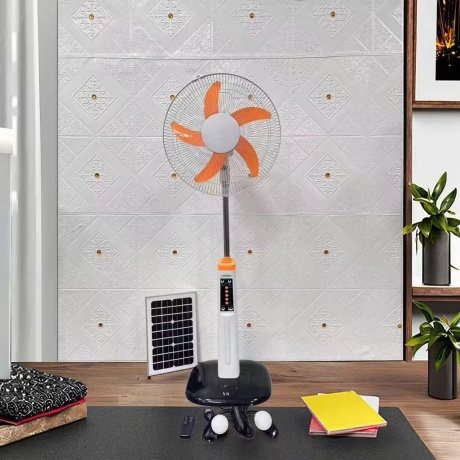
A solar fan purchase begins with a system diagram, not a product name. Identify every permitted input and charging route on the current controlled sample. Record whether the ordered version uses mains input, direct-current input, an external panel, an internal or external battery, an adapter, a controller, a dedicated cable or another buyer-approved arrangement.
Do not infer supplied components from a catalog image, another model or the word “solar.” The quotation and packing list should state whether each panel, adapter, cable, connector, battery or controller is included, optional or excluded. The manual and carton claims must describe the same released system.
If the power architecture is not yet confirmed, keep it open in the inquiry. A buyer can compare product directions before every field is known, but should not approve artwork, advertise charging claims or calculate landed cost from assumed components.
Compare the P62 and P66 Catalog Routes
P62 Route
A solar fan catalog direction with 1 unit per carton and listed 40HQ quantity of 1700. Model code, power, voltage, charging system, supplied components and final carton require confirmation.
P66 Route
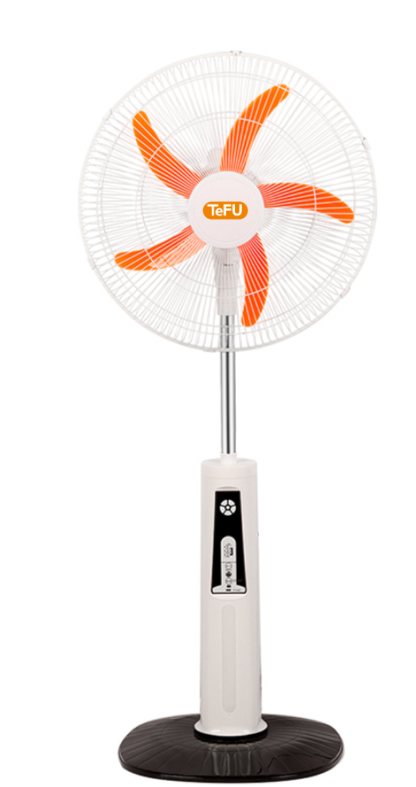
A catalog direction with published 220V, 50-60Hz, 30W, 2 units per carton, 4.4 kg net, 5.2 kg gross and 640 × 190 × 610 mm carton reference.
Decision Rule
Choose by the verified power system, required components, channel explanation, packing, service route and landed cost. Do not compare only appearance or unit price.
P66 also lists 20HQ quantity of 925 and 40HQ quantity of 1850. Reconfirm the exact released carton and practical loading for the current order. P62’s listed 1700 figure cannot be copied to P66, and P66’s electrical or carton fields cannot be copied to P62.
Use the electric fan model selection page when comparing solar, standard 18-inch and 3-in-1 directions. Use the solar versus rechargeable fan guide to separate product labels from actual power-system requirements.
Control Every Supplied Power Component
Create a controlled bill of supplied items with part name, quantity, revision and compatibility. Where applicable, this can include the fan, battery, solar panel, mains adapter, charging cable, connectors, controller, remote control, lamp or other approved accessories. Only list items that belong to the confirmed version.
Connect the item list to the approved packing layout and inspection checklist. A product can arrive with the main fan intact yet remain commercially unusable when one required adapter, cable or connector is missing or incompatible.
Do not treat a connector that physically fits as proof of electrical compatibility. Voltage, polarity, connector type, current requirement and control route need written confirmation for the exact model and revision.
Approve Battery and Panel Data Where Applicable
If the ordered version includes or supports a battery, confirm battery chemistry, rated voltage, declared capacity, protection route, replacement method, label, transport documentation and storage instructions as applicable to the order and route. Do not publish a run-time claim from nominal capacity alone.
If a solar panel is included or supported, confirm rated output, connector, cable, dimensions, mounting or placement instructions and compatibility with the fan system. Panel performance depends on real conditions; public content should not promise universal charging time or operating time.
The buyer is responsible for destination compliance, transport acceptance and local product claims. Yaoyuan Electric can coordinate current product documents and order-specific evidence, but cannot replace the buyer’s qualified compliance, logistics or market review.
Test the Actual Operating and Charging Routes
Approve a written test plan for each permitted input. Record the exact sample, configuration, starting condition, supplied components, test duration, controls used and observed result. If run time, charging time or speed performance will appear in buyer materials, define the test conditions and approval owner before publishing the claim.
Check transitions between permitted power routes only where the approved version supports them. Confirm indicators, controls, speed settings, oscillation, lighting or other functions only when they belong to the released model.
A demonstration video can support communication, but it does not replace the controlled specification, sample identity or production-lot inspection.
Freeze the Country and Market Version
Confirm country of sale, rated input, frequency, plug, cord, adapter route, labels, manual language, carton identity and any destination-specific buyer requirement. P66’s published 220V and 50-60Hz fields still need to be connected to the current plug, cord and supplied charging components.
If one shipment contains multiple plugs, adapters or label versions, use separate SKU or version codes and carton marks. Keep component issue, production, packing, inspection and destination stock records separated.
The fan market-version guide provides the release sequence for electrical configuration, sample, labels, artwork, production and receiving.
Design Packing for the Complete System
The approved packing layout should show the fan and every included component. Protect guards, blades, bases, panels, adapters, cables and connectors from movement and contact. Give small electrical parts a defined location and quantity check.
The manual should identify the real supplied system and safe assembly or connection sequence. The retail pack and carton should not show an included panel, battery or accessory unless that item is part of the released SKU.
Use the fan OEM packing guide to control claims, artwork and carton identity. Use the fan carton and transit guide for handling and destination evidence.
Recalculate Loading from the Final Carton
P62 and P66 publish different carton quantities and loading references. P66’s catalog record also publishes 640 × 190 × 610 mm, 4.4 kg net and 5.2 kg gross. These values support early planning but must be reconfirmed after the exact system, accessories and OEM pack are frozen.
A panel, stronger insert, different adapter or accessory pack can change carton dimensions, weight and practical loading. Recalculate each SKU separately and preserve enough handling tolerance for loading and destination unloading.
Use the fan container planning guide to connect final cartons with stock depth, loading evidence and receiving reconciliation.
Build an After-Sales Route Before the First Order
A solar-supported or rechargeable direction can create claims across the fan, battery, panel, adapter, cable or connector. Define the information required to identify the failed component: model, version, carton or batch reference, supplied components, photos, video, power route used and observed result.
Confirm which parts can be replaced and how compatibility will be controlled. A later battery, adapter, panel or controller should not be substituted because its appearance is similar. Written electrical and version compatibility is required.
Use the fan after-sales guide to control claim evidence, spare-parts compatibility, corrective action and repeat-order release.
Approve the Exact Sample and Release Evidence
The approved reference should contain the catalog route, model and version identity, power architecture, all included components, electrical configuration, functions, guard, blade, base, controls, labels, manual, retail pack and export carton. Record open exceptions rather than treating an evaluation sample as fully approved.
Any later change to the battery, panel, adapter, connector, controller, structure, artwork or packing needs written review. State its effect on cost, MOQ, timing, testing, inspection, transport documentation and service compatibility.
Use the fan sample approval process before production release.
Compare Private Quotations on One System Basis
A normalized solar fan quotation should identify the exact model route, power architecture, included and optional components, electrical version, functions, battery and panel data where applicable, OEM scope, packing, inspection, trade term, validity and open approvals. Two quotes with different included components are not comparable.
Build landed cost from the complete released SKU, not the fan body alone. Add current freight, destination charges, duties, tax, receiving loss, finance, service provision and buyer overhead using route-specific data from the buyer or qualified service providers.
Solar Fan Buying Pack
- Buyer type, channel and target selling period
- P62 or P66 catalog route with current product image
- Exact model and version identity
- Approved power and charging architecture
- Included, optional and excluded component list
- Battery and solar-panel data where applicable
- Connector, cable, adapter and controller compatibility
- Operating and charging test conditions
- Voltage, frequency, plug, cord, labels and manual language
- OEM claims, artwork and packing revision
- Final carton dimensions, weight and loading calculation
- Inspection scope for identity, components, function and packing
- Transport-document and destination-receiving responsibilities
- After-sales evidence and compatible-parts route
- Private quotation inclusions, assumptions and validity
Commercial Boundary
Yaoyuan Electric can discuss current P62 and P66 catalog routes, available order-specific systems, samples, OEM packing, carton planning, inspection coordination and private factory quotation for qualified importers and distributors. Availability, technical fields, components, loading data, MOQ, timing and terms require current written confirmation.
The buyer controls destination requirements, compliance review, transport acceptance, product claims, demand, assortment, selling price, freight, duties, tax, inventory, collections and profit. Public content is not a promise of charging performance, run time, capacity, shipment, arrival, clearance, sales or margin.
Prepare a Solar Fan Inquiry
Send the P62 or P66 route, required power inputs, included panel or battery requirement where applicable, quantity by SKU, country of sale, buyer channel, target selling month, voltage, frequency, plug, OEM packing, destination port and required sample or inspection discussion. Use inquiry code SOLARFAN1000.
Wholesale only. MOQ starts from 1000 PCS and depends on the confirmed model and configuration. Retail and one-piece orders are not accepted.