Direct Answer for Fan Importers
Do not place a fan order when the hottest weather has already arrived. Set the date when stock must be ready for dealers, supermarkets or online fulfillment, then work backward through local distribution, customs, port handling, sea transport, loading, inspection, production, materials and approval. Actual production and transport dates must be confirmed for each order; a climate calendar is a planning tool, not a guaranteed vessel schedule.
The Most Important Date Is Warehouse-Ready Stock
Port arrival is not the same as saleable inventory. Goods may still need discharge, customs clearance, duties, inland transport, receiving checks, dealer allocation and shelf preparation. A container arriving during the first week of a heat wave can still miss the strongest buying days if it remains at the port or central warehouse.
Define one commercial target: the date sufficient fan stock must be ready for normal sales. This target should reflect the local climate, the buyer's channel and the speed at which stock reaches regional dealers.
Use the Fan Season Decision Matrix
After the market season is identified, each importer still needs six separate commercial decisions. Use these focused guides to move from climate research to order structure, distribution and repeat-order control.
Warehouse-Ready Date
Separate factory completion, port arrival and saleable warehouse stock.
First Order SKU Mix
Build a hero model, supporting model and useful quantity depth.
Seasonal Reorder Cutoff
Decide whether another order can still arrive before the buyer's verified selling cutoff.
Slow Stock Risk
Control markdown, storage, blocked cash and next-season carryover.
Dealer Allocation
Plan model allocation by region before the buyer's documented release cutoff.
Mixed Container Timing
Keep other appliance categories from delaying seasonal fan stock.
Move from Season Planning to Purchase Execution
After the market window, quantity and distribution plan are clear, use this execution matrix to release the correct fan version, packing and shipment information. Each guide controls one point where a wholesale order can otherwise lose time, traceability or commercial value.
Sample Approval
Turn the selected fan into a controlled production reference before mass assembly.
Plug and Voltage
Release the correct market electrical version, label and charging accessories.
OEM Packaging
Align logo, box, manual, barcode and carton mark with the actual product.
Container Volume
Compare priority-SKU depth, carton volume and loading sequence.
After-Sales Parts
Build model traceability, claim evidence and practical local service support.
Quotation Checklist
Send one comparable, decision-ready request instead of asking only for price.
Verify Quality from Production to Destination Receiving
This quality matrix follows the approved fan through components, operation, structure, batch progress, shipment release and destination receiving. It gives buyers a practical evidence path without pretending that one inspection can remove every production or logistics risk.
Motor and Components
Define the approved internal and market configuration before production.
Functional Inspection
Check speeds, airflow direction, noise, vibration, controls and oscillation.
Structure and Stability
Verify guards, blades, assembly parts, adjustment points and base support.
Batch Traceability
Connect progress evidence with exact SKU versions, quantities and packing.
Pre-Shipment Inspection
Sample sufficiently completed goods against approved order references.
Arrival Receiving
Record seal, cartons, SKU quantities, transit damage and warehouse release.
Model Margin, Cash Flow and Repeat-Order Exposure
This commercial matrix connects the private factory quotation with buyer-supplied landed cost, channel margin, working capital, promotion control and repeat-order evidence. It helps buyers compare complete business scenarios instead of chasing an undefined public unit price. Resale price, demand, sell-through, margin, reorder quantity and profit remain buyer-owned decisions.
Wholesale Price Drivers
Compare equivalent motors, configurations, packing, quantities and trade terms.
Landed Cost
Calculate cost to saleable warehouse stock, including logistics and risk allowances.
Distributor Margin
Build importer, regional wholesaler, dealer and retail price roles.
Inventory Turnover
Track stock cover, dealer credit, cash collection and seasonal working capital.
Seasonal Promotion
Move defined stock without permanently damaging the channel price ladder.
Repeat-Order Profit
Increase, repeat, reduce or stop SKUs using actual contribution and sell-through.
Work Backward Through Seven Order Stages
- Retail and dealer release: allow time to split stock, update listings, train sales teams and deliver cartons to the selling channel.
- Destination clearance: include port handling, customs, payment of applicable charges and inland transport under the chosen trade arrangement.
- International transport: confirm the actual routing, booking window, cut-off and estimated sailing with the responsible freight party.
- Inspection and loading: reserve time for finished-goods inspection, correction where necessary, warehouse staging and container loading.
- Bulk production: schedule assembly, testing and packing according to the selected fan types and current factory capacity.
- Materials and OEM packing: prepare motors, blades, guards, bases, cords, batteries or solar components, boxes, manuals and carton marks.
- Commercial approval: confirm models, quantity by SKU, plug, voltage, packing, artwork, destination port and order-release conditions.
Every open decision consumes the buffer before production. Asking for a shipment date while model allocation or box artwork is still changing does not create a reliable arrival plan.
Hot Weather Does Not Start at the Same Time Everywhere
The Middle East, West Africa, East Africa, Southern Africa and Southeast Asia follow different weather and buying calendars. Southern Africa has the opposite seasonal cycle from northern markets. The Philippines has a nationally recognized hot dry period, while Kenya has strong regional and altitude differences. Nigeria's hot season also differs between the south and north.
For that reason, Yaoyuan Electric uses market-specific planning pages instead of giving one global month for every importer:
Country Wholesale Supplier Pages
Use the regional guides for climate and timing research. Use these country landing pages when the buyer is ready to compare model direction, electrical version, distribution route, packing and quotation requirements for one market.
UAE Fan Supplier
Type G, 230V 50Hz reference, UAE channels, re-export separation and hot-season stock.
Saudi Arabia Fan Supplier
Type G, 230V 60Hz reference, Arabic packing and regional dealer allocation.
Nigeria Fan Supplier
Regional heat differences, mains and backup-power roles, carton value and dealer data.
Ghana Fan Supplier
Tema receiving, Accra and Kumasi routes, focused SKU mix and repeat-order evidence.
Kenya Fan Supplier
Coastal and highland demand, Mombasa-to-inland distribution and 240V 50Hz reference.
South Africa Fan Supplier
Southern summer timing, regional routes and clearly defined C, M or N plug versions.
Choose the Selling Window by Channel
A wholesale distributor may need stock earlier than a retailer because cartons must move through several dealer layers. A supermarket may need barcodes, listing approval and planogram preparation before the first promotional week. An online seller may launch faster but still needs product media, local warehouse receiving and stable replenishment.
Large dealer networks should create an early allocation batch for major cities and a second replenishment plan for regional markets. This reduces the risk that the entire container arrives on time but reaches customers too late.
Match Fan Type to the Market, Not Only the Temperature
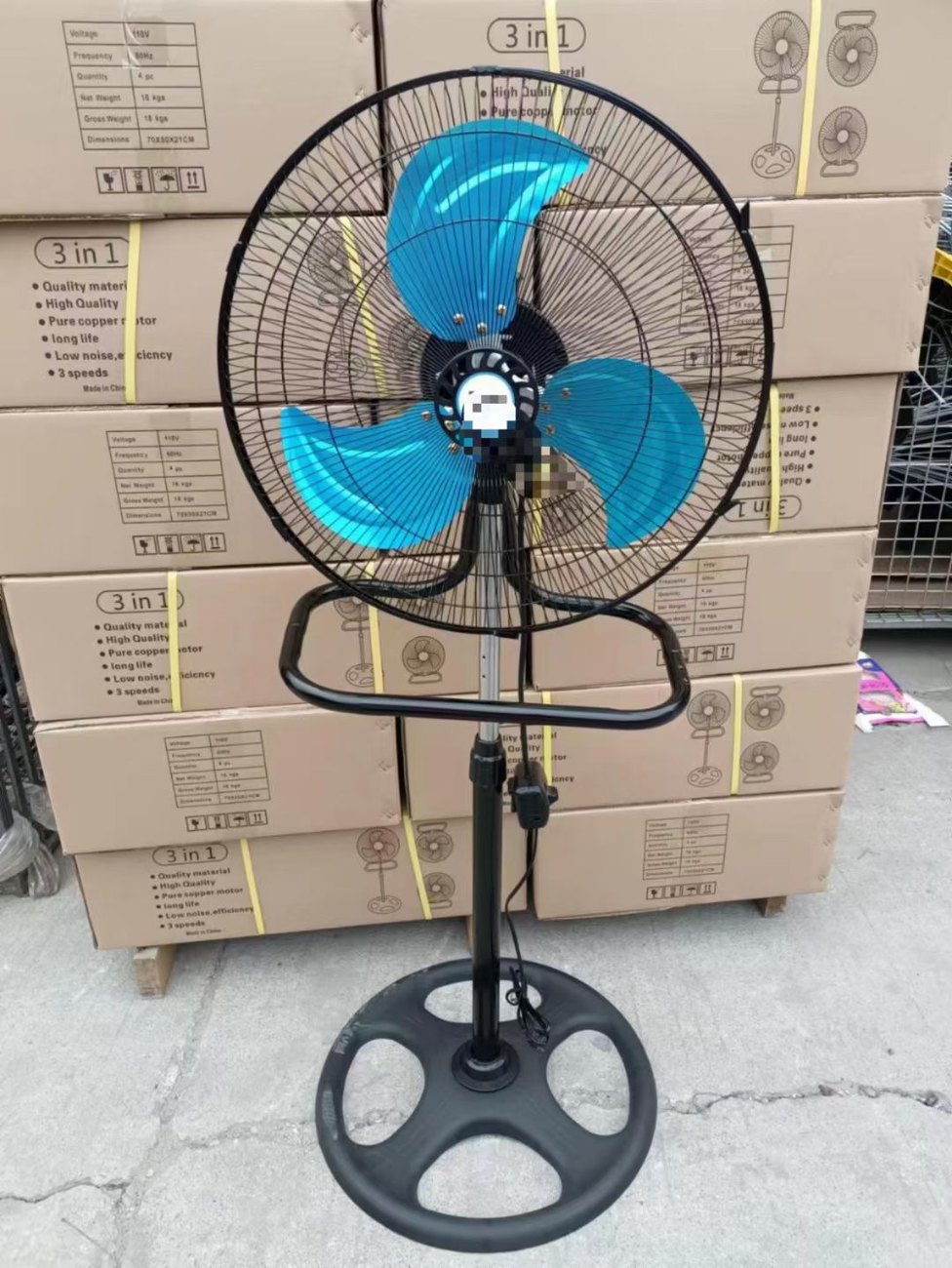
Conventional 18-inch stand fans can suit broad household and retail demand where stable mains power and price competition matter. A 3-in-1 fan may help a distributor serve several use positions with one model. Rechargeable fans address backup-power and mobility use cases. Solar fan direction should be evaluated by the actual charging system, local expectations, component support and selling price.
Use the fan model selection guide and solar fan versus rechargeable fan guide before assigning all seasonal quantity to one product direction.
First Orders Need More Time Than Stable Repeat Orders
A first order may require model comparison, samples, plug and voltage confirmation, logo placement, box artwork, manual language and barcode approval. A repeat order using the same approved product and packing can follow a shorter decision path, subject to component and capacity confirmation.
New private-label buyers should not copy a repeat-order schedule. Complete the product and packing baseline first, then reserve production. This protects both the launch date and the buyer's brand reputation.
Separate the Core Order from Seasonal Replenishment
One large order can create heavy stock risk if the selling season is uncertain. One small order can sell out before the hottest weeks and leave dealers without stock. Importers can plan a core quantity for early market coverage and a replenishment decision based on sell-through, current forecast, port conditions and repeat production availability.
Replenishment is only useful when the remaining season is longer than the complete order-to-market cycle. Do not reorder from enthusiasm alone; compare dealer stock, weekly sales and the realistic warehouse-ready date.
Use Current Forecasts as a Final Adjustment
Historical climate identifies the normal selling season, but current government weather forecasts may show an earlier, later, hotter or wetter period. Review the national meteorological service before the final quantity decision and again before a seasonal reorder.
A forecast should adjust inventory risk, not replace product research. Local wholesale price, competing stock, household purchasing power, electricity conditions and dealer feedback remain part of the commercial decision.
Build a Buffer Around Chinese Production Peaks
Buyer-defined selling windows across several hot-climate markets can overlap. Capacity, component preparation, printed packing and freight space may tighten before common shipping periods. Importers with a fixed campaign should discuss forecasts early and convert them into a confirmed order once model and quantity decisions are ready.
A forecast helps the factory review capacity, but only a released order can support material purchasing and a committed production plan. See the peak-season production capacity guide for the difference.
Do Not Use an Unverified Transit-Time Promise
Sea transport varies by loading port, destination port, direct or transshipment routing, carrier schedule, cut-off, congestion and customs conditions. The importer should obtain a current route estimate for the specific shipment and keep factory completion, loading, vessel departure, port arrival and warehouse arrival as separate milestones.
Yaoyuan Electric can coordinate factory-side product readiness and provide agreed shipment information. Freight and destination timing must be confirmed with the responsible logistics parties for the order.
Prepare the Quotation Around the Target Selling Month
A useful fan inquiry should include country, target selling month, destination port, fan type, quantity per model, plug, voltage and packing direction. This allows the factory to discuss whether the proposed timeline and product mix are commercially realistic.
For OEM projects, also send logo, box language, barcode and manual requirements. For mixed containers, list every category and identify which one is driving the required loading date.
Fan Season Planning Checklist
- Buyer-verified selling window recorded by city, region and sales channel
- Warehouse-ready date set before the buyer's verified selling window
- Dealer allocation and launch time included
- Destination customs and inland delivery buffer included
- Current route, sailing and port conditions checked
- Inspection, correction, loading and documentation scheduled
- Exact fan models and quantity per SKU confirmed
- Plug, voltage, charging direction and accessories confirmed
- OEM artwork and printed packing approval completed
- Factory capacity and material status confirmed for the actual order
- Core order and possible replenishment reviewed separately
- Current official seasonal forecast reviewed before final release
Use Timing to Control Arrival and Inventory Exposure
The cheapest fan can become expensive when it arrives after the main season and occupies warehouse space for months. A well-timed order gives dealers time to display, promote and reorder while customers are actively buying. Timing therefore belongs in the same decision as product quality, landed cost, packing and after-sales planning.
Zhongshan Yaoyuan Electric Appliance Co., Ltd. supplies electric fans for importers, distributors, wholesalers, supermarket buyers and OEM customers. MOQ starts from 1000 PCS. Wholesale only. Send your country, target selling month, selected fan models, quantity, packing request and destination port for a private planning discussion.