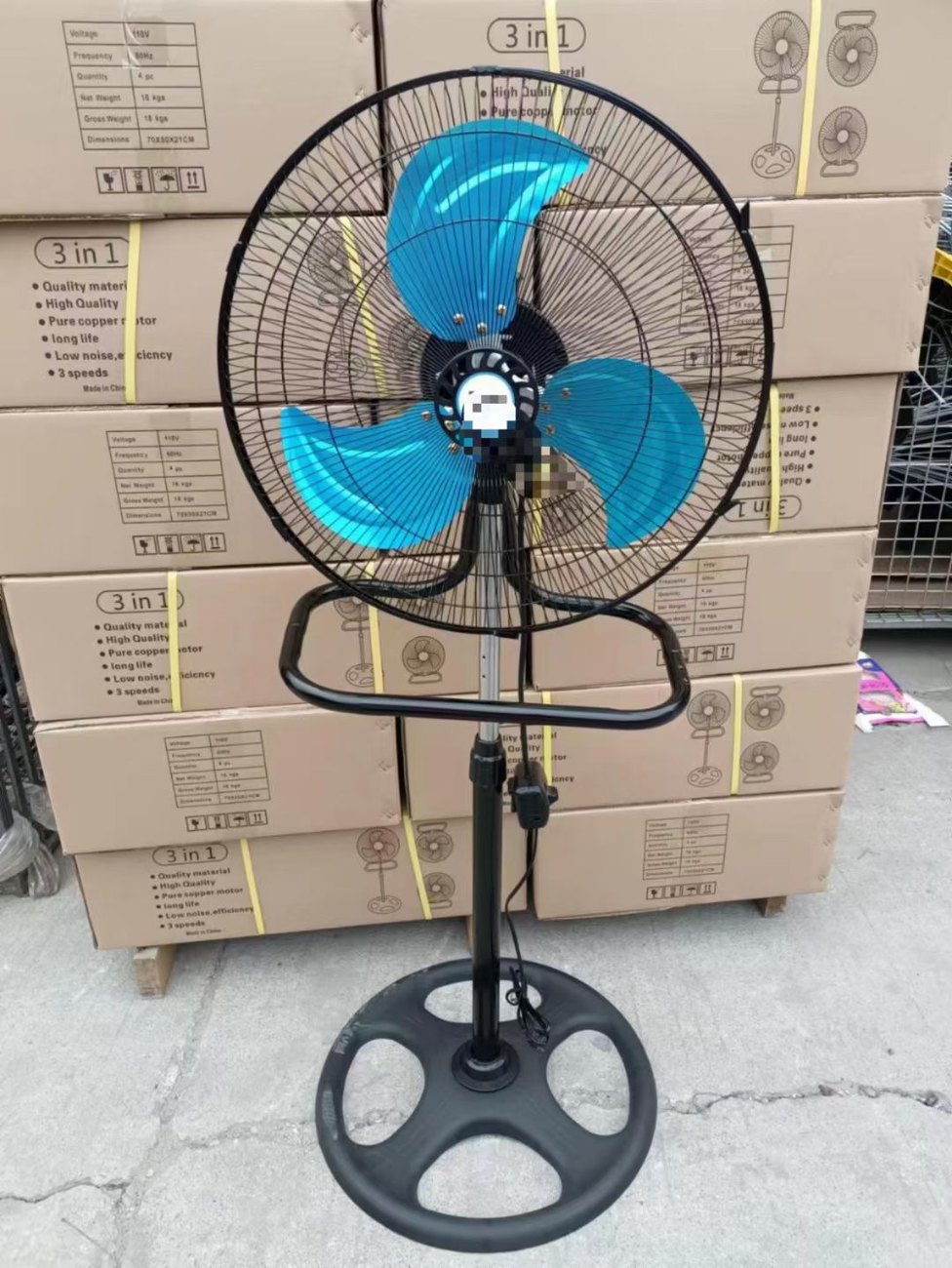
Direct Answer
An electric fan after-sales system starts before the purchase order is released. Freeze the exact model and market version, identify compatible service parts by revision, define the local reporting route, classify claims consistently, preserve evidence by unit and batch, assign decision authority, and connect verified findings to corrective action and repeat-order approval. A carton of unidentified parts, an informal warranty promise or a photo without model and batch context is not a service system.
Design the Service Route Around the Sales Channel
A national distributor, regional wholesaler, supermarket chain and appliance dealer do not receive claims in the same way. Before ordering, define where a dealer or store reports a problem, who checks the unit, where uncertain stock is held, who may authorize a replacement, and how evidence reaches the responsible supplier or service team.
A distributor with technicians may be able to diagnose and replace controlled parts. A wholesale network without technicians may need a simpler route based on unit exchange, quarantine and consolidated claim review. The correct parts plan depends on this real capability. Do not copy a repair model that the destination team cannot operate safely or consistently.
Record the contact point, response stages and escalation owner. Keep local consumer obligations, warranty statements and service practices under review by the buyer for the destination market; a factory discussion does not replace local legal or channel requirements.
Freeze the Installed Product Identity
Service begins with identity. Link the product name, model code, electrical version, functions, color, motor or charging direction, accessories, rating label, packaging revision, approved sample, purchase order and shipment batch. Similar-looking fans may not share the same motor, controls, guard, blade, base, adapter, cable, battery-related component or fastener.
Use a controlled identifier on product and carton records. Preserve the quoted, sampled, approved, ordered, inspected, loaded and received versions. If a component changes, record the affected model, effective batch and compatibility impact. Do not assume that a part from a later order fits an earlier shipment because the outside appearance is similar.
The fan model selection guide connects six real catalog directions to exact-version confirmation. Public catalog images and specifications support shortlisting; the current signed specification and approved sample control the order and later service reference.
Build a Claim Taxonomy Before Claims Arrive
Use a short, consistent set of categories so different dealers do not describe the same symptom in unrelated language. Useful groups may include receiving or transit condition, missing or incorrect accessory, identity or label mismatch, assembly issue, cosmetic condition, startup failure, speed or control issue, oscillation or adjustment issue, abnormal noise or vibration, structural damage, charging or power-input issue where applicable, and uncertain cause.
Keep symptom separate from cause. A damaged guard observed at receiving does not by itself prove whether the cause was factory packing, container handling, inland transport, warehouse handling or dealer movement. Record the observation, location, carton condition and available timeline first; determine responsibility only after evidence and applicable commercial terms are reviewed.
Do not combine transport damage, customer misuse, missing parts and functional faults into one percentage. Each group needs a different investigation, cost owner and prevention route.
Standardize the Claim Evidence Pack
Every reported case should identify the importer or dealer, country, product model, market version, shipment or purchase-order reference, available batch identifier, quantity reviewed, quantity affected, date found, sales or receiving stage, symptom category and current stock status. Add clear product, label, carton and affected-area photos. Use video when movement, sound, controls or intermittent function must be observed.
For multiple units, preserve a simple case table rather than sending unrelated chat images. Number the units and connect each image or video to the same identifier. State whether the affected quantity is confirmed, sampled or estimated. Keep unverified dealer statements separate from inspected results.
Evidence should be proportionate to the decision. One unit can establish that a symptom exists, but it does not automatically establish the rate across a shipment. A broader lot decision requires a defined inspection or review scope.
Create a Model-Revision Parts Compatibility Matrix
A useful parts list names the service item, exact compatible model and revision, electrical or dimensional identifier where relevant, image or drawing reference, packaging quantity, storage condition, replacement skill required and approval status. The same generic name such as motor, switch, blade, guard, adapter or control board is not enough.
Separate parts that local staff can replace from parts requiring trained technical work or a different commercial remedy. Consider whether replacement can be completed without creating an electrical, mechanical, stability or compliance risk. If the destination service route cannot control the work, shipping that part may create more risk than value.
Keep superseded versions visible in the matrix. If a new component is not backward-compatible, mark the effective batch and do not mix its stock with earlier service inventory.
Select Service Stock from Evidence, Not Guesswork
Do not publish or apply one universal spare-parts percentage to every fan order. The useful quantity depends on exact models, SKU depth, service route, parts compatibility, local failure history, replacement method, shipment frequency, storage life and replenishment lead time. A first order with no history should use controlled assumptions and a review date.
Classify candidate parts by operational value. A high-priority item is compatible, identifiable, practical to replace, important to product recovery and difficult to replenish quickly. A low-priority item may be rarely used, version-sensitive, difficult to install or likely to become obsolete. The buyer should balance service continuity against dead-stock risk.
Record the basis for every quantity. After receiving and market release, update the plan using verified claims, parts consumption, unresolved cases and remaining installed stock rather than simply repeating the original spare-parts package.
Control Receiving, Quarantine and Service Inventory
When the container arrives, reconcile fan models, electrical versions, cartons and units before dealer release. Preserve evidence for wet, crushed, punctured, shifted or otherwise affected areas. Quarantine uncertain quantities and keep them physically and digitally separated from released stock.
Receive service parts against their own packing list and compatibility identifiers. Count them, inspect packaging and labels, and store them so similar parts cannot be mixed. Record every issue and return by model, batch, dealer and date. Service stock without movement records quickly becomes unreliable.
Use the fan destination receiving guide to separate container evidence, product reconciliation and controlled release. Receiving evidence protects both later claim review and carrier or insurer notification where relevant.
Use a Triage and Escalation Workflow
Record
Capture identity, stage, symptom, quantity, evidence and stock location. Do not diagnose from an unlabelled image.
Contain
Stop uncontrolled dealer release of uncertain units, separate affected stock and identify whether other units or batches need review.
Decide
Authorize inspection, local service, replacement, commercial review, supplier investigation or other action under the agreed scope.
Define who may move a case between stages. Dealers can report observations, but the importer may need to verify quantity and identity before commercial escalation. Technical analysis and commercial settlement are connected but should not be treated as the same decision.
Separate Technical Finding from Commercial Responsibility
A confirmed symptom does not automatically determine who pays. Review the purchase specification, approved sample, inspection scope, packing release, shipment evidence, receiving condition, handling history, claim timing and contract terms. Responsibility may differ among product, packing, transport, storage, dealer handling or end-use causes.
Agree commercial handling case by case. Options may include controlled parts support, local rework discussion, replacement in a future shipment, credit discussion or another documented resolution, but no option should be promised publicly without the evidence, authority and commercial agreement required for that case.
Do not advertise an unsupported universal warranty, zero-defect promise or automatic compensation rule. Qualified wholesale buyers should request the current order-specific service and claim terms before purchase.
Turn Repeated Findings into Corrective Action
When cases show a repeatable pattern, document the problem statement, affected model and batch, containment, available cause evidence, proposed correction, verification method, responsible owner and effective date. Connect the action to the controlled product, component, assembly, instruction, packaging or inspection record.
A design or component change is not complete when someone says the issue was improved. Record the approved revision and the first affected production quantity. Verify the change against an appropriate sample or inspection scope and preserve the result for the next order decision.
Keep isolated cases visible without overstating them. A disciplined system can distinguish a single handling event from a recurring product or process pattern.
Review Service Cost by SKU and Channel
Track more than the number of complaints. For each SKU, review received saleable quantity, verified cases by category, units quarantined, parts used, local labor or handling cost, replacement units, dealer credit exposure, unresolved cases and collected-cash effect. Use the same denominator and time window when comparing models.
Dealer satisfaction matters, but the importer also needs economic control. A model with a low unit price may still produce weak contribution if claims, technician travel, replacement transport, credit delay or unsaleable returns consume the margin. Conversely, an expensive parts package that is never used can lock cash in obsolete inventory.
The factory cannot know or guarantee the buyer's local warranty cost, dealer terms, labor cost, resale price or profitability. These calculations require current buyer data.
Gate the Repeat Order with After-Sales Evidence
Before replenishing, reconcile the exact first-order model and version, received quantity, released quantity, verified sell-through, stock remaining, case categories, service inventory, unresolved issues and corrective-action status. Decide separately for every SKU: repeat unchanged, repeat after verified correction, reduce, change role, hold or stop.
Do not approve a new order merely because dealer requests appear strong. Check whether older claims are fully understood and whether any version change affects parts compatibility, labels, packaging or service instructions. The fan repeat-order profit review connects service cost with contribution, collections, stock cover and remaining season.
After-Sales Control Pack
- Exact model, market version and approved sample reference
- Shipment, PO and batch traceability fields
- Dealer reporting route and escalation owner
- Claim taxonomy and evidence template
- Quarantine and stock-release procedure
- Model-revision parts compatibility matrix
- Local replacement skill and authority limits
- Service-parts receipt, issue and balance record
- Technical finding and commercial decision separation
- Corrective-action owner, revision and verification
- SKU-level service cost and unresolved case review
- Repeat-order release decision by exact version
Commercial Boundary
Yaoyuan Electric can discuss current fan models, order-specific configuration control, compatible parts information available for the approved version, OEM packing, inspection coordination and private quotation scope for qualified importers and distributors. Final parts availability, quantity, compatibility, service method, claim treatment and timing require written confirmation for the exact order.
The buyer controls local consumer obligations, warranty wording, service network, technicians, inventory, dealer policy, transport after receipt, resale price, collections and market profitability. Public content is not a warranty contract and does not guarantee zero defects, universal parts support, technical cause, compensation, demand or repeat-order profit.
Prepare a Fan After-Sales Brief
Send the selected model and image, country, buyer channel, quantity by SKU, electrical version, OEM packing, planned service route, local technical capability, requested parts discussion, destination port and target selling month. For an existing order, also send the purchase-order or shipment reference, model and batch evidence, affected quantity, symptom categories, photos or video and current stock status.
Wholesale only. MOQ starts from 1000 PCS and depends on the confirmed model and configuration. Retail and one-piece orders are not accepted. Use inquiry code FANPARTS1000 for a private project discussion.