Colombia Importers
Companies controlling the importing entity, destination city or sales region, customs route, local stock, consumer information and after-sales responsibilities.
Colombia Pump SKU & Channel Pack Route
Build a compact pump range for the intended Colombia channel, verify the local bottle interface, approve the complete charging package and release one Spanish packed sale unit before requesting a private quotation.
Wholesale only. MOQ starts from 1000 PCS. Public prices are not displayed.
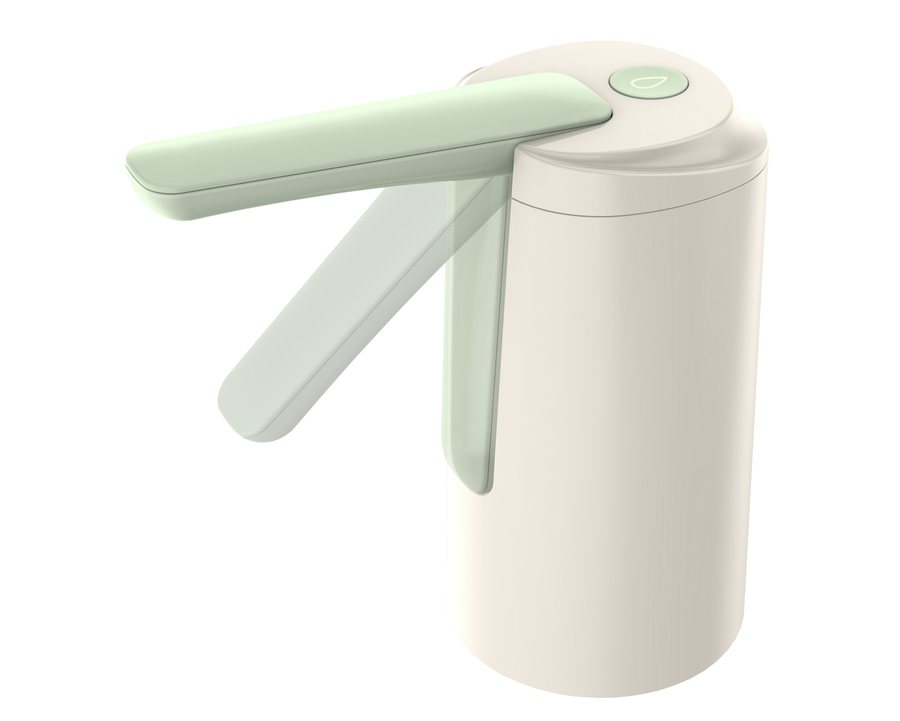
Direct Buyer Answer
Approve the complete sale unit and the bottle interface, not only a battery number or product photograph. The file should identify the pump, hose, outlet, cable, adaptor or cap accessory, local bottle closure, Spanish box, manual, barcode and master carton. Then confirm the channel, charging package, inspection method and service handoff. Yaoyuan can coordinate current catalog records, samples, packing files and available factory evidence; local fit and market-entry decisions remain with the buyer and qualified Colombian parties. Wholesale only; MOQ starts from 1000 PCS and the confirmed packed unit receives a private quotation.
Buyer Qualification
Companies controlling the importing entity, destination city or sales region, customs route, local stock, consumer information and after-sales responsibilities.
Buyers supplying supermarkets, appliance shops, water-delivery channels, promotional programs or regional wholesalers with repeat-order planning.
Purchasing teams requiring approved Spanish artwork, barcode, importer identity, retail packing and repeatable carton records.
Businesses ready to approve exact model, bottle setup, charging scope, product claims, artwork, inspection criteria and service plan.
Importers combining compact pump cartons with approved air fryer, blender, fan or other small-appliance routes under separate specifications.
MOQ starts from 1000 PCS. Retail and one-piece orders are not supported. Model mix, OEM feasibility and documents require confirmation.
A useful Colombia pump comparison begins with the item a distributor will actually receive and resell. Identify the exact pump, hose, outlet, cable, adaptor or cap accessory, Spanish box, manual, barcode and master carton as one sale unit. Then add the local bottle closure that the unit must fit, the channel that will sell it and the quantity assigned to that SKU. This creates a commercial object that can be sampled, packed, inspected and quoted without guessing what an attractive catalog photograph includes.
Battery capacity, housing material and nominal power remain specification fields; none of them answers the whole buying question. An 800mAh line does not establish runtime, a PP line does not describe the complete water path, and a bottle image does not prove fit. Yaoyuan Electric can coordinate current catalog records, samples, available factory files and packing data. The importer and qualified Colombian parties remain responsible for local classification, authorization, customs, tax and product-information decisions.
Write a short job statement for every shortlisted SKU. A supermarket item may need a buyer-approved Spanish box, barcode, importer identity and stable shelf presentation. A bottled-water distributor may focus first on closure fit, hose replacement and simple repeat supply. A promotional program may require a controlled color, logo location and carton quantity. A mixed-container buyer needs a pump carton that complements, rather than duplicates, the role of larger appliances in the same order.
Use the pump model selection guide, product selection matrix, first-order product mix route and retail assortment guide to reduce the shortlist. Local observations supplied by the buyer help define the role; they do not prove that a model will be popular, profitable or suitable across all Colombia channels.
The five routes below expose different levels of published detail. Use them to identify which model deserves a current sample and which missing fields must enter the RFQ. They are not quotations, Colombia approvals, water-safety approvals, performance promises or final packing sheets. A field absent from the public record remains unconfirmed until it appears in the current signed order file.
Use as a compact-size candidate: the page lists DC5V/5W, a 69mm x 129mm product and a 118 x 78 x 68mm box. The unusual 490 x 410 x 36.5mm carton field must be reconciled before this route enters a Colombia packed-unit cost sheet.
Use as an 800mAh rechargeable candidate. Its page lists PP, a 70mm x 126mm product, a 165 x 85 x 86mm box and a 440 x 345 x 455mm carton. The buyer still needs a sample-defined charging package, closure test and runtime method.
Use when a 400mAh direction needs evaluation against a larger-battery route. The page lists 5W, PP and 60 units per carton. Although that model page shows 500 pieces, this Colombia commercial route begins at 1000 PCS pending the actual quotation.
Use as another compact body and box candidate. Its published references are DC5V/5W, 70mm x 125mm, a 136 x 83 x 71mm box and a 570 x 355 x 310mm carton. Add battery identity and every packed accessory to the trial-unit file.
Use only after its missing-data list is closed. The page identifies PP, 800mAh, no light and MOQ 1000 PCS, but it does not publish the final product size, cable, hose, outlet, box or carton needed for a Colombia sale-unit comparison.
Use the wider catalog to discover alternatives, then move only candidates with a named SKU job and a manageable missing-data list into sample review. Incomplete records should not enter final quotation or artwork release.
"Suitable for 20L bottles" is not a fit specification. Ask the Colombia buyer to supply neck and cap dimensions, clear closure photographs, the intended cap-on or cap-off use and any known variation between water suppliers. The controlled SKU file should also identify seating depth, hose length and connection, outlet position, adaptor or cap accessory and the complete supplied set.
Test the current sample on representative closures from the intended channel. Record whether the pump seats securely, whether the hose reaches the working depth, whether the outlet clears the bottle, whether dispensing and stopping operate as agreed and whether leakage is observed. Approve each intended closure arrangement or narrow the claim. Continue with the bottle and hose compatibility route, rechargeable operating route and pump inspection checklist.
Neck and cap dimensions / closure photographs / cap-on or cap-off use / seating result / hose reach / outlet position / adaptor scope / supplied accessories / test bottle identity / approved photos / claim limits.
Colombia's Resolution 683 of 2012 addresses materials, objects, containers and equipment intended to contact food and beverages for human consumption. A bottled-water pump can place tubing, seals, outlet parts and internal pump components in the water path. For that reason, a published "PP" housing field cannot represent the complete contact system. Build a component map that connects each relevant part, material, supplier record and available declaration or test evidence to the exact approved model.
Do not print "food grade," "BPA free," "safe for drinking water" or a similar claim unless the responsible parties have approved model-specific evidence and destination wording. If a tube, seal, spout, pump component or supplier changes, reassess the affected evidence and sample. Start with INVIMA's official Resolution 683 of 2012 overview and the Ministry of Health's published resolution text.
The importer and qualified Colombian parties decide which sanitary provisions, registrations, evidence and claims apply to the final product. The factory can organize available material declarations, supplier records, sample parts and test reports where they exist. No catalog model is represented here as automatically approved for every water-contact claim.
Record the connector, product input, cable identity and length, battery manufacturer and model where available, nominal battery capacity, installation method and whether a wall adaptor is included. Confirm the current sample with that same package. Runtime, charging time, cycle life and dispensing-volume statements should stay outside the artwork unless the parties approve a repeatable test method and model-specific evidence.
If a mains adaptor is supplied, treat it as a separate electrical item in the evidence file. Confirm input and output rating, plug, cord or cable identity, label, supplier and applicable destination route with qualified Colombian parties. Do not assume one plug or adaptor is suitable for every Colombian channel. If no adaptor is included, the packing, manual and quotation should state the supplied scope accurately.
For rechargeable models, align battery identity with transport planning. Ask the freight forwarder and carrier what current battery test summary, dangerous-goods classification, packing, marking and declaration are required for the chosen route. A capacity printed in a catalog is not a transport document. Use the battery transport handoff guide, charger and evidence control route, plug and supply comparison guide and supplier document verification route.
Colombia market-entry work should begin with the final model, intended use, bottle and water-path construction, power arrangement, supplied components and intended claims. Use the exact specification to support a proposed tariff classification. DIAN's tariff consultation connects a subheading with the measures attached to it. A qualified Colombian importer or customs adviser should approve the final classification rather than relying on a marketing title or another supplier's paperwork.
VUCE processes import registrations and licenses for goods subject to prior requirements, permits or authorizations. That does not mean every bottled-water pump follows the same route. Keep workstreams separate: DIAN classification, VUCE or other authorization questions, sanitary review for water-contact materials and claims, adaptor and charging-system review, battery transport documents, Spanish consumer information, importer identity and customs inputs. Ask for the exact report, declaration, model family, factory, version and validity basis before treating a document as relevant.
Start with the official DIAN tariff consultation, official VUCE import services and INVIMA's food-contact-material rule overview. These sources define questions for the importer and qualified advisers; they do not approve the products displayed on this page.
The approval object is not an isolated graphic file. It is one finished sale unit containing the approved product, accessories, Spanish box, manual, labels and barcode, all tied to the same model and revision. The buyer supplies or approves brand name, product name, importer or distributor information, warnings, operating steps, charging information, supplied contents, permitted claims, recycling marks where applicable, dieline and master-carton mark. Every file needs a revision number and named approver.
Do not create Spanish packing by changing a few words on an unrelated market file, and do not allow one generic label to cover different batteries, charging inputs or included accessories. Verify language accuracy with a qualified reviewer. The factory can place buyer-approved text into the agreed packing format, but it should not invent legal statements, importer details, certifications or water-safety claims. Use the OEM pump program, supermarket private-label route, artwork approval workflow and custom packaging control guide.
Compare quotations using the same model, quantity, included items, packing and trade term. Obtain the current color-box dimensions, units per carton, master-carton dimensions, net and gross weight, carton material and any pallet or display requirement. Recalculate CBM from the approved carton rather than relying on an old catalog field. The JLB-W15 public carton field appears as 490 x 410 x 36.5mm and should be checked before use because the third dimension may not describe the final export carton as intended.
Build the landed-cost worksheet from private unit quotation, OEM and printing charges, inspection, inland handling, export charges, freight, insurance if used, destination handling, duty and tax assumptions supplied by the buyer's qualified advisers, local transport, financing and service reserve. Divide the completed route cost by saleable units only after carton and quantity reconciliation. Use the landed-cost and cooperation route, pump quotation input guide, carton and CBM route and controlled product mix guide.
Sample approval should identify model, appearance, color, charging system, battery, bottle setup, hose, outlet, accessories, product label, box, manual and any approved claims. Define the test method before judging the result. A practical protocol can cover charging indication, basic dispensing operation, measured flow under stated conditions, repeat operation, leakage observation, bottle stability, hose retention, outlet positioning, noise observation, switch response and accessory count. Do not convert one informal demonstration into a universal performance claim.
For pre-shipment inspection, confirm purchase-order identity, quantity, workmanship, assembly, charging input, battery reference where traceable, basic operation, bottle-fit setup, leakage observation, cable and accessory count, Spanish product and packing labels, barcode, manual, individual box, carton mark and carton quantity. Sampling level and acceptance criteria should be agreed for the actual order. Use the pre-shipment inspection route, AQL planning guide, golden sample control and customer order process proof.
Ask which parts can be supplied for the approved model and which operations the buyer's service channel can perform. Potential items may include model-specific hose, spout, cable, switch or internal components, but availability and compatibility require written confirmation. A similar-looking part is not automatically interchangeable. Record part code, compatible finished-good version, quantity, packing and claim-handling method.
When the battery, motor, pump module, hose, seal, spout, cable, connector, housing material, label or carton changes, review the signed specification, sample, water-contact evidence, transport file, artwork, inspection method and spare-part map. Use the component change approval route, spare-parts planning guide, quality-claim evidence workflow and repeat-order specification control.
A mixed-container plan can combine approved water pump SKUs with air fryers, blenders, fans or other small appliances, but each category keeps its own specification, MOQ, artwork, evidence, carton data, inspection and quantity allocation. Do not use compact pump cartons only to fill unexplained container space. Assign a channel, stock target and reorder role to every SKU.
Build the load plan from current carton dimensions and final quantities. Reconcile model count, carton count and CBM before cargo release. Review the pump mixed-container route, multi-category sourcing page, mixed-container planning guide and container loading process.
Use COLOMBIAPUMP1000 in your WhatsApp message. Wholesale only. MOQ starts from 1000 PCS. Public prices are not displayed. No retail or one-piece orders.
No. Approval is not inferred from a catalog listing. The importer and qualified Colombian parties review the exact pump, water path, battery or adaptor, claims and intended entry route.
After the packed sale unit is fixed. The buyer approves the SKU, supplied set, destination text, importer identity, permitted claims, barcode and translation before printed files are released.
That is not assumed. Provide neck and cap measurements plus closure photographs, then test the current pump, hose and adaptor arrangement on representative bottles from the intended channel.
No. Capacity must be read with the complete charging package, pump module, test method, packed accessories, bottle interface and channel job.
The adaptor becomes a controlled supplied item. Its input, output, plug, label, supplier and destination evidence questions must be recorded separately from the rechargeable pump.
One selected model, assigned channel job, closure setup, charging scope, Spanish pack, quantity, inspection basis, destination port and trade term must describe the same sale unit.
Wholesale Only
Colombia wholesale requests start from 1000 PCS. The route does not serve retail or one-piece purchases.
Channel job, bottle interface, water path, charging package and Spanish packed unit must all point to the approved SKU.
Private pricing begins after the packed unit, allocation, inspection basis, port and requested trade term are coherent.
Long-Term Market Development
Use this route when your team can share channel evidence, target landed-cost logic, inventory and service constraints, and a repeat-order plan. Yaoyuan can coordinate the selected water dispenser pump version, OEM files, supplier resources, inspection and replenishment decisions. Demand, exclusivity, delivery, sales volume and margin are not promised before both parties review the evidence and responsibilities.