Brazil Strategic Wholesale Partner | Piece-List and Food-Contact Control

Silicone Kitchen Utensil Set Supplier for Brazil Importers

This route is for Brazilian importers, distributors, supermarket buyers, online sellers with bulk demand and private-label brands that need a repeatable silicone kitchen utensil program. It connects local assortment evidence with a corrected piece list, component-level material map, current sample, intended-use protocol, food-contact documentation, Portuguese OEM files, protective packing, inspection and reorder identity.

The source data contains one internally consistent 12-piece route with published silicone wording and carton references. A separate source title says 19 pieces while its detail field says 12 pieces. That second route is quarantined from firm quotation until the complete set is photographed, counted and corrected in writing. A title, picture or broad material name cannot approve the production version.

Wholesale only. MOQ starts from 1000 sets. No retail or one-piece orders. Prices remain private until the exact set, quantity, packing, destination, trade term and inspection scope are aligned.

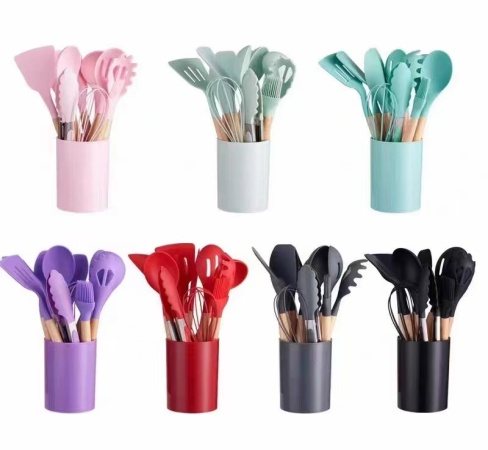
Silicone kitchen utensil set source route for Brazil wholesale specification approval

Source Truth

Separate the usable 12-piece route from the conflicting record

Internally consistent route

The usable discussion route is published as a thin silicone 12-piece set. The source describes the material broadly as silicone and publishes a 440 x 435 x 350 mm master carton, 24 sets per carton, 0.06 CBM per carton and 13 kg per carton. These are source references, not a substitute for current packed-sample measurement.

Quarantined conflicting route

A second record has a 19-piece title but a 12-piece detail field. It also carries different carton references: 670 x 560 x 385 mm, 12 sets per carton, 0.14 CBM and 25 kg. Because identity and count conflict, these fields cannot be mixed with the internally consistent route or presented as a confirmed 19-piece SKU.

What the source does not establish

The source does not provide a complete named piece list, individual dimensions, head and handle construction, internal core, joint method, holder inclusion, exact color, material grades, intended temperature, food-contact evidence, odor or migration result, retail-box dimensions, barcode, Portuguese files or Brazil market-release status.

The project stop rule

Do not release a firm quotation, OEM artwork, loading plan or performance claim until the selected route has a dated current sample, complete component matrix and signed specification. If a count, color, component or holder changes, create a new revision instead of silently updating the old item.

Strategic Resource Exchange

Build the assortment with Brazilian channel evidence, not factory assumptions

What the Brazil partner contributes

Company and importer identity, state or sales region, actual channel, target customer, competitor set photographs, observed shelf or online positioning, preferred colors, acceptable set size, Portuguese review, target packaging role, destination and landed-cost inputs, local food-contact and customs specialists, launch forecast, stock plan, service process and sell-through reporting.

What Yaoyuan coordinates

Available product and supplier routes, current samples, piece-list clarification, component and packing questions, color and holder options that can actually be confirmed, OEM file coordination, production checkpoints, inspection evidence, mixed-container planning and repeat-order review.

What neither side should invent

Exact consumer demand, heat resistance, non-scratch performance, dishwasher suitability, food-contact compliance, odor result, customs classification, tax, market approval, delivery date, sales, margin or profit. Each decision needs a current product version, responsible party and evidence suitable for the intended Brazil channel.

How resources expand

Begin with one controlled set and a clear channel job: core supermarket assortment, promotional set, online color series or mixed-container support item. Add colors, pieces, packaging investment or territory only after receiving quality, stock age, dealer reorder, service cases, sell-through and repeat-order economics show where more resources are justified.

Complete Piece Matrix

Name and control every utensil before comparing price

1. Name every component

Create a numbered list for every spatula, turner, spoon, ladle, skimmer, whisk, brush, tongs, scraper, holder or other included item. Record the exact function and silhouette. A set count alone cannot show whether two quotations contain the same tools.

2. Measure each piece

Record overall length, head width and thickness, handle dimensions, hanging hole, flexible edges, tong opening, whisk geometry and holder dimensions where applicable. State measurement points and tolerances so inspection can identify a changed mold or substituted part.

3. Map materials by component

Identify the food-contact head, handle, internal reinforcement or core, whisk wire, tong structure, brush bristles, joint, decorative parts and holder. Broad silicone wording does not prove that every component is silicone or that all components share one material grade and intended-use condition.

4. Define assembly identity

Record one-piece or joined construction, core insertion, bonding or mechanical joint, handle-to-head fit, removable parts and holder support. Observable checks should cover looseness, separation, sharp flash, exposed reinforcement, deformation and incomplete molding.

5. Freeze color references

Use an approved physical sample and controlled color reference for every component. Record whether heads, handles and holder use the same or coordinated colors. Screen images and chat photos are useful directions but should not be treated as final production color approval.

6. Give the set one revision

Connect the dated sample, numbered piece matrix, component materials, colors, holder, logo, box, manual or insert, labels and master carton to one revision. Production, inspection, receiving and repeat orders should all refer to that same identity.
Food-Contact Decision Gate

Connect evidence to each material and intended condition of use

Define contact conditions first

The Brazil partner should identify foods, acidity and fat exposure, maximum intended cooking temperature, contact duration, repeated-use pattern, cleaning method and whether an item touches a hot pan. Evidence should be reviewed against those conditions and the exact component material, not against the word silicone alone.

Review the complete multi-material set

A silicone-head record cannot automatically cover metal cores, whisk wire, tong springs, handle materials, pigments, adhesives, joints or the holder. Build a component-to-evidence matrix that shows which document, supplier statement, test or unresolved question belongs to each part.

Use official Brazil sources as a review starting point

Anvisa explains that packaging and other materials intended for food contact are regulated according to the material and intended use. The Brazilian importer and qualified specialists should determine the current requirements for the exact finished set and its components. No Brazil market-release evidence has been established for the pictured source route.

Official Anvisa food-contact materials guidance

Do not publish unsupported performance claims

Heat resistance, food safety, odor-free, non-toxic, non-scratch, stain resistance and dishwasher suitability require defined wording, relevant evidence and buyer approval. If evidence is incomplete, remove the claim from packaging and sales content instead of filling the gap with a generic supplier statement.

Buyer-Defined Use Protocol

Evaluate the current set against observable kitchen tasks

Task coverage

Assign each tool to a realistic task such as turning, stirring, serving, draining, brushing, whisking, scraping or gripping. Record food, vessel, temperature range, duration, load and repetition. This reveals duplicated tools, missing functions and channel-specific gaps before packaging investment.

Handle and joint behavior

Define observations for grip, flex, twist, joint movement, exposed core, sharp edges and deformation under the agreed task. Results belong to the tested sample, load and method. They should not be converted into universal strength or lifetime claims.

Surface interaction

If the buyer needs a non-scratch position, define the cookware surface, force, cycles, contamination and inspection method with qualified parties. A soft-looking head or silicone name alone cannot prove compatibility with every coating or utensil-use pattern.

Cleaning and storage

Agree manual or machine cleaning conditions, detergent, water temperature, cycles, drying and holder use. Observe odor, staining, residue, warping, joint changes and color transfer under the chosen protocol. Do not print dishwasher claims unless the exact set and conditions are supported.

Brazil Assortment Architecture

Give each set a commercial job before adding colors or pieces

Core replenishment set

A core route should cover the functions that the buyer's real channel repeatedly needs, use a stable piece matrix and fit an understandable shelf or online position. The importer should identify comparable local sets, the reason dealers would reorder and the stock depth the channel can support. Yaoyuan can then review whether the controlled 12-piece source direction fits that role or whether a different current sample is required. The objective is dependable replenishment, not the largest possible piece count.

Color-led channel series

A color series can help a marketplace, supermarket or promotional channel separate offers, but every color increases sample, component, packing and inventory control. Define which colors serve which channel and what minimum demand evidence justifies each one. Use physical color approval, record component-to-color mapping and track sell-through separately. Do not use several untested colors to create artificial variety while weakening stock rotation and repeat-order clarity.

OEM brand-building route

A private-label route requires more than printing a logo. The buyer needs a consistent set composition, supported product wording, Portuguese review, barcode ownership, pack design, importer information, inspection baseline and plan for replacement or repeat supply. Brand investment should follow a clear distribution role and evidence that the chosen set can be maintained. Yaoyuan coordinates available OEM and production resources after the product facts and channel responsibility are aligned.

Mixed-container support route

Silicone utensils can complement electric frying pans, air fryers, blenders or other kitchen categories when the buyer has a real channel plan for each line. Mixed loading does not remove product-specific MOQ, packing, food-contact, artwork or inspection decisions. Build one consolidated schedule only after every SKU has an approved specification, carton and commercial owner. This protects container utilization without turning the order into unrelated stock that the buyer cannot replenish.

Portuguese OEM File Control

Freeze every customer-facing file around the approved set

Build the file inventory

List logo, color references, retail box or sleeve, product labels, barcode, insert or manual, warning or care text, importer information, carton marks and channel-specific stickers. Give every file an owner, revision, approval date and linked product revision.

Translate from controlled facts

Portuguese copy should be reviewed after the exact piece list, materials, intended use, care method and supported claims are frozen. A translator should not decide technical content. The Brazil partner should provide or approve local wording through a qualified reviewer.

Control barcode and importer data

The buyer owns or supplies barcode and importer information needed for the chosen channel. Verify numbers, names, addresses and placement before printing. Scan barcodes on the final material and retain signed print proofs with the project file.

Prevent mixed revisions

Do not combine an old 12-piece box, a new color, a changed holder and a different piece list under one approval. Production release should show which product and file revisions belong together, with obsolete files removed from the active folder.

Commercial Architecture and Landed Cost

Compare complete sellable sets, not headline unit prices

Create one quotation baseline

Compare the same piece matrix, component materials, dimensions, colors, holder, OEM files, unit packing, carton, inspection, quantity, trade term and destination. A cheaper offer with fewer pieces, changed cores or weaker packing is not the same commercial object.

Re-measure final packing

The source carton figures are useful historical references. Recalculate unit-box size, quantity per carton, master-carton dimensions, gross and net weight and CBM from the approved packed sample. Do not transfer the conflicting route's packing data to the controlled 12-piece route.

Model landed cost with importer inputs

The Brazil partner provides the current NCM decision, tax and customs assumptions, broker and port charges, inland transport, storage, finance, inspection, packaging or labeling work and channel costs. Qualified Brazilian parties own classification and treatment decisions. Recalculate whenever product, packing, quantity, route or timing changes.

Official Siscomex simulators

Protect the repeat-order economics

Track landed cost per sellable set, receiving variance, stock age, return and service cases, dealer reorder and sell-through by revision. Use the evidence to decide whether to hold the construction, improve packing, change assortment or invest in a new color or piece configuration.

Protective Packing and Production

Make completeness, appearance and repeatability visible

Approve the packed arrangement

Record where every numbered piece and holder sits in the unit pack, how heads and handles are protected, what prevents rubbing or deformation and how the buyer can verify completeness without ambiguity. The packing arrangement should match the approved presentation and carton calculation.

Set incoming component checks

Buyer-defined checks may cover component identity, dimensions, colors, molding appearance, odor, flash, deformation, exposed core, joint fit, whisk or tong construction, holder stability, packaging components and evidence references. Sampling and acceptance methods must be agreed before production.

Control assembly and set building

Use the numbered piece matrix during assembly and packing. Count every set, separate incomplete or mixed-color sets and control rework. A final box count cannot detect whether a duplicated spoon replaced a required spatula unless the process checks piece identity.

Verify finished goods

Inspect revision, piece count and identity, dimensions, colors, component and joint appearance, buyer-defined use checks, Portuguese files, barcode, unit packing, carton quantity, dimensions, weights and marks. Record sample size, result, deviations and disposition with shipment evidence.

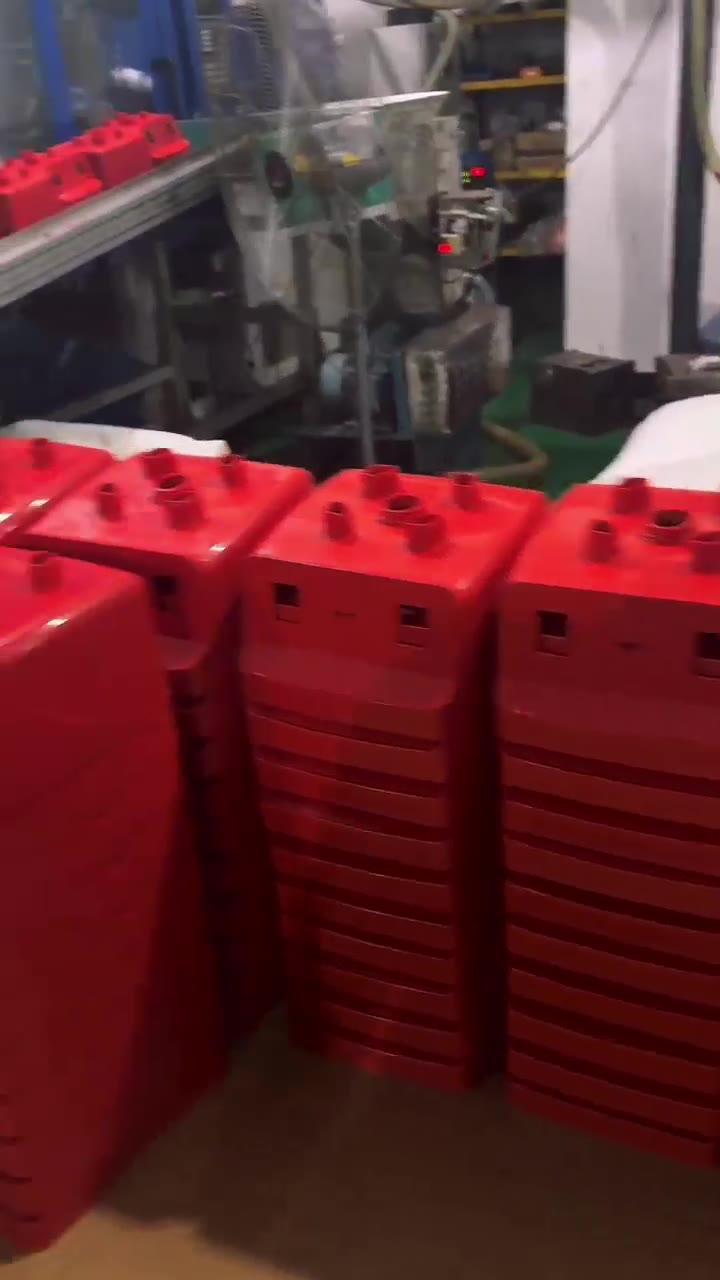
Wholesale production and packing evidence for silicone kitchen utensil set shipment control

Receiving and Replenishment

Use Brazil field evidence to protect the next order

Receiving baseline

Record seal and carton condition, quantity received, project revision, unit packing, sampled piece count, colors, holder, barcode, visible molding or deformation, missing or duplicated tools and carton references. Compare findings with signed samples and inspection evidence within the agreed claim window.

Structured issue records

Classify missing piece, wrong piece, wrong color, flash, stain, odor, exposed core, loose joint, deformation, damaged holder, packing damage, barcode or Portuguese-file error. Include lot, carton, piece number, date, photos, video and use or cleaning conditions where relevant.

Sell-through scorecard

Review stock received, stock sold, stock age, channel, dealer reorder, returns, service cases and comments by revision. Separate product issues from transport, storage, retailer handling and unsupported consumer use so the next decision addresses the right cause.

Controlled replenishment

Repeat orders should cite the latest accepted sample, piece matrix, materials, colors, holder, claims, Portuguese files and packing. Any substitution or set change needs written review, updated evidence and a new inspection baseline before production release.

Decision-Ready RFQ

Send enough evidence for one private, comparable quotation

Buyer and channel

Send company, importer role, Brazilian state or sales region, actual channel, target customer, competitor set photographs, observed commercial position, planned launch window and why this set belongs in your assortment.

Exact set requirement

Send the selected source route or current sample, required named piece list, dimensions or functions, materials, construction, colors, holder, intended food and heat conditions, cleaning method, evidence questions and proposed claims.

OEM and logistics

Send quantity, logo, Portuguese file responsibility, barcode ownership, importer data, packing role, destination port, trade term, target warehouse-ready window, inspection scope and any mixed-container categories.

Strategic resources

Identify the channel evidence, competitor data, landed-cost inputs, local food-contact and customs specialists, Portuguese reviewers, stock plan and sell-through reporting your team contributes. We will identify available product, supplier, sample, component, OEM, production, inspection, mixed-container and replenishment resources.

Wholesale Only

Build a controlled Brazil silicone utensil program

Send company, market region, channel, selected route, required pieces, quantity, color, food-contact and OEM requirements, destination, inspection and the local resources your team contributes. We will respond with the next evidence and quotation steps.

Contact on WhatsApp
WhatsApp