Importers and Distributors
Companies able to define the Brazilian importing entity, sales region, channel, product role, destination evidence questions and repeat-order process.
Brazil Food-Preparation Appliance Partnership Route
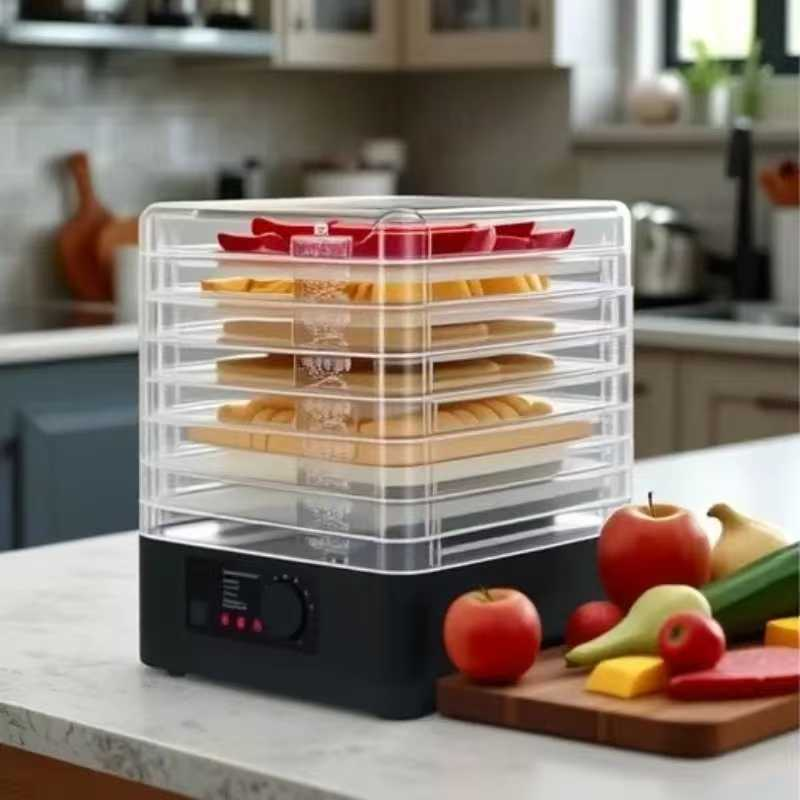
Build a controlled food dehydrator program from four real catalog families: round 28cm, round 32cm, square and new retro. Define the target foods, buyer channel and sample test first; then freeze the rack system, electrical version, Brazilian plug, Portuguese files, food-contact evidence, carton, inspection and repeat-order scorecard.
Wholesale only. MOQ starts from 1000 PCS. No public prices, retail orders or one-piece orders.
Buyer Qualification
Companies able to define the Brazilian importing entity, sales region, channel, product role, destination evidence questions and repeat-order process.
Purchasing teams that need Portuguese files, importer identity, barcode, shelf-ready packing, controlled claims and stable replenishment records.
Buyers prepared to approve one exact sample, food-contact component map, electrical identity, artwork revision, buyer test and inspection protocol.
Importers combining an approved dehydrator SKU with controlled air fryer, blender, fan, rice cooker or food-storage appliance routes.
Direct Buyer Answer
A decision-ready Brazil dehydrator inquiry starts with the importing company, sales state or region, buyer channel, target foods, expected portion size, intended shelf presentation, selected catalog route, quantity, electrical requirement, Portuguese OEM scope, destination port and inspection method. Those inputs tell both parties what must be demonstrated by the sample. They are more useful than asking for the lowest price on a product picture.
The source catalog verifies four shape or appearance families, selected mechanical or digital control wording, fixed or adjustable rack wording and published rack-height references. It does not publish model codes, rated power, voltage, frequency, plug, temperature range, timer range, tray material map, packing dimensions, loading quantity or drying results. This page preserves that boundary. No missing field is borrowed from another appliance or invented to make the offer look complete.
The workbook separates mechanical and digital directions. It publishes fixed 3.0cm, 4.5cm and 8.0cm rack references plus an adjustable 3.0cm direction. Approve the exact control panel, rack identity and adjustment method on a current sample.
The workbook shows one mechanical and one digital direction, both with a fixed 3.5cm rack-height reference and a 10cm main-unit reference before the selected rack. Do not infer power, temperature, timer or finished height.
The source separates mechanical, timer-and-knob and digital pictured directions. Published rows use fixed 3.5cm racks and show 9cm or 10cm main-unit references before the selected rack. A picture is not a unique model code.
Three pictured appearance groups are published with fixed 3.0cm, 4.5cm and 8.0cm rack directions plus an adjustable 3.0cm route. Freeze the selected appearance and rack construction with a dated image and sample reference.
The buyer should assign a commercial role before requesting a sample: entry price point, compact shelf route, larger-tray route, design-led private label or specialist-food route. The role is a planning decision, not a promise of local demand. Local competitor evidence, retailer feedback, target shelf position and service expectations should come from the importer. Yaoyuan can then coordinate available product, sample, component, packing, production and inspection resources around that evidence.
A one-time transaction ends when cargo is handed over. A strategic program continues through receiving, sell-through, service and reorder decisions. The Brazil partner contributes importing identity, target states, channel access, representative foods, competing products, shelf or wholesale observations, landed-cost inputs, local-language review, service capacity, stock plan and sell-through evidence. Yaoyuan contributes access to available catalog routes, samples, component information, factory coordination, OEM files, packing development, production follow-up, inspection support, mixed-container planning and replenishment preparation.
Keep one shared decision register. Record the selected route, sample identity, open technical questions, buyer test, destination responsibilities, Portuguese artwork, packing revision, inspection method and next decision owner. Close facts with evidence instead of optimistic messages. If the importer learns that a tray height, control style or package format does not fit the channel, both parties can adjust the next order before repeating the same mistake.
Fruit slices, herbs, vegetables, meat, pet treats and other buyer-defined uses create different loading and observation needs. The buyer should provide representative food, slice thickness, initial preparation, quantity per tray, number and position of loaded trays, operating setting, observation intervals and the target physical result. The test should record the actual sample version and ambient conditions. It should not be converted into a universal drying-time, preservation, health or nutrition claim.
A useful comparison uses the same food preparation and loading method across shortlisted routes. Record visible consistency, tray-to-tray differences, control usability, operating stability, ease of loading, removal and cleaning, and any buyer-defined acceptance point. If the buyer wants to communicate a specific performance claim, that claim needs its own qualified evidence and destination review. A social-media demonstration is not a substitute for a controlled commercial claim.
Rack shape, height, layer count, food-contact surface, support structure and included quantity affect use, packing, freight and replacement needs. State fixed or adjustable wording exactly as approved. Where the source says adjustable, inspect what is physically adjustable and how it changes the assembled product. Do not advertise an adjustable temperature or timer because the rack wording says adjustable.
Give every tray or rack position a clear identity in the signed specification. Include material evidence, color, finish, usable area, rack height, quantity, fit, deformation check, cleaning instruction and replacement policy where applicable. A lower quotation with fewer trays or a different rack height is not commercially comparable with a complete approved configuration.
The public workbook does not define voltage, frequency, plug, cord, power, thermal protection or rated label for these dehydrator routes. Therefore, the current catalog page is a discovery route, not proof of a finished Brazilian appliance. The importer should define the intended state or sales region and required electrical identity. Yaoyuan should then review whether an appropriate platform can be developed, sampled and documented.
The version register should connect route, housing, control panel, heater, fan or airflow assembly, PCB or thermostat where applicable, thermal protection, trays, lid, voltage, frequency, rated input, Brazilian plug, cord, grounding, label, Portuguese files, barcode, carton, sample and evidence revision. Any change to the heater, motor, protection component, PCB, cord or plug should reopen the affected test, artwork and conformity questions.
For a mains appliance, approve the Brazilian plug construction, current rating, cord, strain relief and rated label as part of the finished SKU. Do not use a travel adaptor, generic plug image or verbal promise as the production basis. The importer and qualified Brazilian parties should determine the exact current conformity route for the finished dehydrator, its intended use and its electrical construction.
Inmetro's official guidance states that importers of household appliances covered by Portaria Inmetro No. 148 of 2022 must import and supply certified products and show conformity identification on the product and packaging. Review the official household-appliance importer obligations, the regulated products information and the product registration overview. These sources define questions for the responsible parties; this page does not claim that a catalog route is already certified for Brazil.
The dehydrator may include trays, rack surfaces, a lid and other parts that directly contact food during heating and airflow. Build a component map for the exact sample: part name, supplier reference, material, color or additive where relevant, contact conditions, available declaration or test record and order revision. The source workbook's isolated color or material wording is not a complete food-contact declaration.
Anvisa explains that Brazilian food-contact rules cover packaging, equipment, machines, utensils and similar items used during food preparation, storage, sale and consumption, and organizes requirements by material type. Use the official Anvisa food-contact materials overview to frame the exact questions. The importer and qualified Brazilian parties own the current legal interpretation, acceptable evidence and final claims. Yaoyuan can coordinate available factory-side material records for the approved construction.
The rated label, product label, Portuguese manual, color box, barcode, buyer-supplied importer identity, warnings, cleaning instructions, target-use wording and master-carton marks should describe the same SKU. Give every file a revision, approval date and named approver. Inspect printed samples before mass packing. Do not reuse Spanish artwork, a general food-dehydrator manual or another electrical version without a controlled review.
Keep claims within the evidence. Avoid unsupported statements about drying time, nutrient retention, shelf life, food safety, energy saving, temperature accuracy, timer range or professional use. If the importer wants a specific claim, define the exact wording, test method, product version and qualified destination review before artwork approval.
The source does not publish product or packing dimensions, packed weight, units per carton or loading quantity for the four routes. Tray count and rack height can materially change the color box and master-carton cube. First approve the complete sample and protective packing. Then record individual-box size, units per carton, carton dimensions, net and gross weight, pallet rule where used, order quantity and current loading method.
Separate factory-controlled product, packing and China handoff inputs from freight, insurance, customs, tax, destination handling, local transport, warehousing, finance, service and marketing values owned by the importer and qualified providers. Use the South America landed-cost RFQ route to compare suppliers on one complete commercial basis. No universal duty, freight, margin or profit is promised.
Do not assign an NCM from a product title or competitor listing. Classification depends on the exact construction and declared function. Brazil's official Siscomex guidance states that administrative treatment should be checked for the actual NCM and operation and that informational tables do not replace the current simulator. The importer, customs broker and qualified Brazilian parties should own that decision before shipment.
Use the official Siscomex import administrative-treatment guidance and import systems overview. Yaoyuan can provide matching product, component, specification, packing and commercial inputs. It does not determine Brazilian classification, licensing, tax or customs release.
The inspection plan should identify the approved route, sample, control panel, rack shape, rack height, layer count, food-contact components, heater and airflow assembly, electrical identity, plug, cord, label, Portuguese files, accessories, carton and buyer-defined operation test. A generic checklist is not enough. The inspection sample and acceptance method should be agreed before production release.
Verify identity first, then workmanship and operation. Match printed files to the released revision. Confirm that the test food, preparation, tray loading and observation method are repeatable. Record nonconformities, rework, reinspection and shipment-release authority. Use the pre-shipment inspection control and golden-sample retention route to connect sample evidence with production release.
Gate one is commercial fit. The importer supplies channel observations, representative competing products, target shelf or wholesale position, intended food uses and a realistic quantity plan. The parties choose one catalog route because it fills a defined assortment role. They do not add several similar appearances merely to make the range look larger. If the channel cannot explain who will buy the route and why it belongs in the assortment, keep it out of the first program.
Gate two is product and destination control. A current sample must pass the buyer-defined food test and confirm the rack system, control operation, cleaning route and complete included set. The same version must have a controlled electrical identity, Brazilian plug, food-contact map, Portuguese files, packing basis, evidence questions and inspection protocol. Open issues remain visible in the decision register. Printing, production and market claims should not move forward simply because a quotation has been accepted.
Gate three is repeat-order evidence. After receiving, compare physical inbound condition, buyer or dealer questions, returns, service cases, stock, sell-through, replacement-tray demand and cash-cycle observations against the first-order assumptions. Decide whether to repeat unchanged, correct the version, change the package, adjust the assortment role or stop the route. This gate protects both partners from using more factory capacity and importer working capital on an SKU that has not earned expansion.
The gate record should name the evidence, owner, decision date and next action. Yaoyuan can coordinate factory resources after the buyer supplies the local evidence needed for a decision. The importer can plan the next buying cycle after Yaoyuan supplies matching product, production and inspection evidence. This is the practical difference between strategic cooperation and a sequence of disconnected purchases.
After receiving, the strategic partner should record inbound condition, carton damage, installation or first-use questions, returns, service reasons, stock by SKU, sell-through by channel, replacement-tray demand and customer feedback. Separate product defects from transport damage, instruction problems, misuse and unsupported market claims. Share a concise scorecard before the next forecast.
Yaoyuan can use that evidence to coordinate available component, sample, artwork, packing, production, inspection and replenishment resources. The importer can use it to refine assortment, channel allocation, pricing position and service reserves. Neither party should guarantee demand, delivery, sales, margin or profit. The value of strategic cooperation is faster, evidence-based correction across repeated orders.
A food dehydrator can share a container with approved air fryers, blenders, fans, rice cookers, vacuum sealers or water pumps, but mixed loading does not erase model MOQ or country-version responsibility. Record model, quantity, electrical identity, Portuguese files, carton, CBM, weight, evidence and inspection separately for every SKU. Reconcile production timing and loading only after those records are stable.
Use the South America mixed-container route to allocate space and shared costs without mixing Brazilian and Spanish-language versions. The final loading quantity remains subject to production-intent cartons, weight, loading method and operational confirmation.
Use BRAZILDEHYDRATOR1000 in the formal RFQ or WhatsApp message. It identifies a Brazil wholesale food-dehydrator project requiring sample, evidence, OEM, packing, inspection and strategic replenishment control.
MOQ starts from 1000 PCS. Final route, rack system, electrical version, OEM scope, packing and quantity must be confirmed before a private quotation is executable.
The current source workbook does not publish those ranges. They must be confirmed from the exact current sample and signed specification before any claim or quotation.
No blanket certification claim is made. The importer and qualified Brazilian parties must determine current scope and evidence for the exact finished construction.
Yes, after the buyer approves controlled Portuguese content, importer details, barcode, claims, labels, manual, color box and carton revisions.
No. Results depend on the product version, food, preparation, load and method. Market sales depend on the importer's channel and execution. Both should be managed with evidence.
Yes, after every selected SKU has its own MOQ, approved sample, destination version, carton, evidence questions, production timing and inspection basis.
Wholesale Only
Importing identity, sales region, channel, target foods, competitor and cost evidence, Portuguese approval, service capacity, forecast and sell-through data.
Available catalog routes, component and sample information, OEM files, packing, production, inspection, mixed-container and replenishment resources.
Qualified Brazilian parties own current conformity, classification, customs, tax, language and market release. No demand, delivery, sales, margin or profit is guaranteed.
Food dehydrator procurement loop
Use the Brazil page for the country brief, then open the sample, OEM, evidence, mixed-container and after-sales routes before a wholesale order is released.
Review eight structured food dehydrator catalog records across 28cm, 32cm, square and retro routes, with clear sample, electrical and packing evidence boundaries.
Create a food dehydrator sample approval record covering route identity, control interface, rack dimensions, trays, electrical label, operation, cleaning and packing.
Plan OEM food dehydrator branding through route selection, sample approval, claims evidence, control-panel language, label, manual, box, carton and change control.
Screen food dehydrator routes for a named Latin American market using buyer-confirmed electrical, language, channel, packing, landed-cost and service requirements.
Separate USA and European food dehydrator projects by electrical version, materials, food-contact scope, labels, claims, destination evidence and buyer approval.
Coordinate food dehydrators with air fryers, blenders, fans or other appliances while preserving separate sample, electrical, packing, inspection and carton-data gates.
Define food dehydrator service identity, rack and tray compatibility, complaint evidence, quarantine, corrective action and repeat-order feedback before launch.