Importer Evidence
Bring territory, channel, seasonal selling window, competitor range, target position, landed-cost inputs, stock limit, service method and sell-through evidence.
Venezuela Electric Fan Market Partnership
Develop a seasonal fan business by connecting the Venezuela partner's selling window, channel, competitor, landed-cost, service, stock and sell-through evidence with Yaoyuan Electric's model, motor, blade, guard, component, sample, Spanish OEM, packing, production, inspection, shipment and replenishment resources.
Wholesale only. MOQ starts from 1000 PCS. No public prices, retail orders or one-piece orders.
Shared Seasonal Objective
Bring territory, channel, seasonal selling window, competitor range, target position, landed-cost inputs, stock limit, service method and sell-through evidence.
Coordinate available motor, blade, guard, oscillation, stand, controls, electrical or charging components, samples, OEM files, cartons, inspection and parts.
Work from local warehouse-ready date through receiving, customs, ocean transit, loading, inspection, production, artwork and sample approval.
Use receiving damage, assembly cases, vibration, returns, spare-part use, stock age, sell-through and next seasonal cutoff to change the allocation.
A useful fan quotation begins with the market calendar, not the factory price. State the importing company, territory, channel, target customer, intended selling window, date stock must be ready in the local warehouse, latest useful arrival, exact fan role, quantity, electrical or charging identity, Spanish OEM scope, destination, transaction route, service method and reorder objective. This lets both partners work backward to the purchase-order deadline and decide whether the project still fits the commercial window.
Yaoyuan Electric can coordinate available factory-side model, motor, blade, guard, shaft, oscillation, base, stand, switch, cord, plug, charging component, sample, artwork, packing, production, inspection, shipment evidence, spare part and replenishment information. The Venezuela importer and appointed local professionals own current classification, conformity, customs, tax, consumer information, market claims, transaction feasibility and release. Neither partner should promise a hot-season arrival, market demand, sales volume or profit before the complete route is confirmed.
The importer should define the months when fan sell-through normally rises in the actual territory and channel. That date must come from current local sales, weather, promotion and inventory evidence, not a copied regional calendar. Record the target selling window, local warehouse-ready date, latest acceptable arrival, destination facility, customs and receiving allowance, ocean or inland transport assumption, cargo handoff, loading, inspection, production, OEM artwork release, sample approval and purchase-order release. Give every stage an owner, evidence item and decision deadline.
A schedule is a control file, not a delivery guarantee. Artwork changes, unconfirmed electrical identity, sample failure, component revision, inspection findings, carrier changes, banking review, customs work or destination handling can move the date. If a delay crosses the buyer's latest useful arrival, both partners should reassess quantity, channel allocation, cargo route or the commercial logic instead of shipping inventory that may arrive after its best selling period.
The routes below reproduce public catalog fields for discovery. They are not signed order specifications and do not confirm local conformity, market demand, current stock, actual carton, future loading or delivery. Where the catalog does not publish a model code, keep the route reference rather than inventing one. Before purchase, obtain the current sample, signed specification, component identity, packing sheet and order revision.
Public fields: model 18BR, AC220-240V and Plastic PP 18-inch. The page also records two units per carton and an old 40HQ reference of 2600.
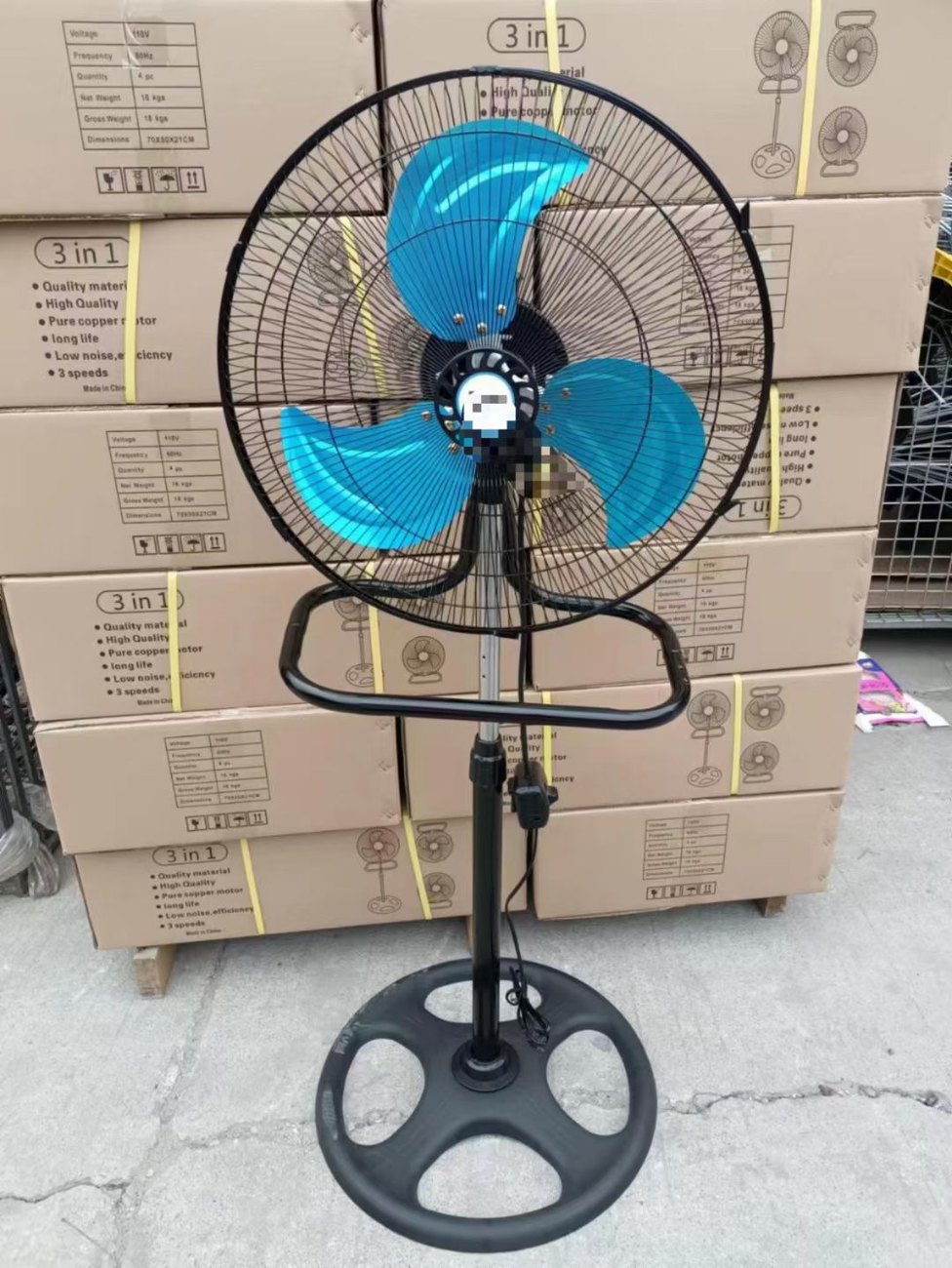
Use as an entry or core standing-fan discovery route. Confirm motor, blade, guard, base, oscillation, controls, power, carton and actual electrical version.
Public fields: AC220-240V and Plastic PP 18-inch. The public source does not provide a model code or confirmed power.
Define the three configurations, supplied base or mounting parts, assembly method and complete packed set before assigning a flexible-channel role.
Public fields: AC220-240V and Plastic PP 18-inch. The public source does not provide a model code or confirmed power.
Keep P56 separate from 18BR until the current motor, guard, blade, controls, stand, appearance, carton and component revision are compared.
Public fields: AC220-240V and plastic construction. The page records two units per carton and an old 40HQ reference of 2600.
Confirm exact functions, size, supplied components, power, assembly, cartons and current model identity before using it as a step-up or flexible route.
Public fields: 220V, 50-60Hz and 30W. Published carton: 640 x 190 x 610mm; published old loading references: 925 for 20HQ and 1850 for 40HQ.
Do not infer the battery, panel, runtime, charging time, adaptor, transport evidence or supplied set from the word solar. Freeze every component and test.
A first range can use an entry route, core volume route and only an evidence-backed step-up or alternative-power route. Assign each selected fan to a distributor tier, appliance shop, supermarket program, promotional channel or private-label position. Record competing fan size, functions, shelf price position, dealer margin structure, expected service burden, local stock capacity and the reason the new route deserves space.
Do not fill a container with several visually similar fans that solve the same buyer problem. Concentrating the first allocation can simplify samples, Spanish artwork, component control, inspection, spare parts and replenishment. Mixed-container planning remains possible, but every SKU keeps its own MOQ, revision, destination identity, carton, evidence and receiving line.
The signed specification should identify the exact model or catalog route, motor and relevant reference, blade size, material and count, shaft and fixing, front and rear guard construction, spacing, fasteners, oscillation mechanism, tilt, height adjustment, pole, base or wall and floor components, speed steps, controls, wiring, cord, plug, rated label, color and accessories. A 3-in-1 title must become a written list of configurations and parts in the carton.
The buyer-approved sample should be checked for assembly, guard fixing, blade clearance, stand or base stability, tilt, oscillation, speed steps, switches, observed noise and vibration, cord and plug, labels and packing. If motor, blade, guard, switch, plastic, fastener, supplier or construction changes, the revised sample and evidence should be reviewed before the order revision is accepted.
A public AC220-240V or 220V field is not a finished Venezuela product identity. The importer should confirm the actual voltage, frequency, plug, cord, rated label and any installation or channel requirement for the precise sales territory. The final product, specification, label, manual, color box, inspection criteria and cargo documents should describe the same electrical version.
For a solar or rechargeable route, separately identify the charging input, cable or adaptor, battery manufacturer and model, battery chemistry and capacity reference, installation status, panel or charging-system components, protection and available transport evidence. Do not borrow battery, panel, runtime or shipping statements from another model. Any requested destination variation that differs from the catalog is a factory review item until documented.
Compare the complete version rather than the ex-factory unit line. The importer file can include product configuration, OEM work, individual packing, units per carton, actual master-carton size, net and gross weight, order quantity, inspection, inland handling, freight basis, destination charges, classification, duties and taxes confirmed by accountable parties, local delivery, finance, damage allowance, assembly or service cost, spare parts, stock age and collection cycle. Divide the supported total by expected sellable units, not only shipped units.
Old 20HQ or 40HQ catalog references do not guarantee a future load. Recalculate from the approved carton, quantity mix, loading method and actual container plan. A denser carton can reduce freight per sellable unit, but weak protection can increase crushed cartons, guard deformation, blade damage, returns and dealer claims. Carton economics and product protection must be reviewed together.
ISO's member profile identifies SENCAMER as Venezuela's national standards body and describes its work in standardization, COVENIN, metrology, accreditation, technical regulation and certification. This is a planning anchor, not proof that a catalog fan is approved. The importer and qualified Venezuela professionals should determine the current standard, technical-regulation, conformity, labeling, efficiency or registration questions for the exact finished fan and channel.
Map each claimed report or certificate to the tested model, motor, blade, guard, electrical identity, construction, component set, issuing body, scope and validity. A similar fan, overseas report or factory certificate does not establish Venezuela acceptance. Keep unresolved requirements in the decision file and do not print marks, efficiency claims or approvals without a confirmed basis.
The WTO Trade Facilitation Agreement database lists SENIAT and Venezuela's VUCE among member-notified sources for import procedures, forms, duties and taxes, fees, classification, valuation, origin, restrictions and penalties. Use these official starting points to create a written question list for the exact fan. They do not replace a current classification or destination review by responsible parties.
The invoice, packing list, origin information, product description, model, quantity, value basis, cartons, weights, electrical or charging identity and cargo documents should reconcile. The importer and appointed broker confirm current classification, permits, VUCE steps, valuation, duties, taxes and release requirements. Yaoyuan can provide confirmed factory and cargo fields but does not decide customs treatment.
OEM scope can include product logo, model, controls, speed names, assembly instructions, rated label, warnings, manual, barcode, importer or distributor information, color box, master-carton marks and service contacts. The importer provides and approves accurate Spanish market text, claims and local information. Yaoyuan coordinates factory artwork application and printing evidence after the product version is frozen.
Keep one revision register for product label, control panel, manual, individual box and carton. File name, date, approver and status should be visible. The artwork must match the supplied functions and electrical identity. A solar claim, low-noise claim, airflow figure, energy claim, runtime, charging time or durability statement requires approved evidence and must not be invented for advertising.
Confirm payer, beneficiary, bank, currency, payment method, counterparties, insurers, forwarders, carriers, vessels and destination route before deposit or production release. OFAC maintains current Venezuela-related sanctions information for U.S.-linked persons and transactions. Its public page is a due-diligence source, not legal advice and not a blanket decision about a specific order.
Banks, carriers, insurers and other providers make their own current acceptance decisions. If a party, bank, vessel or route changes, review the transaction again. Yaoyuan does not guarantee payment processing, cargo acceptance, insurance, customs release or arrival. The buyer should use qualified counsel and accountable transaction professionals where required.
The approved sample file should identify model code or catalog route, revision, motor, blade, guard, oscillation, stand or base, controls, fasteners, electrical or charging system, labels, color, logo, supplied parts, individual packing and master carton. Photos should show identifying construction and the complete packed set. Write any permitted tolerance and the action when a result falls outside the agreed basis.
A pre-shipment inspection can cover identity, quantity, assembly completeness, appearance, guard fixing, blade clearance, fasteners, stability, height and tilt, oscillation, speed steps, switches, observed noise or vibration, agreed operating cycles, cord, plug, charging components, labels, accessories, artwork, barcode, box and carton. Define sample size, method, acceptance and shipment-release authority for the exact order.
Discuss parts that match the exact order revision and local service method. Possible items can include blade, guard, switch, knob, fastener, oscillation-related component, cord or plug, but the approved list must identify model, revision, compatibility, quantity and packing. Random unidentified parts are not a service system. Decide who diagnoses a case, what evidence is required and when replacement is approved.
At destination, reconcile container, seal, cartons, units and visible condition before distribution. Photograph carton damage, deformation, missing parts and representative product condition. Record assembly cases, vibration, noise, switch or oscillation issues, transit damage, returns and resolution. This receiving file separates cargo damage, packing problems, assembly error and product issues before the partners decide corrective action.
A repeat order should not copy the previous purchase order automatically. Compare sell-through by model and channel, remaining stock, stock age, dealer replenishment, returns, service cases, replacement use, transit damage, local cash collection and the next warehouse-ready deadline. Confirm whether product, motor, blade, guard, electrical identity, Spanish files, carton, inspection or transaction route changed.
The importer shares verified channel and inventory evidence. Yaoyuan reviews current model, component, production, carton, inspection, mixed-container and replenishment resources. Both partners can keep, increase, reduce, replace or stop a route based on measured results. That is the difference between a strategic seasonal program and a one-time low-price shipment.
Use VENEZUELAFAN1000 in your WhatsApp message or formal RFQ. Wholesale only. MOQ starts from 1000 PCS. No public prices or retail orders.
No. Both partners can build a dated control plan, but approvals, production, carriers, banking, customs and destination handling require current confirmation.
No. The exact sales territory, voltage, frequency, plug, cord, label and current destination requirements must be confirmed.
Do not infer the supplied set from the route name. Freeze battery, panel, charging components, adaptor, protection, tests and transport evidence in writing.
No. Recalculate with the approved carton, order mix, loading method and actual container plan.
Yes, after the buyer approves accurate functions, warnings, claims, barcode, importer information and local service details.
No blanket approval is claimed. Qualified parties confirm current requirements for the exact finished version.
The exact model, components, electrical identity, OEM files, carton, inspection, shipment timing, transaction route and destination change the quote.
The importer supplies market and inventory evidence; Yaoyuan coordinates factory resources; both improve allocation and timing from measured results.
Strategic Wholesale Only
Selling window, warehouse-ready date, channel, competitor, local cost and stock evidence shape the range.
Model, motor, blade, guard, sample, Spanish files, carton, production and inspection support execution.
Assembly, damage, vibration, returns, replacement identity and component continuity protect the installed base.
Stock age, sell-through, service cases, cash cycle and next seasonal cutoff remain under one shared scorecard.