U.S. Importers
Businesses able to name the importer of record, selling states, product category, intended use and market-entry owners.
U.S. Importer Engineering Decision Page
A catalog model designed around another electrical system is not converted into a U.S. wholesale version by changing the rating label or plug. Develop and freeze the heater or motor, PCB, power supply, cord, plug, protection parts, operating modes, sample, OEM files and evidence scope before production and private quotation. Wholesale only. MOQ starts from 1000 PCS.
Qualified Wholesale Route
Page responsibility: This page owns physical 120V/60Hz version development: electrical architecture, critical components, controlled sample and production identity. After that identity is frozen, move to the U.S. evidence handoff; use the USA small appliance wholesale supplier hub for product selection and a complete RFQ.
Businesses able to name the importer of record, selling states, product category, intended use and market-entry owners.
Buyers supplying appliance dealers, regional wholesalers or established business customers with documented channel requirements.
Purchasing teams that can provide listing, insurance, barcode, testing, packaging, labeling and vendor-document requirements.
Brand owners able to approve exact product identity, technical files, English artwork, claims and post-market responsibilities.
Use this route before final sample approval, evidence assessment, purchase-order release and mass-production freeze.
Wholesale only. MOQ starts from 1000 PCS. No retail, one-piece orders or public consumer prices.
Voltage and frequency affect the electrical design that produces heat, torque, speed, airflow, charging power and control behavior. A product whose public record says AC220-240V cannot be presented as a U.S. 120V/60Hz version unless the actual construction has been developed, sampled, assessed and frozen for that rating. Replacing only the plug, cord or printed label can leave the heater, motor, power supply, current path, thermal protection, PCB and enclosure operating outside the intended design.
Start with the catalog model as a product-discovery reference. Then create a separate U.S. version identifier and engineering file. Record the target rating, intended use, duty cycle, functions, load, accessories, channel and evidence expectations. The buyer, factory engineering team, component suppliers, qualified laboratory and responsible U.S. parties should all review the same construction. Do not request a quotation for a “U.S. version” while the main electrical architecture remains unresolved.
No label, packaging, certificate, quotation or production release should describe a U.S. 120V/60Hz version until the physical sample and controlled specification match that identity.
Assign a unique commercial model and internal revision for the U.S. route. Link it to the source catalog reference without treating the two as identical. Record the approved sample number, schematic revision, BOM revision, PCB revision, firmware version where applicable, motor or heater reference, cord set, plug, fuse or protection parts, enclosure, accessories, label, manual and packing revision. The file should make it possible to distinguish a 120V/60Hz sample from every 220-240V version in purchasing, assembly, inspection and shipment records.
Model-family grouping, private-label naming and evidence coverage must be reviewed by competent owners. Similar appearance does not prove identical construction. A new brand, model number, motor, heater, PCB, power supply, radio module, cord, plug, thermal protector or material can change the evidence route. Use the component change-control guide to prevent an approved sample from drifting during production.
Develop the 120V heater, current path, thermal controls, fan motor, relay or switching system, PCB supply, cord, plug, insulation and enclosure around the exact capacity and operating program.
Develop the motor winding, current, speed control, overload protection, jar and blade load, duty cycle, cord, plug and enclosure for the intended ingredients and operating pattern.
Develop the motor, capacitor or drive, speed controls, oscillation, timer, remote or display, guard, blade, base stability, cord and plug for the exact fan configuration.
Develop the heater, thermal switch or sensor, protection, pot and lid system, steam path, controls, cord and plug around the approved capacity and cooking protocol.
Keep the low-voltage pump, PCB, battery, USB cable and optional mains adaptor as separate controlled items. A 120V wall adaptor does not redefine the pump's own low-voltage rating.
After engineering identity is frozen, determine product-specific CPSC, FCC, energy, electrical-channel, origin, state, label and post-market responsibilities.
A wattage target does not by itself define a safe or functional conversion. The electrical current at a lower supply voltage can change conductor, terminal, switch, relay, connector, fuse, trace, cord and plug requirements. Heating products require review of heat-up behavior, steady-state temperature, abnormal operation, thermal cutoffs, clearances, insulation, plastics near hot parts and repeated operating cycles. Motor products require review of winding, starting current, stall or overload behavior, speed, torque, temperature rise, vibration and mechanical load.
Document the calculation basis and confirm it on the actual sample. Do not copy a wattage field from the 220-240V catalog or assume that matching nominal watts means the two constructions perform identically. Product claims such as cooking time, airflow, blending ability, noise or energy use require their own defined methods and evidence. Missing measurements remain open instead of being filled with marketing estimates.
Frequency can affect motors, transformers, clocks, timers, filters, power supplies and control behavior. The significance depends on the exact architecture. Record whether the motor or transformer is frequency-sensitive, whether timing comes from a crystal, firmware or line reference, and whether speed, airflow, temperature, noise or standby behavior changes. A broad catalog statement such as AC110-220V does not prove correct 60Hz operation, component ratings or finished-product acceptance.
Test the operating modes that the customer will actually use. For a fan, include each speed, oscillation and timer route. For a blender, include start, run, pulse, load and rest cycles. For heating products, include control transitions, normal use and relevant abnormal conditions. For a rechargeable pump, test the supplied charging route independently from pump flow and bottle compatibility.
Ask the U.S. buyer and its qualified technical owner to specify the required plug configuration, polarization, grounding, cord type, conductor size, length, temperature rating, connector, strain relief and channel-specific listing expectations. Two-prong and three-prong choices should follow the product construction and applicable technical route, not a sales preference alone. The cord set, appliance inlet and internal connection must remain traceable to the assessed sample.
Do not print a certification mark or claim because a component supplier provides a recognized cord or plug. Component recognition does not automatically approve the finished appliance, and authorization to use a finished-product mark must be confirmed for the exact model, manufacturing location and certification route. Use the U.S. evidence page to separate federal import questions from retailer, workplace, insurer and local electrical expectations.
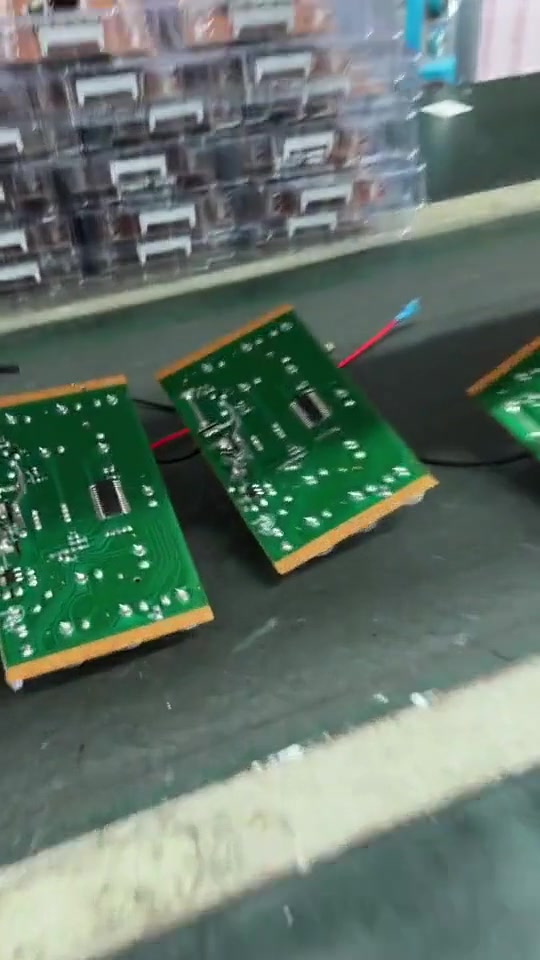
Record the PCB part number and revision, schematic, layout, clock sources, power supply, relay or switching devices, display, cables, ports, filters, shielding and operating modes. A digital display, switching supply or microcontroller can affect EMC and FCC questions even when the appliance has no Wi-Fi or Bluetooth. A wireless variant requires a separate module, antenna, firmware, host-integration, label and user-information route.
Firmware should have a controlled version and owner. List every function that can alter power, heat, motor speed, standby behavior or protection. A production PCB substitution should trigger technical and evidence review before use. A component FCC ID or module grant must not be copied onto a finished product without confirming the exact authorization conditions and host obligations.
Identify components whose substitution can change electrical, thermal, mechanical, food-contact or radio performance. Depending on the product, these can include heater, motor, thermal fuse, thermostat, sensor, relay, capacitor, power supply, transformer, fuse, switch, cord set, plug, insulation, enclosure resin, PCB, battery, charger, fan guard, jar, blade, coating and water-contact parts. Record manufacturer, part number, rating and approved alternative where evidence supports one.
A quotation should state whether the selected component route is included. If a recognized component, independent test or buyer-specified listing is required, its commercial and timing impact should be confirmed before the purchase order. Do not accept an “equivalent” substitution based only on voltage, wattage or physical size. Equivalence must be reviewed against function, risk, evidence and the approved sample.
Confirms size, appearance, basic functions and whether the catalog direction is worth developing. It is not the final U.S. evidence sample.
Uses the proposed 120V/60Hz architecture and controlled components for functional, thermal, electrical and mechanical review.
Matches the version submitted for applicable laboratory, certification, FCC, retailer or buyer assessment.
Connects final construction, approved artwork, accessories and packing to production and pre-shipment inspection.
Checks that purchasing, assembly, routine tests, traceability and packing reproduce the released version.
Factory engineering can provide legitimate specifications, component records, drawings, samples, test support, labels, manuals, packing and production evidence for the actual order. That evidence does not by itself decide every U.S. legal or channel requirement. The U.S. importer and qualified U.S. parties determine applicable CPSC rules and certificate or eFiling scope, FCC authorization, DOE coverage, electrical listing, customs, state requirements, retailer conditions and post-market responsibilities.
Use the USA Small Appliance Import Compliance and Factory Evidence Handoff after the version definition is stable. Do not ask a laboratory to test an unresolved model, and do not ask the factory to print marks, responsible-party details or claims that the buyer has not authorized. A CE mark, overseas report, component certificate or supplier declaration is not automatic U.S. finished-product acceptance.
Connect the brand, commercial model, rated label, origin marking, warnings, instructions, controls, accessories, claims, barcode, importer or responsible-party information, color box and master carton to the approved construction. Use revision numbers, approval dates and named approvers. The buyer supplies and approves accurate legal and market text; the factory executes the approved files for the order.
Do not place an NRTL mark, FCC ID, energy statement, capacity claim, food-contact claim or safety statement into artwork before the responsible owner confirms the exact basis and permission. When an electrical or component change affects the identity, reopen the artwork and evidence review. The shipped product, packaging, manual, online listing and customs description should remain consistent.
Separate catalog-product discovery from U.S. version development. Record engineering sample cost, new heater or motor work, tooling or fixture changes, PCB work, component minimums, laboratory support, certification or channel assessment, artwork, pilot production, inspection and any buyer-specified service stock. State which items are included, conditional, buyer-paid or still open. Do not hide unresolved development under a provisional unit price.
Build the schedule from requirement freeze through engineering sample, technical review, evidence assessment, final sample, artwork approval, purchase-order release, production, inspection and shipment. None of these dates alone guarantees a U.S. warehouse date. The buyer should add freight, customs and local receiving inputs. The factory should confirm production timing only after the version, components, approvals and commercial conditions are released.
Use USA120V1000. MOQ starts from 1000 PCS. Public prices are not displayed. A private quotation follows the exact model, development scope, quantity, components, evidence route, OEM files, destination and timing inputs.
No such assumption should be made. The heater or motor, current path, controls, protection, cord and evidence route require engineering review for the actual product.
No. Confirm the exact 120V/60Hz construction, component ratings, sample, functions, plug, cord, labels and evidence matched to the order.
There is no single universal answer. The importer should determine product, channel, workplace, retailer, insurer, state and local electrical requirements with qualified U.S. parties.
Not automatically. Compare every proposed change with the approved construction and reopen technical or evidence review when it can affect the basis.
Preliminary layout can be discussed, but rated information, marks, claims, warnings and model identity should not be released until their basis is approved.
MOQ starts from 1000 PCS. Development, component, color, private-label and model-combination conditions are confirmed for the actual project.
Controlled USA Version
Send the exact product, quantity, channel, electrical route and evidence questions.