Importers of Record
For companies controlling customs entry, origin marking, applicable CPSC scope, battery transport records and traceability.
USA Water Dispenser Pump Importer Project
Select one exact pump model, test it with the buyer's real bottle and hose, freeze every water-contact part, separate the low-voltage pump from its battery, USB cable and optional wall adaptor, approve English OEM files, and inspect the same order revision before shipment.
Wholesale only. MOQ starts from 1000 PCS. Public prices are not displayed.
Qualified U.S. Buyers
For companies controlling customs entry, origin marking, applicable CPSC scope, battery transport records and traceability.
For buyers defining bottle formats, sales channels, retail price position, packing and repeat-order construction.
For teams specifying shelf presentation, barcode, English instructions, replacement policy and supplier evidence.
For brand owners prepared to approve an exact sample, complete accessory set, artwork and batch inspection.
Price depends on the exact pump, battery, accessories, evidence, packing, quantity, inspection, destination and trade term.
MOQ starts from 1000 PCS. No public consumer price, retail order or one-piece shipment.
A catalog pump is a sourcing direction, not a finished U.S. import file. A decision-ready project identifies the importing company, sales states and channels, exact model, quantity, target bottle neck and cap, hose dimensions, insertion depth, intended water and use environment, battery identity, USB cable, optional wall adaptor, water-contact materials, English OEM files, origin marking, destination port, inspection scope and post-sale plan.
Yaoyuan can coordinate current samples, available specifications, supplier documents, artwork, packing, production, inspection and shipment data. The U.S. importer and qualified U.S. parties determine applicable CPSC, FCC, food-contact, battery-transport, electrical, customs, state, marketplace, retailer and consumer-information requirements. The factory does not issue U.S. approval or act as importer of record.
These published fields support comparison only. They do not prove universal bottle fit, measured flow, runtime, charging time, complete accessories, drinking-water suitability, U.S. acceptance, current stock or delivery. Confirm every field against the current sample and signed order specification.
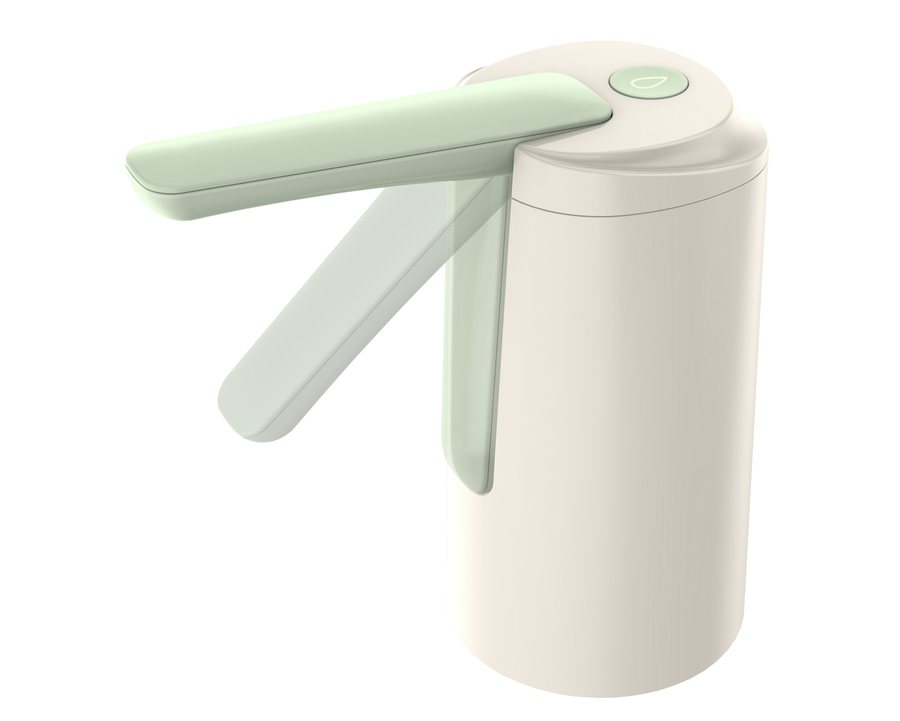
Published direction: DC5V/5W, approximately 69mm diameter by 129mm, with a 118 x 78 x 68mm color-box reference. Confirm battery, cable, hose, outlet, bottle adaptor and packing revision.
Published direction: PP, 800mAh battery, approximately 70mm diameter by 126mm and a 165 x 85 x 86mm color box. Confirm the exact cell, charging board and supplied accessories.
Published direction: 5W, PP and a 400mAh battery, with a legacy 500-piece field in the source record. Current sales policy remains MOQ starting from 1000 PCS.
Published direction: DC5V/5W, approximately 70mm diameter by 125mm, a 136 x 83 x 71mm color box and a 570 x 355 x 310mm carton reference.
Published direction: PP, 800mAh battery and no light. Confirm whether this exact appearance and function set matches the current sample before artwork approval.
Dimensions and carton fields are references, not guarantees. Recalculate the packing and freight inputs after the approved color box, accessory set, units per carton and pallet decision are frozen.
“Fits a 5-gallon bottle” is not a complete specification. Record bottle-neck outside diameter, cap construction, adaptor engagement, hose inside and outside diameter, hose length, insertion depth, pump inlet, outlet spout, flow direction, stability, leakage points and whether a bottle cap must be removed, pierced or replaced. Ask the buyer to send bottle drawings, dimensions, cap photos and physical samples when the local format is uncertain.
The verification protocol should use the actual destination bottle, water level and hose set. Check installation force, retention, tipping, leakage, start and stop behavior, incomplete priming, residual dripping and the ability to reach water near the bottle bottom. Photograph the approved fit and retain its dimensions in the order file. A successful fit on one bottle does not establish compatibility with every U.S. bottled-water format.
The pump may operate on low-voltage DC power while the rechargeable cell, charging board, cable and optional mains adaptor create separate technical and transport questions. The signed specification should identify pump motor, PCB revision, switch or display, battery manufacturer and model, chemistry, nominal voltage, capacity, cell count, protection circuit, connector, cable length and type, charging input and the exact accessory set inside each box.
If a wall adaptor is supplied, identify its 120V/60Hz input, output, plug, label, manufacturer and buyer-required electrical acceptance. Do not describe the low-voltage pump itself as a 120V appliance because a wall adaptor is included. If the order ships only with a USB cable, say so clearly and do not show an adaptor in artwork or instructions. Substitution of the battery, board, cable or adaptor must reopen affected evidence, artwork, transport and inspection checks.
PHMSA states that lithium cells and batteries offered for transportation must have passed the applicable UN Manual of Tests and Criteria, section 38.3 design tests. Its current guidance also explains that manufacturers and subsequent distributors must make a lithium battery test summary available for covered battery designs. A generic statement, unrelated report or battery capacity printed in a catalog is not the same as a traceable test summary for the exact cell or battery used in the order.
Before booking, record the cell or battery manufacturer, model, chemistry, configuration, watt-hour calculation, equipment relationship, test-summary reference, production revision, quantity, packing method and transport mode. Ask the carrier, freight forwarder and qualified dangerous-goods party to confirm classification, marks, labels, documents, packaging and acceptance for the actual route. Yaoyuan can coordinate available factory-side records; the shipper and responsible transport parties own the final shipment decision.
Create a component map for the hose, inlet connector, seals, internal pump path, outlet tube, spout, bottle adaptor and any cap touching water. For each part, record material, grade, color, supplier, drawing or part number, intended water contact, temperature, contact time, repeated-use assumption and available declaration or test report. The exterior shell material does not establish the identity or suitability of the internal water path.
FDA organizes food-contact questions around the substance, food type and conditions of use. The importer and qualified food-contact specialists should determine whether each substance is authorized for the intended use and whether available evidence matches the exact component and production revision. Do not convert one resin document into a blanket statement that the finished pump is “FDA approved.”
CPSC explains that manufacturers and importers of general-use products subject to an applicable CPSC-enforced rule requiring certification must issue a General Certificate of Conformity. For imported products, the importer is legally responsible for the GCC. Product names alone do not determine whether a certification rule applies, and this page does not state that every water dispenser pump requires a GCC.
Mandatory CPSC eFiling took effect on July 8, 2026 for imported regulated consumer products subject to CPSC certification requirements. The importer should determine exact rule scope and connect any required product certificate, product identifier, manufacturer, testing and shipment data to the same order revision. The factory can supply matching available records but cannot replace the importer's legal decision.
A basic USB-rechargeable pump can contain clocked digital circuitry. A version with a display, touch control, wireless function or separate radio module can create a different FCC route. The U.S. importer and qualified party should classify the finished configuration, determine the authorization path and responsible-party, labeling and user-information requirements, and match evidence to the production board and enclosure.
Do not assume that a module FCC ID, charging-board report or supplier declaration covers the finished product. PCB, clock, enclosure, cable, power source, firmware, antenna and module conditions can affect the analysis. Any change to the board, display, radio, cable or adaptor should trigger documented review.
UL is not one universal federal customs requirement for every bottled-water pump. OSHA's NRTL program recognizes private organizations to certify products within their scopes for relevant workplace electrical requirements. Retailers, marketplaces, insurers, institutional buyers and local authorities can separately require a recognized safety listing or another electrical-acceptance route, especially when a mains adaptor is supplied.
The buyer should state sales channels, intended use, requested mark, product or power-supply standard, certification owner, factory authorization and follow-up requirements before laboratory work or artwork begins. Never print UL, ETL or another certification mark unless the exact product, factory and label use are authorized. A report, a component mark and an active finished-product listing are different records.
Freeze the brand, controlled model, charging input, battery field, instructions, warnings, bottle-installation method, cleaning method, disposal information, included accessories, barcode, individual box and master carton as one English file set. Add compliance or responsible-party statements only after the qualified owner confirms the exact language and evidence. Packaging must show the same configuration that is actually packed.
CBP guidance explains that foreign-origin goods generally require country-of-origin marking unless an exception applies. The importer should determine classification, admissibility, marking, valuation, recordkeeping, duty and entry requirements for the exact merchandise. Keep the commercial invoice, packing list, model, battery and accessory descriptions aligned with the product, cartons and importer records.
Inspection should verify model, appearance, color, logo, battery and PCB identity, charging input, cable and adaptor set, hose, inlet, outlet, seals, bottle adaptor, materials, labels, instructions, barcode, color box, carton and quantities. Functional sampling should use the approved bottle and hose protocol and record installation, priming, pumping, stop behavior, leakage, residual dripping, charging indication and abnormal observations.
Retain the approved golden sample, signed specification, critical-component list, approved artwork, battery test-summary reference, water-contact map, inspection method and change log. A supplier change to the cell, PCB, motor, hose, seal, spout, water-path material, cable, adaptor or packaging should be disclosed before shipment and reviewed against affected evidence.
A low unit price can become expensive when oversized color boxes, weak cartons, accessory errors, battery-document gaps, rework, relabeling, storage, testing delays or rejected bookings are added. Compare product cost, OEM setup, evidence work, inspection, individual packing, master carton, palletization, inland transport, dangerous-goods handling where applicable, freight, insurance, duty, brokerage, destination charges, storage, fulfillment, returns and service allowance.
Build the schedule backward from the required U.S. warehouse-ready date. Include model confirmation, destination bottle sampling, battery and accessory verification, evidence review, artwork, sample approval, production, inspection, booking, export handling, transit, entry, inland delivery and contingency. No public page can guarantee current production capacity, booking, customs release, delivery date or sales result.
Include buyer company, importer of record, sales states and channels, exact pump model, quantity, target bottle and cap dimensions, hose specification, intended use, pump and PCB revision, battery manufacturer and model, chemistry and capacity, charging input, cable, optional wall adaptor, water-contact component questions, CPSC and eFiling decision, FCC configuration, requested electrical or channel acceptance, English OEM scope, origin marking, inspection method, required warehouse-ready date, destination port and trade term.
Use inquiry code USAPUMP1000. Yaoyuan will respond against the confirmed project instead of publishing a misleading generic price. Wholesale only; MOQ starts from 1000 PCS.
Private Wholesale Inquiry
Send one exact pump, quantity, importer and channel, bottle and hose dimensions, battery and charging set, English OEM files, requested evidence, inspection, required warehouse-ready date, destination port and trade term. Use USAPUMP1000.
Version Evidence Before Quotation
Identify the exact model or catalog reference first. Yaoyuan can organize available sample, specification, packing and inspection evidence for that controlled version. The importer and qualified destination-market parties remain responsible for confirming applicable market-access, customs and channel requirements. This review does not promise certification, stock, delivery timing, demand, sales or profit.