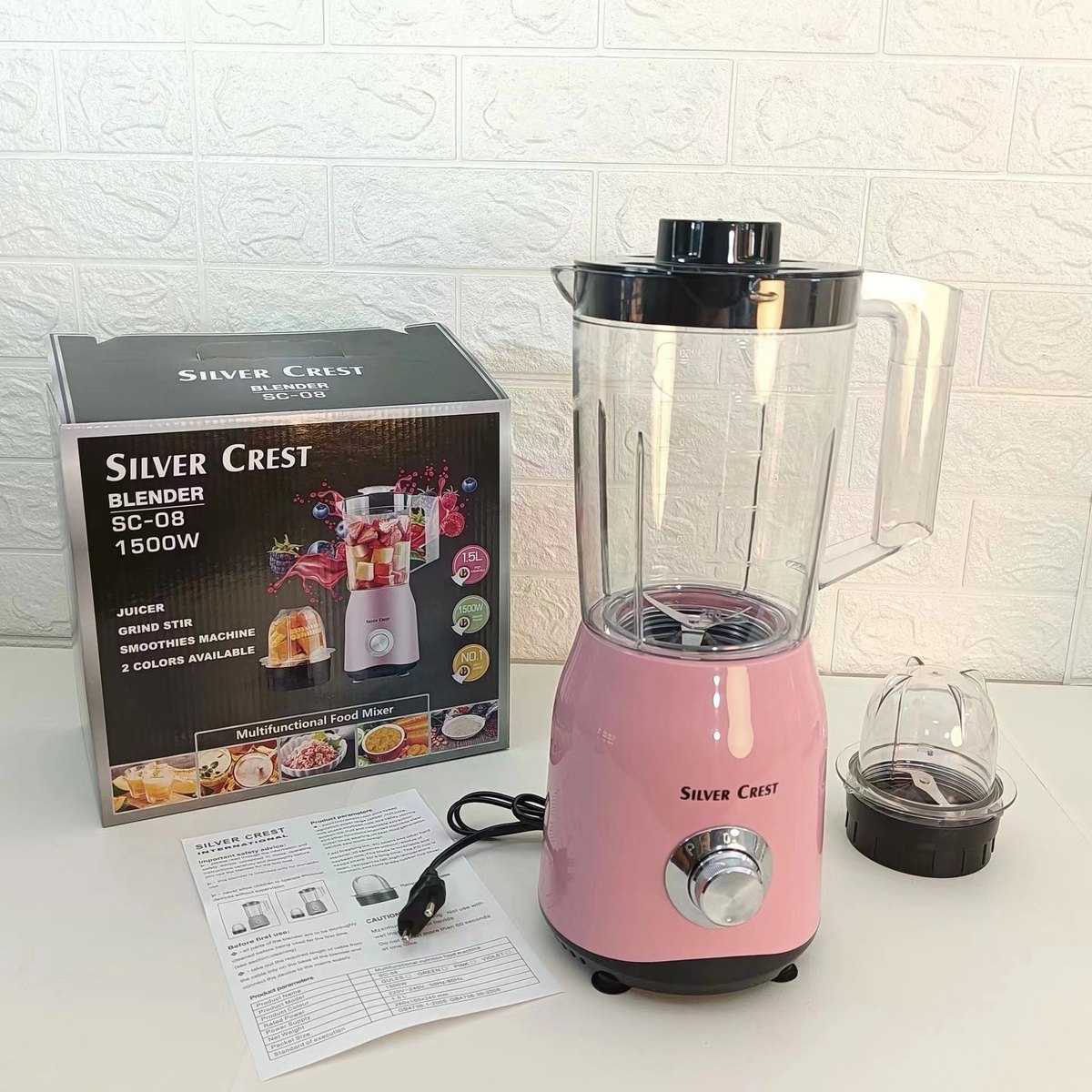
Direct Answer
Before bulk production, an importer should approve a dated blender specification sheet and a matching sample record. The file should identify the model, country version, rated voltage and frequency, plug, jar and blade assembly, controls, accessories, labels, artwork, color box, master carton and inspection criteria. Any later change should receive a new revision number and written buyer approval. Public catalog data is useful for comparison, but it is not a substitute for the final signed order specification.
Why a catalog reference is only the starting point
Blenders that look similar can have different motors, jar materials, blade assemblies, couplers, lids, plugs, control panels and packing units. A quotation based only on a photo can therefore describe a different commercial unit from the one expected by the buyer. Even a familiar model family may contain market-specific versions. The specification process turns a general product direction into an order version that production, inspection and receiving teams can verify.
This distinction also protects both sides during price comparison. If two offers do not use the same jar, motor direction, accessories, plug, labels and packing, a lower unit price does not necessarily represent a lower cost for the same product. Buyers should first normalize the specification and then compare the commercial terms.
Select
Choose a catalog direction and target sales channel.
Define
Issue a dated specification with exact confirmation fields.
Approve
Match the sample, artwork and packed accessories to the file.
Verify
Inspect production and shipment against the approved revision.
Real catalog references that can begin a specification discussion
The following data comes from published Yaoyuan Electric catalog records. It helps buyers compare product directions; it does not replace confirmation of the final order version.
| Catalog model | Published comparison data | Important approval points |
|---|---|---|
| SC-1589 Dual-Cup Blender | 2.5L, 350W, AC220-240V; published color-box and carton dimensions | Confirm both cup assemblies, lids, blade groups, couplers, plug, labels and packed quantity. |
| SC-5532 3-in-1 Blender | 3.5L, 800W, AC220-240V; published color-box and carton dimensions | List every included jar or function accessory and show its position in the approved packing. |
| BF-5042 8-in-1 Blender | 3L, 800W, AC220-240V; published material direction | Do not use "8-in-1" alone. Name and photograph each included component in the specification. |
| BR-Y66 SC Y66 Blender | 2L, 2400W, AC220-240V; stainless-steel and PC/glass option reference | Confirm the selected jar option, rated-label data, blade, control panel and final packing. |
| Y66 K Brand Y66 Blender | 2L, 2400W, AC220-240V; stainless-steel and PC/glass option reference | Separate appearance or branding direction from the approved electrical and mechanical version. |
Accuracy rule: published capacities, wattage, dimensions and material descriptions remain catalog references until the selected model, sample and order specification are confirmed. Missing or abbreviated catalog fields should be treated as questions, not assumptions.
What the final blender specification should control
Identity and electrical version
Record the exact model code, buyer SKU, product name, target country, rated voltage, frequency, rated power, plug and cord details. The rating label, color box and manual should use the same approved identity.
Jar and food-contact assembly
Define jar quantity, capacity reference, material, lid, cap, blade assembly, sealing parts and coupler. Where an option exists, state the selected option instead of listing several alternatives.
Controls and appearance
Approve the switch or control panel, speed positions, printed words, body color, trim, logo location and visible finish. Use annotated photos when a text description could be misunderstood.
Accessories and packed unit
List every jar, grinder cup, pusher, measuring cap, spare seal, tool and document included in one retail box. The sample record and packing inspection should use the same list.
Labels, manual and artwork
Control rating-label content, warning labels, barcode, manual language, color-box artwork and carton marks by revision. Certification marks should appear only when the selected model and market documentation support them.
Color box and master carton
Confirm box dimensions, packed quantity, gross and net weight, carton dimensions, internal protection and sealing method. Loading calculations should use the approved packed unit, not an earlier catalog estimate.
How to approve the sample without creating a false promise
A sample should be identified by model, configuration, date and revision. The approval record should state what the sample proves and what remains subject to final confirmation. For example, an appearance sample may confirm color and artwork while the market plug or final manual remains pending. A complete approval should include photographs of the product, rating label, plug, control panel, accessories, color box and open packing arrangement.
The approved sample should not be silently replaced after a price or component discussion. If a requested change affects function, appearance, packing, compliance documentation or cost, the supplier should issue a revised specification. The buyer can then approve the revision before it becomes the production reference.
Connect the approved version to production and inspection
The signed specification should follow the order into pilot production, mass production, pre-shipment inspection and destination receiving. Inspectors need measurable checks: model identity, quantity, electrical label, plug, jar and blade fit, controls, leakage observation where applicable, accessories, appearance and packing. A generic instruction such as "check quality" does not define which version should pass.
For repeat orders, compare the new order with the retained approval record. If the buyer changes the plug, artwork, accessories or carton, create a new revision rather than editing the old file without traceability. This keeps claim discussions focused on evidence and helps both parties distinguish an approved commercial change from an unintended substitution.
Buyer checklist before production release
- Exact factory model code and buyer SKU are aligned.
- Country, voltage, frequency, plug and cord are confirmed.
- Jar, blade, lid, coupler and every accessory are listed.
- Rating label, warnings, manual, barcode and artwork use controlled revisions.
- Color box, carton, internal protection, packed quantity and weights are confirmed.
- Approved sample photographs match the written specification.
- Open points are marked pending instead of being guessed.
- Inspection criteria refer to the same approved revision.
Continue the blender purchase route
Private B2B quotation
Send the model and market version you need to approve
Include model, quantity, country, plug, voltage, packing request, destination port and OEM requirements. Wholesale only; MOQ starts from 1000 PCS.