Direct Answer for Importers
An OEM blender packing file should identify the approved model, jar and accessory set; use verified product claims; show the correct plug, voltage and market information; include the required manual, barcode and carton mark; and define how the product is protected inside the box. Importers should approve the final artwork version and one complete packing reference before mass production. Packing is not only decoration: an error can affect retail acceptance, warehouse identification, customs documents, dealer delivery and after-sales handling.
Define the Complete Packing System
One retail blender can involve a protective bag or film, molded protection, retail box, manual, warranty material, labels and a master carton. Accessories may have their own bags or fixed positions. The buyer should confirm the whole system, not approve only the color-box front panel.
The dated blender protective-bag handling clip shows protective-bag application and placement at an assembly workstation only. It does not establish the exact model, approved packing revision, final packing, a passed inspection, completed quantity, output rate, capacity or shipment release; match it to the buyer-approved packing file and order record.
The packing specification should state what is included in each unit and how many retail units enter one master carton. This becomes the reference for quotation, artwork, packing trial, inspection and warehouse receiving.
Choose Neutral or Private-Label Packing Deliberately
Neutral packing can suit a buyer who is validating an unfamiliar model or selling through a channel that does not yet require a branded shelf presentation. Private-label packing is more appropriate when the buyer has a brand identity, retail plan, approved claims and repeat-order direction.
OEM packing adds value only when it is controlled. Printing a logo on an unverified box does not create a strong brand. Product identity, visual consistency, correct information and reliable repeat supply matter more than decorative complexity.
Lock the Product Configuration Before Artwork
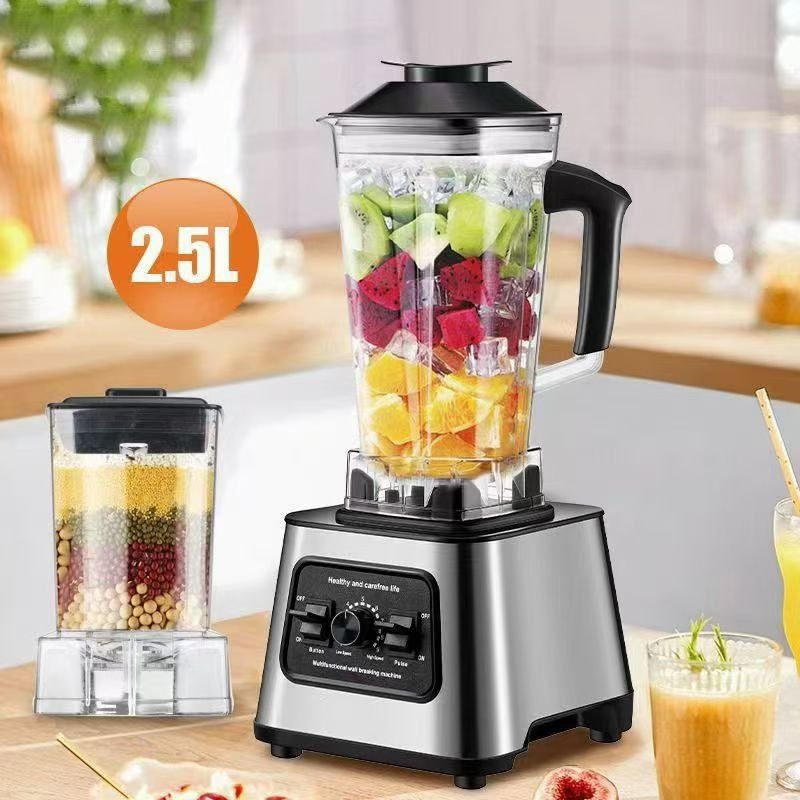
Do not design the box around a temporary sample or a similar catalog photo. Confirm the exact motor base, jar, lid, handle, controls, color, blade and accessory set first. If the physical set changes after artwork is released, images, feature descriptions, packing dimensions and model codes may become wrong.
Use one approved model code across the purchase order, product label, manual, retail box, master carton and inspection record. Clear identity reduces the risk of mixing two similar blender sets during packing or warehouse delivery.
Use Accurate Product Images and Claims
Box images should represent the supplied product. Do not show a glass jar when the order uses plastic, an accessory that is not included or a control panel from another model. Capacity, function and material descriptions should match the approved specification.
Performance statements should be supportable. Avoid adding market language or claims only because a competitor uses them. The buyer is responsible for confirming local advertising and labeling requirements; the factory can align production artwork with the approved direction but should not invent legal claims.
Confirm Plug, Voltage and Rating Information
The retail box and manual should correspond to the actual market configuration. EU, UK, US and South Africa plug versions may need different images, text or labels. Voltage and frequency must match the product rating direction.
If one order includes several markets, identify each packing version and quantity separately. Do not place mixed voltage or plug versions under an identical carton mark. Review the blender voltage and plug guide before releasing artwork.
Prepare Manual Language for Real Users
The manual should identify product parts, assembly, intended operation, cleaning direction, important warnings and the supplied accessories. The language set should fit the destination market and sales channel. A translated manual should be reviewed for meaning, not accepted only because every paragraph has been converted into another language.
Keep the manual version linked to the product version. If the jar, controls, accessory set or function changes, review whether the manual also needs revision.
Control Barcodes and Retail Labels
The buyer should supply or approve the final barcode data and confirm whether each SKU needs a separate code. A different color, jar set or plug version may require different retail identity. Barcodes should be placed where they remain readable and are not covered by shipping labels.
Do not reuse a code from another product merely to complete artwork quickly. The warehouse, dealer or supermarket system may receive the wrong item identity even when the physical cartons arrive correctly.
Make the Accessory Packing List Visible
A standard jar, grinding cup, chopper cup, spare seal or other accessory changes the final set. The packing list should state the included items, and the internal arrangement should give each component a defined position. Loose accessories can scratch the jar or housing during transport.
For dual-cup and multi-function blender sets, use a visual reference or packing diagram so workers and inspectors can verify the complete set consistently.
Design Internal Protection Around the Actual Product
The jar, handle, lid, motor base and accessories have different impact and movement risks. Internal protection should reduce contact between visible surfaces and prevent the heavy parts from shifting inside the retail box. Cable and plug placement should not mark the housing or damage printed material.
A packing trial should use the production-intended product and accessories. A protection insert that fits a sample without all accessories may fail when the complete set is packed.
Balance Retail Presentation with Shipping Efficiency
A larger retail box may look more prominent but uses more container and warehouse space. A very tight box may reduce volume but make packing difficult or weaken protection. The final dimensions should balance shelf presentation, product fit, carton strength and loading efficiency.
Importers should obtain retail-box and master-carton dimensions after the complete packing trial. Do not calculate freight from an early artwork size when internal protection has not been confirmed.
Specify the Master Carton and Shipping Mark
The master carton should identify the consignee or approved mark, product or model code, quantity, carton sequence where required, gross and net weight direction, dimensions and handling symbols. The actual requirements depend on the buyer and shipment.
Carton marks must remain consistent with the packing list and warehouse plan. In a mixed container, clear category and model identification helps the destination team count and sort goods before dealer delivery.
Approve Artwork in a Controlled Sequence
A practical sequence is: buyer sends brand assets and required information; factory prepares or adapts the layout; buyer reviews text, images and codes; both sides record corrections; buyer approves the final version; and the approved file receives a clear date or version reference.
Approval messages such as "looks fine" can become ambiguous after several revisions. Identify the exact final file. Any later change should create a new version and show what changed.
Review a Physical or Complete Packing Reference
A screen proof helps check layout and text but cannot fully confirm print color, material, box fit or internal arrangement. Depending on order risk and timing, the buyer and factory can discuss a printed proof, physical packing sample, detailed photo set or video of the complete packed unit.
The approved packing reference should be connected to the golden sample or written order specification so production and inspection use the same baseline.
Run the First Packing Trial Before Full Output
The first production units should be packed completely and checked for product fit, accessory count, manual, labels, barcode, box orientation and master-carton arrangement. Packing workers need a clear method before the line reaches normal speed.
If the first trial finds movement, pressure, missing space or confusing accessory positions, correct the packing method before the full quantity is boxed. The pilot production guide explains how early output can be reviewed before volume increases.
Carry Packing Risks into Pre-Shipment Inspection
Inspection should verify the approved artwork version, model identity, barcode, manual, accessory count, internal protection, box condition and carton mark. Random cartons should represent the actual shipment allocation, including different colors or market versions where applicable.
Inspectors should record differences precisely. A wrong manual or barcode may affect the whole batch even when the blender functions normally. Use the pre-shipment inspection guide to connect packing approval with shipment release.
Plan Remaining Printed Materials for Repeat Orders
Printing quantities and production use may leave approved boxes, manuals or labels after an order. The buyer and factory should record the remaining quantity and decide whether those materials can be used for the next unchanged order.
If the model, contact information, claims, barcode or regulatory direction changes, old printed materials may no longer be suitable. This is another reason to avoid unnecessary box versions during a first order.
OEM Blender Packing Approval Checklist
- Exact product, jar and accessory set locked before design
- Brand name, logo and model code confirmed
- Product images and claims match the supplied unit
- Plug, voltage and rating information match the market version
- Manual language and operating content reviewed
- Barcode and SKU identity approved by the buyer
- Internal protection checked with the complete set
- Retail-box and master-carton dimensions confirmed
- Carton mark matches shipment and warehouse requirements
- Final artwork file and revision clearly recorded
- Complete packing reference approved before mass packing
- Packing checkpoints included in pre-shipment inspection
Packaging Should Protect the Brand and the Shipment
Good OEM packing lets the importer identify, sell, transport and support the correct product. It prevents avoidable disputes because the box, manual, barcode, accessories and carton all describe the same approved SKU. The result is more valuable than a visually complex box that production cannot repeat reliably.
Zhongshan Yaoyuan Electric Appliance Co., Ltd. supports neutral packing, OEM logo, custom color box, manual, barcode and carton-mark discussion according to the selected model and order quantity. MOQ starts from 1000 PCS. Wholesale only. Send model, quantity, country, plug, voltage, brand assets, packing requirements and destination port for review.