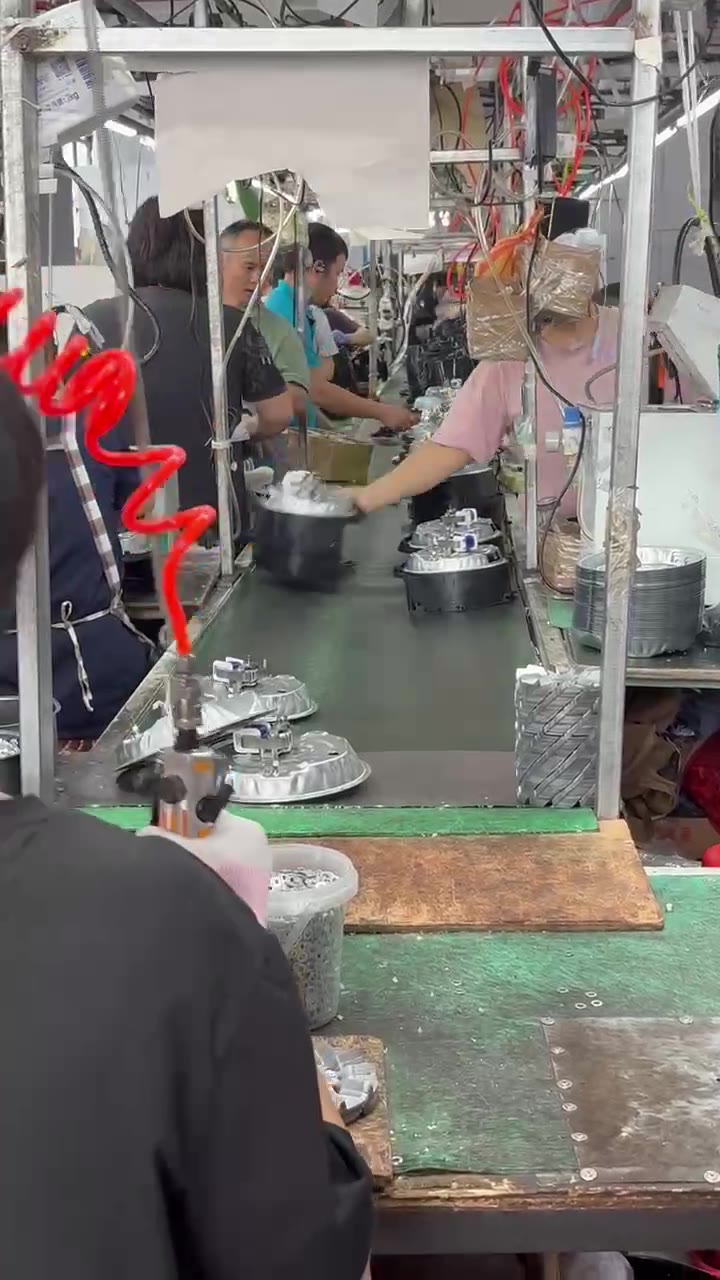
Direct Answer for Importers
Pilot production is a controlled early run used to verify that an approved appliance can be reproduced with the intended materials, production setup, inspection method and packing. The factory should review first-off units against the golden sample and order specification, record any difference, correct the cause and define the release decision. The required scope depends on model novelty, OEM changes, component risk, order quantity and previous production history.
A showroom sample can be assembled carefully by experienced technicians. Full production is different. Materials arrive in batches, workers follow stations, tools repeat operations and finished goods move through testing and packing. A small mismatch in drawings, jigs, labels, accessories or work instructions can be repeated across hundreds of units if the first production output is not checked.
Zhongshan Yaoyuan Electric Appliance Co., Ltd. treats early production review as a practical risk-control step, not a marketing ceremony. The purpose is to find differences while the affected quantity is still limited and to give production a clear release standard for air fryers, blenders, electric fans, rice cookers, ovens, ceramic hobs, water dispenser pumps and related small appliances.
Decide When a Pilot Run Is Necessary
A pilot run is especially useful for a new platform, a first OEM order, a new mold or tooling direction, major artwork and packing changes, a critical component substitution, a replacement model or a product entering a market with new compliance requirements. A stable repeat order with unchanged materials and packing may need a simpler first-off confirmation instead of a separate extended pilot.
The decision should match risk. Requiring the same process for every order wastes time, while skipping early validation on a changed product transfers preventable risk into the full batch.
Complete the Production Input Before the Line Starts
The order sheet, approved sample, product specification, component direction, plug, voltage, rating label, logo, control panel, accessories, manual, color box and carton mark should be released in one controlled version. Production should not begin while different departments hold conflicting files.
If an item remains open, record the owner and deadline. A missing barcode or manual may look like a packing problem, but it can stop the finished goods from being released or create relabeling cost later.
Confirm Material Identity and Readiness
The early run should use the intended production materials, not convenient substitutes from the sample room. Critical parts, visible plastics, cords, plugs, labels, accessories and packing components should match the approved direction. If any temporary material is used, it must be identified and excluded from buyer approval of the final production configuration.
Material readiness also affects timing. A pilot assembled from incomplete materials may prove basic function but cannot validate the complete retail product or packing process.
Verify Line Setup and Work Instructions
Production tools, jigs, test equipment, assembly sequence and work instructions should be ready before the first units move through the line. Operators need a clear method for parts that can be installed in the wrong direction, connectors that require full engagement, screws with controlled positions and safety functions that require testing.
The goal is not to make one perfect unit through special attention. The goal is to confirm that the normal line process can repeatedly produce the approved result.
Inspect the First-Off Units Against the Approved Baseline
First-off units should be compared with the golden sample and written order. Review model identity, appearance, assembly fit, control response, operating sequence, plug, voltage, labels, accessories and packing direction. Product-specific checks may include heating, speed, noise, interlock, display, charging or water flow.
A difference should be described by characteristic, location and result. Statements such as "almost the same" do not help production correct a process or help the buyer decide whether the difference is acceptable.
Check Function Under Normal User Conditions
First production testing should reflect normal customer operation. Confirm startup, controls, primary function, protection direction and basic user handling. Where relevant, test with the correct jar, basket, drawer, blade, inner pot, bottle adapter or accessory installed.
Short functional checks cannot replace certification tests or long-term reliability validation. They confirm that production setup and assembly have not created an immediate deviation from the approved product.
Run a Complete Packing Trial
Place the actual product, accessories, protective materials, manual and retail box into the approved master carton arrangement. Confirm fit, carton quantity, barcode, carton mark, gross weight direction and handling symbols. Check whether the packed product can move excessively or whether accessories can damage visible surfaces.
A packing trial also verifies operational details: workers can identify each accessory, the manual is not omitted, labels are readable and the carton can be closed without forcing the product.
Review Process Stability, Not Only One Good Unit
One accepted unit may hide a process problem. Review a practical number of consecutive units for repeated issues such as inconsistent gap, loose connector, label position, control response, noise, surface mark or missing accessory. The sample size should reflect the product and risk; it is not automatically the same for every order.
If results vary widely, production should improve the process before increasing speed. A stable average is more valuable than one specially selected display unit.
Separate Cosmetic, Functional and Safety Findings
Findings should be classified by impact. A minor appearance difference may require a limit sample or process adjustment. A functional failure may require assembly correction and retesting. A safety-related difference can block production release until the cause and compliance impact are understood.
This classification prevents teams from spending equal time on unequal risks and gives the importer a clearer picture of what has changed.
Correct the Cause Before Rechecking
Removing a defective unit does not correct the process. Identify whether the cause belongs to material, tooling, instruction, operator method, test setup, artwork version or packing arrangement. Apply the correction, produce new units and verify the affected characteristic again.
The record should connect the finding, cause, action and verification result. This becomes useful evidence if the same issue appears during pre-shipment inspection or a later repeat order.
Use a Clear Release Decision
The early run should end with one of several decisions: approved for full production, approved with a documented minor condition, recheck required after correction, or production blocked. The decision should identify the applicable model, version, date and first released batch.
Silence should not be treated as approval when a material difference remains open. Production quantity should increase only after the responsible team understands the status.
Keep the First Approved Batch Traceable
Record the production date, batch reference and any approved revision. If the pilot units are included in the shipment, confirm that they meet the released standard. Units produced before a correction should be separated, reworked or excluded according to the actual finding.
Traceability helps later feedback. If dealers report a problem, the importer can determine whether it belongs to the pilot stage, first released batch or a later production change.
Update the Pre-Shipment Inspection Plan
Any issue found during pilot production should become an inspection focus. If the early run found label position, accessory count, noise, drawer fit or carton movement, the pre-shipment checklist should verify that the correction remained effective in the full batch.
This link between production evidence and final inspection is stronger than using a generic checklist that ignores the actual risks of the order.
Protect Mixed Container Timing
A delayed pilot for one category can become the critical path for a mixed container. The buyer and factory should identify the affected quantity, correction time and loading impact early. Options may include adjusting model allocation, producing another approved category first or changing the loading sequence.
The commercial decision should protect the market plan, not only the factory schedule. Removing a hero model to save a loading date may weaken the buyer's launch after arrival.
Use Evidence That the Buyer Can Review
Depending on the project, useful evidence may include dated first-off photos, short function videos, packing trial photos, an issue list, correction evidence and the release status. The buyer does not need every internal factory document, but should receive enough information to understand material differences and important decisions.
Evidence should be organized by model and version. A large folder of unlabeled images creates activity without accountability.
What Buyers Should Send Before Pilot Production
Send product category, model, quantity, country, plug, voltage, approved sample status, OEM artwork status, packing requirement, critical characteristics, inspection requirement and required shipment date. Identify whether this is a new model, replacement model, changed model or stable repeat order.
The factory can then discuss whether a separate pilot, first-off approval or normal production-start check fits the actual order.
Pilot Production Release Checklist
- Approved model, sample, specification and artwork version released
- Production materials match the intended bulk configuration
- Line tools, test equipment and work instructions are ready
- First-off units compared with physical and written references
- Normal function, market configuration and accessories checked
- Complete retail and master-carton packing trial performed
- Repeated units reviewed for process stability
- Findings classified by commercial, functional and safety impact
- Correction and recheck completed before release
- Released version, batch and inspection focus recorded
Why Early Production Approval Builds Trust
Pilot production gives both sides a controlled point between sample approval and full production. It allows the factory to prove that the normal process can reproduce the approved product and gives the importer evidence that important differences were addressed before they multiplied across the order.
Yaoyuan Electric supports pilot and first-off discussions according to the actual model, change level and order agreement. MOQ starts from 1000 PCS. Wholesale only. Production release control complements approved samples, written specifications, component traceability and pre-shipment inspection.