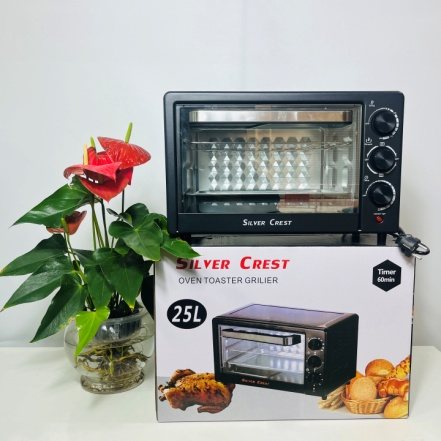
Direct Answer
Before bulk production, approve one exact oven-family sample and dated specification. Record external and usable cavity dimensions, top and bottom heater arrangement, control functions, timer and temperature direction, door and glass construction, rack and tray set, cord and plug, rating label, artwork, protection and inspection criteria. Treat ovens, steamers and combination breakfast machines as separate functional products.
Why a catalog reference is only the starting point
Two ovens with the same nominal liters may have different usable cavity geometry, heater placement, insulation, door seal, thermostat behavior, controls and accessory positions. These differences affect loading, cooking use, shelf presentation, packing risk and after-sales exposure.
Combination products require extra clarity. A breakfast machine may combine oven, hot plate and coffee functions with different simultaneous-load rules. An electric steamer uses stacked food-contact vessels and a different heating route. Neither should inherit oven capacity, temperature or accessory claims.
Select
Choose one oven, breakfast-machine or steamer catalog record.
Define
Freeze cavity, heating, controls, door, accessories and electrical version.
Operate
Approve a documented functional sample using buyer-agreed conditions.
Inspect
Verify production, glass protection, accessories and carton against revision.
Real catalog records that can begin the approval discussion
These Yaoyuan catalog records provide model-discovery evidence. They do not replace confirmation of the current sample, final order version and destination-market requirements.
| Catalog route | What the record establishes | What the buyer must approve |
|---|---|---|
| 13L Oven (P72) | Compact oven catalog direction without a published model code | Confirm current identity, cavity, heater arrangement, controls, door, rack and tray set before quotation. |
| 25L Oven (P74) | Mid-capacity oven catalog direction | Approve usable cavity, heater positions, timer and temperature controls, door, accessories, plug and packed dimensions. |
| 55L Oven (P77) | Large-capacity oven catalog direction | Do not infer loading or performance from liters alone. Confirm packed unit, weights, glass protection, shelves and heater configuration. |
| SC-206 (P78) | Named combination breakfast-machine route | List every function, control, vessel and accessory and define whether simultaneous operation is permitted for the approved electrical version. |
Accuracy rule: missing fields remain open questions. Product photographs, names and published values must not be expanded into unsupported claims.
What the final order specification should control
Cavity and heater arrangement
Record external size, usable cavity reference, rack positions, top and bottom heater count or arrangement, insulation direction and any convection or rotisserie feature only when present on the approved sample.
Door, glass and enclosure
Approve glass panes, door opening and closing, handle, hinges, seal or gaps, body panels, feet, ventilation and visible finish. Define glass protection in the color box and carton.
Controls and operating version
Define temperature and timer direction, function selector, indicators, control sequence, thermostat observations and shutdown behavior. Printed values should match the approved sample and manual.
Racks, trays and accessories
Photograph and list each rack, tray, crumb tray, handle, rotisserie part, steamer vessel, coffee vessel or other included component. Generic product names do not confirm the accessory BOM.
Electrical and combined load
Confirm voltage, frequency, rated input, plug, cord, grounding direction and rating label. For combination products, document permitted individual or simultaneous function use rather than assuming total load.
Packing and container planning
Use approved product and packed dimensions, internal protection, accessory placement, packed quantity, weights and carton marks for logistics. Catalog loading figures remain references until the final packed unit is approved.
Approve a functional sample with a defined load and method
The buyer can define a practical sample protocol based on the intended channel: preheat direction, control settings, load, rack position, observation time, door operation and post-test condition. Record what the sample demonstrated without converting one cooking observation into a universal time or temperature guarantee.
A breakfast machine should be reviewed by function and by any authorized combination of functions. A steamer needs its own vessel, water, steam, control and food-contact checks. If a heater, thermostat, PCB, door, glass or accessory set changes, determine whether the sample approval must be repeated.
Inspection should match the approved cavity, heating and accessory BOM
Inspection can verify identity, quantity, rating label, plug and cord, controls, door, glass, body, racks, trays, accessory count, functional sampling and packing. Glass and door protection deserve explicit checks because transport damage can erase the apparent saving from a weaker carton.
For repeat orders, retain the approved sample, specification, accessory photographs and packing layout. A later cost or component discussion should create a new traceable revision rather than silently changing the reference unit.
Continue the controlled sourcing plan
Private B2B quotation
Send one exact product and market version
Include the catalog route or model, quantity, destination country, plug and voltage, OEM scope, packing, destination port and trade term. Wholesale only; MOQ starts from 1000 PCS.