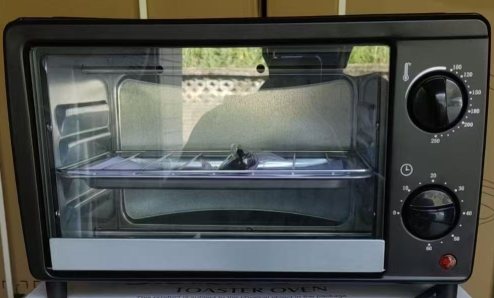
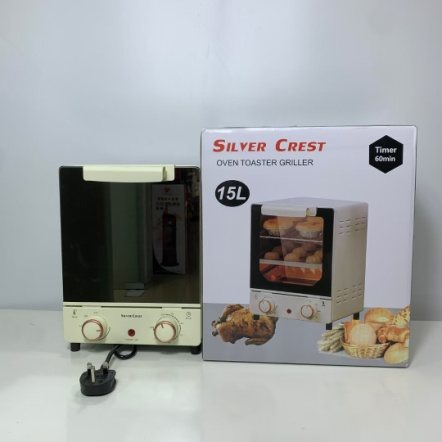
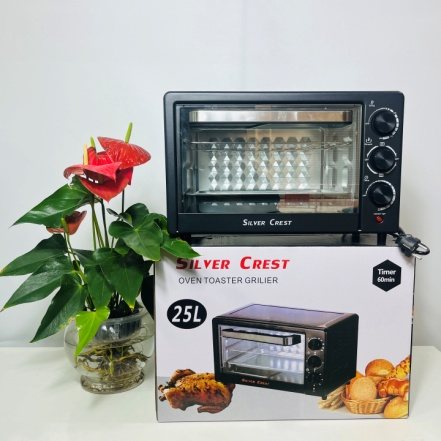
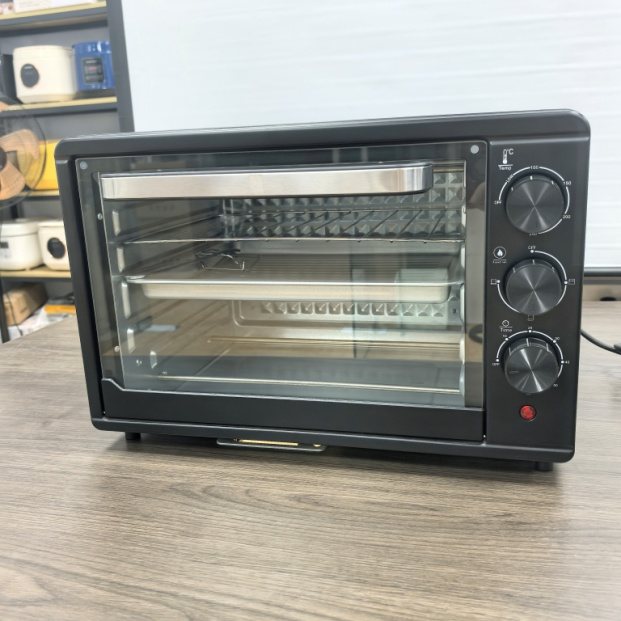
Why capacity matters for electric oven wholesale orders
Electric oven sourcing often fails when the shortlist is built from nominal capacity and front appearance alone. Importers should first define the use case: countertop space, intended food load, channel, expected accessory set, control preference, service plan and destination electrical requirements. The factory can then compare only catalog routes that can be supported by current evidence.
P72 and P73 have very limited public records. Their 13L and 15L wording is part of the catalog name, while wattage, voltage, material, dimensions, loading, functions and included accessories are not published. P75 and P76 similarly publish a capacity name and 725-unit 40HQ loading, but not the rest of the purchase specification. Missing fields cannot be copied from P74 or P77.
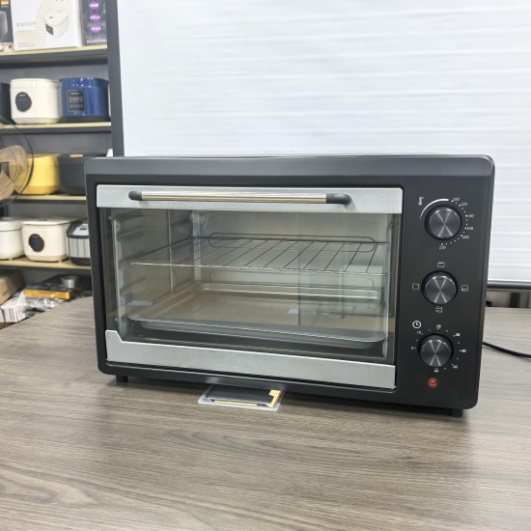
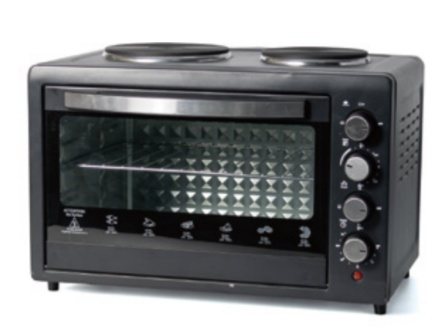
P74 and P77 provide more comparison inputs. P74 lists 25L, 2400W, AC220-240V, stainless steel plus glass and 1,700-unit 40HQ loading. P77 lists 55L, the same published input, voltage and material fields, and 756-unit 40HQ loading. These facts do not prove identical controls, heaters, accessories, test results or current order configuration.
A comparable quotation should identify the current sample and included parts. Confirm cavity and exterior measurements, shelf positions, heater arrangement, control behavior, door closure, glass, cable, plug, label, manual, inner protection and carton. Record what remains open rather than allowing the quotation to hide uncertainty.
Electric Oven Sample and Specification Gate
Approve an electric oven route only after the following fields are tied to one current sample:
- P72, P73, P74, P75, P76 or P77 catalog identity
- Nominal capacity wording plus measured internal and external dimensions
- Heater layout, control architecture, door, glass, ventilation and feet
- Exact tray, rack, pan, handle or other included accessory list
- Rated input, voltage, frequency where applicable, cable, plug and label
- Buyer-defined load and functional test with recorded acceptance criteria
- Manual, artwork, supported claims, packing and master-carton marks
- Inspection checklist, packed measurements, loading recalculation and change control
Do Not Fill Sparse Records by Analogy
P72, P73, P75 and P76 do not publish the same specification fields as P74 and P77. A similar cabinet or capacity range is not evidence that wattage, voltage, material, accessories or functions match.
- No borrowed wattage
- No borrowed voltage
- No borrowed accessory set
- No borrowed certificate
Cavity and Accessory Verification
Nominal liters do not fully describe usable space. Measure the current cavity and confirm the buyer's tray, rack and cookware test. Document included accessories because they affect use, packing, cost and after-sales expectations.
- Usable dimensions
- Shelf positions
- Accessory list
- Buyer test load
Repeat-Order Control
Retain the approved sample, specification, artwork and packing as the repeat-order baseline. Any heater, control, door, glass, cable, plug, label, accessory or carton change should be disclosed before the next production release.
- Retained sample
- Revision code
- Component-change notice
- Re-approval trigger
Complete Oven, Breakfast Maker or Steamer RFQ
A useful request identifies the catalog route or product URL, quantity, destination country and port, buyer channel, intended use, electrical version, included accessories, packing, OEM scope, model-specific evidence and inspection expectation. Public prices are not shown because the exact order basis must be defined first.
- Catalog route, model or controlled temporary reference
- Quantity, with MOQ starting from 1000 PCS
- Country, buyer type, channel and destination port
- Cooking task, load, usable cavity or vessel and accessory expectation
- Plug, voltage, frequency where applicable and label language
- Neutral packing, factory box or OEM artwork requirement
- Current sample, document, inspection and change-control expectations