Importers and Distributors
Companies able to identify the importing entity, destination states, channel, intended beverage tasks, Portuguese file owner, battery-document owner, service route and replenishment process.
Brazil Portable Beverage Appliance Partnership
Build a controlled Brazilian portable blender cup program from five real catalog models. Define the destination states, channel, beverage task and commercial role first; then freeze one model, usable fill, cup and blade-base assembly, sealing method, battery, charging package, Portuguese files, transport evidence, inspection and repeat-order scorecard.
Wholesale only. MOQ starts from 1000 PCS. No public prices, retail orders or one-piece orders.
Direct Buyer Answer
No. Each model needs its own cup, lid, gasket, blade base, lock, usable-fill test, installed battery, charging package, food-contact map, Portuguese files and inspection record. Images can support shortlisting but cannot prove leakage, blending result, transport evidence or conformity. The Brazil importer contributes channel and destination decisions; Yaoyuan coordinates current samples, component questions, OEM packing and production evidence. MOQ starts from 1000 PCS, with a private quotation for the selected controlled version.
Buyer Qualification
Companies able to identify the importing entity, destination states, channel, intended beverage tasks, Portuguese file owner, battery-document owner, service route and replenishment process.
Teams that need a shelf-ready SKU with controlled cup, lid, blade base, cable, barcode, Portuguese instructions, unit box, master carton and repeat delivery.
Buyers prepared to approve one exact housing, capacity, sealed assembly, electrical construction, artwork revision, representative test and inspection standard.
Partners willing to exchange channel, competitor, target-position, landed-cost, service and sell-through evidence so both sides can improve the next order instead of negotiating one isolated price.
Commercial Role First
Portable blender cup is a broad sales label, not a finished order specification. A supermarket shelf program, an appliance distributor range, an online bulk listing and a gift-oriented project require different visual, packing, claim, service and replenishment decisions. The Brazilian partner should first define where the unit will be sold, who demonstrates it, which prepared ingredients represent the intended use, what shelf or listing role it must fill and which objections the channel must answer.
A compact 300ml route may support a different retail role from a larger-format route. A published power number does not establish blending quality. A battery number does not establish runtime. A lifestyle image does not establish safe transport in a bag. The strategic task is to translate a channel position into one traceable SKU that the buyer can explain, inspect, receive, service and reorder.
Use a controlled 300ml option when the channel needs a compact reference, but confirm usable fill, ingredient preparation, leakage behavior and packaging before deciding that its smaller format suits the market.
Use clean, differentiated housing and cup appearance when shelf or online presentation matters. Do not let appearance replace technical identity or current evidence.
Y-LS-02 cannot be positioned by capacity until the anomalous source field is corrected and linked to the current sample. No assumed value should enter artwork or quotation.
Y-ZY03 is the only public record in this group with a 1200mAh field. Confirm cell marking, charging construction and transport file before using that distinction.
Catalog-Controlled Discovery
The current public catalog establishes five discovery routes. It does not publish a complete blade count, blade material, motor construction, connector, charging input, cable, operating sequence, safety lock, runtime, charge time, noise, leakage limit, cleaning limit, food-contact compliance, certification or Brazilian customs treatment for the full group. Missing information stays open until the current sample and written file close it.
Published source: 300ML, 30W, PP, color box 20 x 9.8 x 10.5cm and master carton 49.5 x 42 x 32.5cm. Battery, charging, blade, operating cycle and contents remain open.
Published source: 300ML, 50W, PP+PS, color box 85 x 85 x 190mm and master carton 435 x 265 x 410mm. Confirm which components correspond to PP and PS.
Published source: 300ML, 50W, product size diameter 83 x 185mm, color box 85 x 85 x 200mm and master carton 435 x 265 x 410mm. Material and battery are not published.
Published source: 75W, product size 25 x 12cm, color box 15.5 x 15.5 x 31.2cm and master carton 67 x 63.5 x 32.5cm. The capacity field reads 1200L and is not usable.
Published source: 400ml, product size 21 x 8.5, PC+PP, 1200mAh and no light. Power, box, carton, charging input and cable are not published.
Do not silently convert 1200L into 1200ml or any other value. The supplier must issue a corrected capacity specification tied to a dated current sample. The buyer should approve that correction before quotation comparison, Portuguese artwork, carton calculation, inspection or market listing.
Visible Evidence Boundary
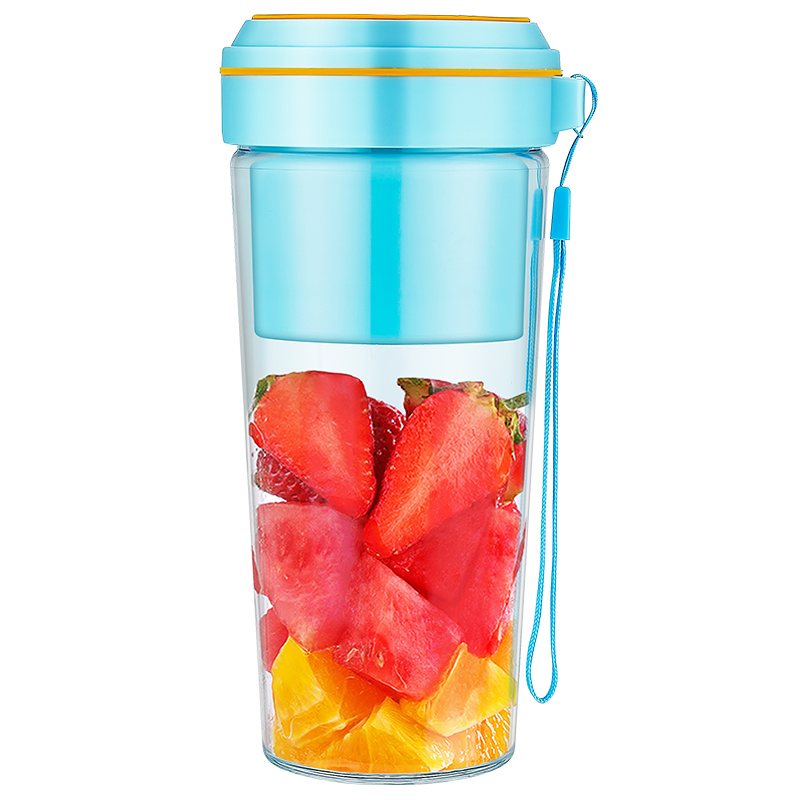
The Y-JG01 image shows a blue housing, clear cup, wrist strap and fruit inside the cup. The image supports appearance and sample-identification questions. It does not prove the actual ingredient was blended, the cup is leakproof, the strap is included in every package, the visible cup material matches the order material, or the product can process frozen fruit or ice.
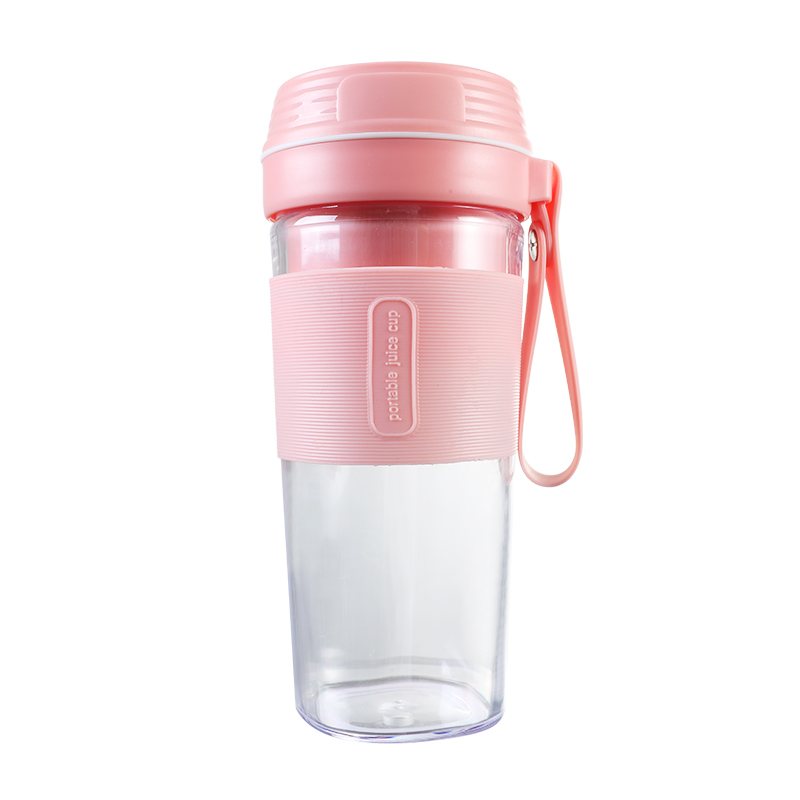
The Y-JG02 image shows a pink housing, clear cup, textured band and strap. It does not prove current production color, exact blade construction, package contents or charging method. The Y-LS-02 image shows a larger clear container with handle-like geometry and a separate part. That appearance cannot correct the anomalous capacity field or establish the included parts.
Two other source images contain Chinese promotional text and lifestyle arrangements. They remain catalog evidence but are not used as the Brazilian buyer's primary artwork. Portuguese OEM files should be built from clean, approved product photography after the exact SKU is frozen.
Strategic Partnership
The Brazil partner contributes importer identity, destination states, channel access, beverage and portion evidence, competitor observations, target selling position, landed-cost inputs, Portuguese review, regulatory and customs specialists, service capacity, launch forecast, stock plan and sell-through evidence. Yaoyuan coordinates available models, components, current samples, OEM files, packing, production follow-up, inspection support, mixed-container planning and replenishment preparation.
Both parties should maintain one register with model, sample code and date, intended channel, representative ingredients, fill level, cup, lid, gasket, blade base, lock, motor, battery, connector, cable, included parts, Portuguese artwork revision, unit box, master carton, inspection method, destination port, evidence status and decision owner. A changed cup, lid, battery or charger is a changed order identity even when the outside color remains similar.
Local channel access, buyer feedback, competitor facts, target position, landed-cost inputs, Portuguese review, conformity and customs professionals, service plan and sell-through evidence.
Available catalog routes, supplier and component coordination, current samples, OEM files, packing, production follow-up, inspection support, mixed-container and repeat-order preparation.
No claim, artwork, price comparison, order release or replenishment decision should bypass the current configuration register and named evidence owner.
Create a repeatable SKU and learning loop for both companies. Do not promise demand, sales, margin, customs release or delivery outcomes that neither side controls alone.
Use Protocol
The buyer should define the task in observable terms: ingredient identity, fresh or frozen condition, piece size, liquid quantity, total fill, initial temperature, operation sequence, number and duration of cycles, rest time, final consistency, visible remaining pieces, leakage, unusual sound, odor, temperature rise and cleaning result. Record the exact model and sample used. A pass applies only to that configuration and protocol.
Published power is an input field, not a result. The 30W, 50W or 75W source line does not prove ice crushing, smoothie texture, continuous duty, speed, torque, blade life or runtime. Fruit visible in a source image does not prove that every version processed that fruit. Claims involving ice, frozen ingredients, nuts, hard foods, hot liquids or professional use require explicit technical review and evidence; otherwise they should remain outside the approved claim set.
Ingredient, preparation, temperature, liquid, fill level and exact sample configuration.
Activation method, cycle duration, number of cycles, rest interval, indication and any intervention.
Consistency, visible pieces, leakage, movement, sound, odor, temperature change and shutdown behavior.
Approve only wording supported by the recorded test and current evidence. Do not convert one sample result into a universal promise.
Usable Fill
A 300ML or 400ml catalog field does not automatically equal the recommended working fill for every ingredient. Blade clearance, foam expansion, liquid movement, lid geometry and the operating sequence can change the safe and useful fill. The current sample should have its nominal capacity, any molded or printed mark, buyer test fill and approved instruction limit recorded separately.
The buyer should not compare models only by the largest number. A compact cup can have a clearer shelf role but different use limitations. A larger body can increase box and carton volume. The Y-LS-02 route cannot enter a capacity comparison until its 1200L source anomaly is corrected. Artwork must not publish an assumed correction.
Sealed Assembly Control
Portable use increases the importance of assembly control. Record cup material and revision, lid geometry, gasket location and material, thread or bayonet fit, blade-base attachment, lock or activation condition, venting where applicable, drinking or carrying parts, strap inclusion and the cleaning boundary. A visually similar lid or gasket is not automatically interchangeable.
Run an agreed leakage protocol on the exact approved sample. Define liquid, fill level, closure method, orientation, hold time, movement and pass criteria. Unless evidence supports it, do not describe the product as leakproof, waterproof, safe inside a bag, dishwasher safe or washable as a complete electrical unit. Instructions should distinguish removable food-contact parts from electrical sections.
Photograph and code lid, gasket, thread, lock and blade-base interfaces. Keep them linked to the approved model.
Use a written test with defined liquid, fill, orientation, time and acceptance result rather than a verbal promise.
Identify removable parts, prohibited immersion, blade-handling precautions and drying instructions in the Portuguese file.
Inspect blade retention, edge protection, assembly, removal and packing so handling risk is controlled throughout the batch.
Electrical Identity
Only Y-ZY03 has a published 1200mAh battery field in this five-model source. That field remains a reference until the current sample, battery marking and supplier file match. The other four public records do not establish battery capacity. None of the five source records establishes a connector, charging input, cable ends, adaptor, charging time, runtime, cell supplier, protection board or cycle life.
Freeze battery identity, cell or pack marking, nominal voltage and capacity, protection construction, connector, charging input, cable or adaptor scope, indications, instructions and package contents. Test charging and operation on the exact sample. Do not describe a connector as Type-C because it looks similar in a photo, and do not imply that a cable or adaptor is included until the released packing list says so.
Battery Transport
Connect the installed cell or battery identity to the proposed product revision. Request the applicable test summary and shipping information from responsible suppliers and freight parties. The UN Manual of Tests and Criteria includes subsection 38.3 for lithium cells and batteries, but a generic report or the phrase UN 38.3 does not prove that the battery installed in the approved unit has a matching test summary.
Before booking, confirm whether the battery is installed in equipment, the quantity and energy information required by the responsible transport parties, packing method, terminal protection, damage controls, labels, documents, route and carrier acceptance. The buyer, supplier, forwarder and qualified dangerous-goods parties should review the actual shipment rather than reusing documents from an unrelated cell or model.
Food-Contact Map
Anvisa explains that food-contact materials include equipment, utensils, containers and similar items made from materials such as plastics, metals, glass and elastomers. The Brazilian importer and qualified parties should map current requirements to the exact materials and intended use. A clear cup is not proof of material, and PP+PS or PC+PP catalog wording does not identify every gasket, blade, shaft, coating or adhesive.
Create a component map for cup, lid, drinking surface where present, gasket, blade, shaft, blade base and any internal surface that can contact ingredients. Record supplier declaration, material identification, colorant or coating where relevant, intended food, temperature and cleaning limits. Do not claim BPA-free, food grade or compliant solely from appearance or a generic declaration.
Conformity Decision
Inmetro's current official household-appliance scope page lists domestic blenders up to 3.5 liters and other electric kitchen machines in its scope table. That official source is an important decision input; it is not evidence that a proposed Y-G01, Y-JG01, Y-JG02, Y-LS-02 or Y-ZY03 configuration is already certified. The Brazilian importer and qualified conformity parties must review the exact battery-operated construction, intended use, supplied charging package and current rules.
Do not print an Inmetro mark, registration reference or conformity statement until responsible Brazilian parties confirm the applicable route and authorize the exact released use. Keep final model, technical file, battery, sample, label, Portuguese manual, importer identity and product revision aligned. Evidence from a mains blender, another rechargeable appliance or another portable-cup configuration cannot be transferred by appearance.
Portuguese OEM Release
Prepare one controlled Portuguese file set: product name, model, rated fields supported by the exact specification, intended-use boundary, prohibited uses, filling and assembly steps, charging instructions, indications, cleaning boundary, sharp-part warnings, package contents, importer information, barcode, unit-box artwork, carton marks and service contacts. Keep revision numbers visible.
The Brazilian partner should review language, mandatory information, local claims and importer details. Yaoyuan coordinates approved logo placement, neutral or custom color box, manual and carton artwork after the order identity is frozen. Do not copy Chinese promotional text into Brazilian artwork, and do not add unsupported ice-crushing, leakproof, waterproof, runtime, material, health or conformity claims.
Packing and Landed Economics
The available source gives selected packing dimensions for Y-G01, Y-JG01, Y-JG02 and Y-LS-02, while Y-ZY03 lacks public box and carton dimensions. Re-measure the current sample and released packing. Confirm units per carton, net and gross weight, carton strength, internal protection, blade protection, cable position, accessory count, artwork, barcode, carton marks and pallet or loading assumptions where used.
Calculate landed economics from the same complete SKU: private factory quotation, approved unit box, master carton, quantity, CBM, weight, battery handling, inspection, origin charges, freight, insurance, destination charges, broker inputs, taxes based on qualified classification and a reserve for damage, leakage, missing accessories or service. A lower unit quote can produce a weaker landed result if the packing, evidence or repeat-order identity is unstable.
Retain original units and source fields, then verify the current physical pack before freight or artwork approval.
Both list the same master carton but different color-box heights. Preserve that difference and verify carton count before comparison.
No public box or carton dimensions are established. Current packing evidence is required before landed-cost planning.
Budget for observable issues such as leakage, charging, lid fit, missing parts and transit damage rather than assuming zero after-sales cost.
Brazil Import Decisions
The Brazilian importer and qualified customs parties should classify the exact finished product and review current NCM attributes, tax and administrative treatment. Siscomex explains that reference tables are informative and do not replace the official simulator used to verify the treatment applicable to each import operation. Product labels such as portable blender, juice cup or rechargeable cup are not a classification decision.
Complete the technical description before classification: function, intended use, cup capacity, rated power where established, battery construction, charging package, materials, package contents and whether any adaptor is supplied. Record the classification owner, evidence reviewed, date and open question. Yaoyuan does not guarantee NCM, tax, licensing, customs release or market approval.
Batch Inspection
Approve a written inspection plan tied to the order specification, sample and artwork revision. Check model and color, cup and lid identity, gasket, blade base, lock, surface condition, rated fields, battery and charging package, indication, agreed representative operation, leakage protocol, included contents, Portuguese files, barcode, unit box, carton marks, quantity and carton condition. Define sampling and acceptance with the buyer and inspection party.
Do not replace the buyer-approved test with a vague power-on check. A unit can turn on while the wrong cup, gasket, cable, artwork or battery is packed. Keep defect evidence by category and use it during receiving and replenishment review.
Receiving and Replenishment
At destination, reconcile cartons, SKU labels, box revision and included parts. Sample-check appearance, lid fit, leakage method, charging and agreed operation. Record transit damage, missing parts, repeated defects, customer questions, service cases, stock by SKU, sell-through by channel and reorder timing. Keep genuine product defects separate from unsupported-use complaints or listing errors.
Both partners then decide whether to repeat unchanged, correct a component or file, change packing, narrow the claim, adjust the channel role or stop the route. Replenishment is earned by evidence. It is not guaranteed by the first shipment or by a factory promise.
Pre-Quotation Evidence Index
For every shortlisted SKU, list published source, current sample code and date, model, capacity field, usable fill, cup, lid, gasket, blade base, lock, motor, battery, connector, cable or adaptor, package contents, Portuguese artwork revision, food-contact material map, battery transport file, Inmetro decision owner, NCM decision owner, current carton, destination port, inspection method and open evidence.
Use four statuses: published source; current sample confirmed; document received and matched; or qualified local decision pending. This prevents a commercial discussion from turning an open question into a silent promise.
Decision-Ready RFQ
Use BRAZILBLENDERCUP1000 in the formal quotation request or WhatsApp message. It routes the inquiry to the Brazil portable blender decision process. Wholesale only. No public prices or retail orders.
Buyer Questions
The source reads 1200L, which is anomalous. We do not silently change it. A corrected specification tied to the current sample is required.
The current public source does not prove ice-crushing capability. Approve an exact model, ingredient protocol and evidence before any claim.
Not by default. Define and approve a leakage protocol for the exact cup, lid, gasket and blade-base assembly.
The source does not establish connector or included cable for the five-model group. Confirm each current sample separately.
Yes, after the technical SKU and evidence-backed claims are frozen and the Brazilian partner reviews required language and importer information.
No. Yaoyuan coordinates factory-side resources and evidence. The importer and qualified Brazilian parties own conformity, customs, tax, channel and final market decisions.
Connected Decision System
Wholesale Only
Wholesale only. MOQ starts from 1000 PCS. No retail or one-piece orders.
Quotation follows the exact model, assembly, battery, packing, evidence and inspection scope.
No public price is published. Send a decision-ready RFQ for a comparable response.