Importers and Distributors
Companies able to define the Brazilian importing entity, destination states, channels, electrical version, product role, local evidence owners and reorder process.
Brazil Countertop Cooking Partnership Route
Build a controlled Brazil program from seven real catalog records: compact 13L and 15L directions, 25L, 48L, 56L and 55L oven routes, plus the SC-206 oven-and-coffee breakfast machine. Define the state, channel and cooking job first; then freeze electrical construction, Brazilian plug, functions, Portuguese files, food-contact parts, glass packing, inspection and repeat-order evidence.
Wholesale only. MOQ starts from 1000 PCS. No public prices, retail orders or one-piece orders.
Buyer Qualification
Companies able to define the Brazilian importing entity, destination states, channels, electrical version, product role, local evidence owners and reorder process.
Purchasing teams that need Portuguese content, shelf-ready presentation, controlled functions, barcode, carton protection, service planning and stable replenishment.
Buyers prepared to approve one exact construction, electrical identity, retained sample, accessories, artwork revision, test protocol and inspection standard.
Importers using compact, core-capacity and combination formats as distinct assortment roles, then sharing receiving, sell-through and service evidence before scaling.
Direct Buyer Answer
A decision-ready Brazil oven inquiry identifies the importing company, destination state or sales region, buyer channel, intended cooking tasks, competing products, target shelf or wholesale position, chosen catalog route, quantity, required electrical identity, Portuguese OEM scope, destination port and inspection method. These inputs determine what the sample must prove. A request for the lowest price on an oven photo does not define a saleable Brazilian SKU.
The seven public records are discovery routes, not finished Brazil approvals. P72 and P73 publish capacity directions only. P74 and P77 publish more electrical and material fields. P75 and P76 publish capacities and loading references without model, voltage, power, control or material details. SC-206 publishes a breakfast-machine combination with an oven and coffee system. Missing fields remain open; they are not copied from a nearby model, another country page or a similar-looking appliance.
The public route identifies 13L but does not publish a model code, rated power, voltage, functions, material, product size, carton or loading quantity. Confirm the current sample and complete specification.
The source identifies 15L but no model code or detailed technical fields. Capacity alone does not establish heater layout, control, accessory set, electrical version or packing.
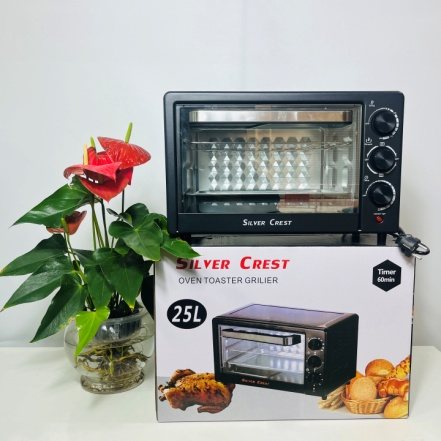
Published fields are 25L, 2400W, AC220-240V, stainless steel plus glass and a 40HQ reference of 1700. These describe the catalog record, not automatic Brazilian conformity or 127V availability.
The route identifies 48L and a 40HQ reference of 725. Model, rated power, voltage, functions, controls and materials are not published and must remain unconfirmed.
The route identifies 56L and a 40HQ reference of 725. The photograph is not proof of convection, rotisserie, heater rating, accessory set or destination version.
Published fields are 55L, 2400W, AC220-240V, stainless steel plus glass and a 40HQ reference of 756. The image shows top plates; simultaneous operation and combined input are not proven by the image.
Published fields are 12L, 2400W, AC220-240V, plastic PP plus glass and 450 x 180 x 190 mm. Its image carries third-party branding, which is not authorization to use that brand.
Published loading quantities are planning references rather than guarantees. Current cartons, quantity per carton, dimensions, gross weight, protection, pallet or floor-loading method, mixed-SKU allocation and usable container capacity must be reconfirmed before freight or landed-cost comparison.
The Brazil partner contributes importer identity, state and channel access, representative cooking habits, competing products, target commercial position, local price and landed-cost observations, Portuguese review, local electrical and conformity specialists, service capacity, launch forecast, stock plan and sell-through evidence. Yaoyuan contributes access to available catalog routes, samples, component information, factory coordination, OEM files, packing development, production follow-up, inspection support, mixed-container planning and replenishment preparation.
Keep one shared decision register with the selected route, open fields, current sample, buyer test, electrical version, destination responsibilities, Portuguese files, carton revision, inspection method, decision owner and due date. Evidence closes a question; optimistic chat messages do not. Strategic cooperation means both sides use actual market and factory information to improve the next order instead of treating each shipment as an isolated price transaction.
A compact oven may target limited counter space and an entry assortment position. A 25L route can be evaluated as a core family format. Larger 48L, 55L or 56L directions create different shelf, freight, storage, service and installation questions. P77 adds top-plate functions. SC-206 adds a coffee system. These routes should not be compared only by stated cavity volume or one unit price.
The importer should bring real channel evidence: available counter dimensions, common meal preparation, expected tray or pan size, competitor functions, buyer objections, service experience, target selling position and acceptable landed-cost range. Yaoyuan can use those inputs to coordinate a shortlist and sample sequence. Neither party should claim that a capacity or feature will be locally popular without measured evidence.
For a standard oven, record usable cavity width, depth and height; tray and rack dimensions; rack positions; upper and lower heaters; selector modes; thermostat and timer behavior; door, handle and glass construction; indicator, lamp, fan or rotisserie where actually present; crumb tray; supplied accessories; cleaning route; and protection devices. A feature visible on one image is not automatically present on another route.
Give the controlled version a unique SKU and revision. Connect the specification, bill of materials, wiring diagram, nameplate, functions, accessories, manual, retail box, master carton, golden sample and inspection checklist to that identity. If a heater, thermostat, timer, selector, motor, glass assembly, cord, plug or PCB changes, review the affected evidence and documents before production.
P77 appears to combine an oven cavity with two top plates. Confirm whether the oven and one or both plates can operate together, each individual load, total rated input, selector sequence, control independence, plate diameter, cookware use, upper-surface temperatures, thermal protection, cord and intended circuit context. The public image does not establish simultaneous operation or safe load.
The Portuguese control-panel wording and manual must match the wired mode matrix. A buyer demonstration should test each allowed mode and every allowed combination under the approved electrical version. If combined operation is restricted, that restriction must be clear in controls, instructions and marketing. Do not turn an unresolved load question into a sales feature.
SC-206 needs separate records for the oven cavity and the coffee system: reservoir, water path, filter, jug, warming plate, switches, simultaneous operation, total input, cleaning, included parts and replacement support. A passing oven test does not release the coffee function. Food- and water-contact components need their own material identity and evidence mapping.
The source image contains third-party branding. It can help identify the catalog direction, but it is not permission to print, advertise or sell that brand. Before public promotion or production, replace it with buyer-owned or authorized branding or an approved neutral presentation. Connect the approved Portuguese product name, functions and cleaning instructions to the exact SC-206 construction.
Brazil orders must state destination state or sales region, required rated voltage, frequency, plug, cord, conductor, earthing or insulation class, total input, protection, nameplate and allowed operating modes. P74, P77 and SC-206 publish AC220-240V. That field is not evidence that a 127V version exists. A 127V request requires current factory feasibility, a separately controlled construction, sample testing, updated labels and a destination evidence review.
Do not relabel a heater platform or change only the plug. Current changes can affect heaters, conductors, terminals, switches, relays, thermostats, thermal protection, controls and circuit expectations. The importer should provide qualified Brazilian electrical input for the intended channel. Yaoyuan can coordinate the available component and sample review; neither the catalog nor this page is an electrical installation recommendation.
Inmetro's official importer guidance states that household appliances imported and made available in Brazil must be certified under Portaria Inmetro no. 148/2022 and show the conformity identification seal on the product and packaging. Its plug guidance also explains that imported products placed on the Brazilian market must use the standardized Brazilian plug direction. These official starting points do not prove that any catalog route is already certified.
Use the current Inmetro household-appliance importer obligations, Brazilian plug guidance and conformity-assessment information. The Brazilian importer, certification body, laboratory and qualified parties must determine the exact scope, model family, sampling, documents, labeling, surveillance and market-release responsibilities.
List trays, racks, pans, crumb trays, coffee reservoir, filter, jug, water path, coatings, seals and any other parts intended to contact food or water. Record material, supplier, part code, use condition, available declaration or report, approved alternative and incoming-control method. A general material description such as stainless steel plus glass or plastic PP plus glass is not a complete food-contact file.
Brazil's Anvisa food-contact materials overview is an official starting point. Qualified Brazilian parties must decide the applicable rules for the exact materials and intended use. The buyer's cooking and brewing tests should record sample revision, input voltage, load, food or water preparation, selected mode, duration, control response, heating result, unusual odor or sound, cleanup and buyer-defined acceptance. A demonstration is not a universal cooking-time, energy-saving, food-safety or durability claim.
Approve product name, model, capacity where verified, voltage, frequency, rated input, plug, origin, importer identity, conformity mark where legitimately applicable, function icons, warnings, cooking or brewing sequence, cleaning, accessories, barcode, product label, manual, retail box and master-carton marks under one revision. Portuguese wording should describe the selected controls and allowed operating modes rather than a nearby model.
Assign each file an owner, revision, approval date and matching SKU. Print and inspect pre-production samples before mass packing. Do not reuse Spanish files, marketplace text or claims from another electrical version. Avoid unsupported statements about cooking speed, temperature accuracy, energy saving, professional use, coffee output, food safety, certification, retailer acceptance, local demand, delivery, margin or profit.
Ovens can expose door glass, handles, controls, frames, trays and coffee jugs to impact and compression risks. Approve the complete product and accessory set before designing the color box and master carton. Record protective clearances, inserts, bags, corner protection, accessory restraint, door restraint, jug separation, units per carton, dimensions, net and gross weight, stacking orientation and pallet rule where used.
Use agreed tests only when the exact package, method and acceptance criteria are identified. Photograph the packing sequence and retain the approved carton revision. A heavier large oven, a top-plate combination and an oven-plus-coffee machine need different risk review. Current packing evidence must replace historical or catalog loading assumptions before freight quotation.
Maintain one editable cost sheet for each controlled route: private factory quotation, samples, electrical development, evidence and local procedure, Portuguese OEM work, accessories, spare parts, current carton, inspection, inland handling, freight basis, insurance, broker and terminal inputs, qualified duty and tax values, local delivery, storage, expected damage, service reserve, returns and working-capital time.
The P74 reference of 1700, P75 and P76 references of 725, and P77 reference of 756 are not guaranteed 40HQ loads. Confirm current cartons, weights, quantity per carton, loading method and mixed-SKU allocation. Use the South America landed-cost RFQ route to compare complete commercial assumptions. Neither Yaoyuan nor this page guarantees freight, duty, sales, margin or profit.
Do not assign one NCM to every oven, top-plate combination and coffee breakfast machine from the marketing name alone. Classification can depend on the exact construction, principal function and declared operation. Brazil's official Siscomex guidance says import administrative treatment should be checked for the actual NCM and operation and that information tables do not replace the current simulator.
Use the current Siscomex import administrative-treatment guidance and import systems overview. The importer, customs broker and qualified Brazilian parties own current classification, licensing, DUIMP or other filing, customs, tax and release decisions. Yaoyuan can provide matching specification, component, packing and commercial inputs.
The inspection plan should identify catalog route, approved SKU, sample revision, capacity record, electrical construction, plug, cord, allowed modes, heaters, controls, thermostat, timer, protection, door, glass, trays, racks, pans, rotisserie where approved, coffee parts where applicable, labels, Portuguese files, carton and buyer-defined operation test. A generic statement that the oven turns on is not enough.
Verify identity before workmanship and function. Check each allowed mode and combination, control response, door closure, glass and frame, accessory count, markings and packing. Record sampling, acceptance criteria, nonconformities, rework, reinspection and shipment-release authority before production starts. Use the golden-sample retention route and pre-shipment inspection control.
Gate one is commercial fit. The importer supplies state and channel observations, representative competitors, actual cooking use, counter and shelf constraints, target commercial position, service ability and a realistic quantity plan. Both parties assign a clear assortment role to one or two routes instead of adding many similar ovens to make the range look larger.
Gate two is product and destination control. The current sample must confirm the cavity, functions, controls, electrical identity, Brazilian plug, accessories, food-contact parts, Portuguese files, packing, conformity questions and inspection plan. P77 and SC-206 require separate combination-function evidence. Open issues remain visible; printing and production do not advance merely because a price was accepted.
Gate three is repeat-order evidence. After receiving, compare carton and glass condition, SKU accuracy, sell-through, buyer objections, returns, service findings, parts used, remaining stock, stock age, cash cycle and the next warehouse-ready date. Keep compact, core, large, top-plate and coffee-combination results separate. Repeat unchanged, correct, rebalance or pause according to evidence.
At destination receiving, reconcile carton count, marks, visible damage and sampled SKU identity before distribution. Record glass breakage, bent frames, loose doors, damaged handles, control damage, missing accessories, coffee-jug damage and carton condition by batch. Separate transport damage, production findings, instruction problems and misuse before assigning corrective action.
Yaoyuan can use verified findings to coordinate unchanged production, component review, Portuguese instruction correction, glass or carton improvement, spare-part allocation, assortment rebalancing or a controlled pause. The importer can use the same file for forecasts, channel allocation, service reserves and cash planning. This shared evidence loop is the practical basis of a strategic partnership.
Ovens can share a container with approved air fryers, blenders, fans, rice cookers, vacuum sealers, food dehydrators or water pumps, but mixed loading does not erase model MOQ or country-version responsibility. Record model, quantity, electrical identity, Portuguese files, carton, CBM, weight, evidence and inspection separately for every SKU.
Use the South America mixed-container route to allocate space and shared costs without mixing Brazilian Portuguese and Spanish-language versions. Reconcile production timing and loading only after each product record is stable.
Use BRAZILOVEN1000 in the formal RFQ or WhatsApp message. It identifies a Brazil wholesale oven or breakfast-maker project requiring exact route, electrical, Portuguese OEM, packing, inspection and strategic replenishment control.
MOQ starts from 1000 PCS. Final route, electrical construction, functions, OEM scope, packing and quantity must be confirmed before a private quotation is executable.
The public P74, P77 and SC-206 records state AC220-240V. They do not prove 127V availability. A 127V request needs current feasibility, controlled development, sample and evidence review.
No blanket certification claim is made. The importer and qualified Brazilian parties must determine and complete current scope for the exact finished construction.
The public image does not prove it. Confirm each allowed mode, individual and combined input, selector logic, protection and circuit context.
No authorization should be inferred from the source image. Only buyer-owned or authorized branding may enter the approved OEM files.
The importer contributes market and channel evidence; Yaoyuan coordinates product and supply-chain resources; both sides use receiving and sell-through results to control the next order.
Wholesale Only
Importer identity, sales region, channel, cooking use, competitor and cost evidence, Portuguese approval, local specialists, service capacity, forecast and sell-through data.
Available catalog routes, components, samples, OEM files, packing, production, inspection, mixed-container and replenishment resources.
Qualified Brazilian parties own current conformity, classification, customs, tax, language and market release. No demand, delivery, sales, margin or profit is guaranteed.
Long-Term Market Development
Use this route when your team can share channel evidence, target landed-cost logic, inventory and service constraints, and a repeat-order plan. Yaoyuan can coordinate the selected oven / breakfast maker version, OEM files, supplier resources, inspection and replenishment decisions. Demand, exclusivity, delivery, sales volume and margin are not promised before both parties review the evidence and responsibilities.