Importer Market Evidence
Provide channel, intended use, competitor set, target retail position, expected weekly sell-through, retailer requirements, service capacity, landed-cost inputs and launch calendar.
United States Oven Market Partnership
Turn a real catalog direction into one controlled 120V/60Hz saleable SKU with an approved sample, exact electrical identity, English private-label files, importer evidence, retailer handoff, inspection and measurable reorder decisions.
Wholesale only. MOQ starts from 1000 PCS. No catalog route on this page is represented as a finished U.S.-approved version.
Qualified Strategic Buyers
Provide channel, intended use, competitor set, target retail position, expected weekly sell-through, retailer requirements, service capacity, landed-cost inputs and launch calendar.
Yaoyuan coordinates available platforms, heater and control resources, 120V engineering review, samples, English OEM files, packing, production, inspection and repeat-order support.
Both parties approve one record connecting the U.S. model, electrical construction, functions, evidence, claims, artwork, carton, channel data and retained sample.
Repeat orders follow verified sell-through, returns, service findings, remaining stock, cash cycle, approved changes and the next required warehouse date.
Importer and Factory Decision File
A published 220-240V oven cannot become a United States product by changing the plug or printing 120V on a box. The heater, current, wiring, terminals, cord, plug, thermostat, timer, selector, motors, protective devices, enclosure temperatures, digital controls and combined operating modes must be reviewed as one construction. The importer must also define the channels, sales states, responsible parties, evidence route, claims and after-sales ownership before mass production.
Yaoyuan can coordinate product and component resources, samples, factory records, English OEM files, packing, inspection, mixed-container planning and repeat-order changes. The U.S. importer contributes current legal, channel, laboratory, customs, market, service and commercial decisions. No certification, listing, customs result, retailer acceptance, delivery date, demand, margin or profit is guaranteed by a catalog image or this page.
The public record identifies a 13L direction but no model code or detailed specification. Confirm usable cavity, heater layout, controls, accessories, current carton and whether a 120V platform can be developed.
The public record identifies 15L but no model code or detailed specification. Capacity alone does not establish input, functions, construction, standard, evidence or U.S. channel suitability.
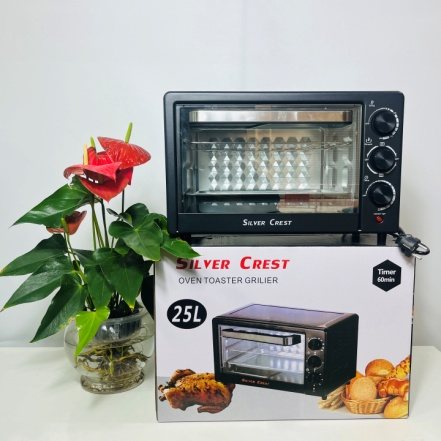
Published fields are 25L, 2400W, AC220-240V, stainless steel plus glass and a 40HQ reference of 1700. Those fields describe the catalog record, not a 120V version.
The public record identifies 48L and a 40HQ reference of 725. Model, voltage, wattage, controls, functions and materials are not published and must not be copied from another large oven.
The public record identifies 56L and a 40HQ reference of 725. Its photograph is not proof of convection, rotisserie, electrical rating or a U.S. version.
Published fields are 55L, 2400W, AC220-240V, stainless steel plus glass and a 40HQ reference of 756. The image shows two top plates, so simultaneous-load and control logic must be proved.
Published fields are 12L, 2400W, AC220-240V, PP plus glass and 450 x 180 x 190 mm. The catalog image includes third-party branding; it does not authorize use of that brand.
The 2400W catalog field shown for P74, P77 and SC-206 belongs to the published AC220-240V record. It cannot be copied into a proposed U.S. version. As basic planning arithmetic, 2400W divided by 120V equals 20A before design tolerances and other considerations. That is not a product rating or circuit recommendation; it demonstrates why a heater system, simultaneous-operation logic, plug, cord and intended branch-circuit route must be redesigned and reviewed instead of relabeled.
Freeze target rated input, allowable cooking performance, intended plug and circuit context, heater resistance, conductor sizes, terminals, switches, relays, thermostat, thermal limiter or fuse, grounding or insulation class, motor loads and routine production tests. A qualified laboratory and responsible U.S. parties should evaluate the exact construction and intended use. If the buyer changes capacity, heater, timer, fan, plate, coffee system or supply cord, reopen the affected engineering and evidence files.
External capacity labels do not tell a U.S. buyer which tray fits, how many rack positions exist, whether controls are intuitive or how a product compares with channel competitors. Record usable cavity width, depth and height, tray and rack dimensions, door opening, clearance, upper and lower heater selection, convection, rotisserie, keep-warm, light and accessory set from the approved sample.
Give each SKU a commercial job. A compact route may serve a constrained countertop position, a 25L route may support a core family proposition, and a larger platform may address higher-capacity use with a different freight and service profile. P77 and SC-206 are combination products and should not be compared with a standard oven only by cavity volume.
For P77, confirm whether the oven and one or both top plates can operate together, each load, total rated input, selector sequence, control independence, plate dimensions, over-temperature protection and required circuit context. The product image does not prove any operating combination. English panel graphics and instructions must match the wired mode matrix.
For SC-206, control the oven, coffee reservoir, jug, filter, warming plate, water-contact parts, switches, simultaneous operation, total input, cleaning route and accessories. The coffee system introduces use and service questions that an oven-only test cannot close. The third-party brand visible in the source image must be replaced by buyer-authorized branding or approved neutral presentation before marketing or production.
The release file should identify heater, thermostat, timer, selector, switches, relays, thermal protection, wiring, terminals, insulation, PCB, motors, lamp, cord, plug, glass, handle, food-contact accessories and critical fasteners. Connect supplier, part code, rating, drawing or photograph, report reference where applicable, approved alternatives and incoming-control method. Retain one named sample matching the released construction.
Component marks are not a finished-product approval. A report for a component or a 220-240V product does not automatically cover a changed 120V construction. The importer, laboratory, certification body and channel owners should agree what evidence is required and who owns it before irreversible tooling, printing or production.
A GCC is required when the exact general-use product is subject to a CPSC-enforced rule requiring certification. Since July 8, 2026, imported regulated consumer products within the final rule's scope require certificate data eFiling. The U.S. importer must determine exact applicability and own the filing route.
Digital controls can create an unintentional-radiator route; intentional Wi-Fi or Bluetooth transmission changes it. Freeze the PCB and firmware configuration before deciding authorization, responsible-party, label and user-information requirements.
UL is not one universal federal customs requirement for every countertop oven. Workplace use, retailer policy, marketplace rules, insurers, local authorities and project conditions can require recognized listing or other evidence. Define the intended channel first.
Confirm classification, importer of record and current entry data with qualified trade parties. Foreign articles generally require conspicuous, legible and permanent English country-of-origin marking, subject to applicable exceptions. State and claim review remains separate.
Start with the CPSC general-use product guidance and current certificate and eFiling update. Use the OSHA NRTL program to understand recognized certification rather than treating a familiar acronym as universal approval.
Review the FCC equipment authorization starting point, the DOE product-scope pages before making any energy representation, and CBP importing and origin-marking guidance. Current requirements must be checked for the exact product, construction, channel and import date.
Connect the U.S. model, ratings, origin, responsible-party fields, warnings, functions, cleaning, accessories, claims, barcode, retail box, inserts, master carton and digital channel data to one approved sample and revision. Do not build artwork while voltage, total input, functions or evidence ownership is still unresolved.
For a retailer or marketplace project, obtain its current onboarding fields, testing or listing requirements, insurance expectations, routing guide, package measurements, barcode owner, image rules, support process and return-data format. Yaoyuan can coordinate factory files, but the buyer remains responsible for channel commitments and authorized claims.
Maintain one decision sheet for each candidate: private factory quotation, 120V development, samples, external evidence, OEM work, accessories, current carton data, inspection, inland handling, freight basis, insurance, broker and terminal inputs, qualified duty and tax values, local delivery, storage, expected damage, service reserve, returns and working-capital time.
The published 40HQ references of 1700 for P74, 725 for P75 and P76, and 756 for P77 are planning records, not guaranteed loads. Confirm current carton dimensions, weight, units per carton, pallet or floor-loading method and mixed-SKU allocation. A lower unit quote can still create a weaker project if conversion cost, glass damage, channel evidence, returns or slow replenishment are ignored.
For the first review period, compare planned and actual placement, units displayed, units sold, objections, returns, failure descriptions, parts used, service time, carton or glass damage, remaining stock, stock age, cash collection and the next warehouse-ready date. Keep compact ovens, large ovens and combination appliances separate.
Yaoyuan can use verified findings to coordinate an unchanged repeat, heater or control review, packing improvement, instruction correction, spare-part allocation, assortment rebalancing or a controlled pause. Strategic cooperation means both parties contribute evidence and resources to improve the next order. It does not mean either side promises demand or profit.
Use inquiry code USAOVEN1000 and send:
Wholesale only. MOQ starts from 1000 PCS. No public prices. A private quotation follows confirmation of the controlled product identity, development scope, evidence route, quantity, OEM files, packing, timing, trade term and destination.
No. Heater, current, wiring, controls, protection, cord, plug and operating performance must be reviewed as one U.S. construction.
No. It belongs to the published AC220-240V catalog record. A proposed 120V product needs a separately controlled design and verified label.
The image does not prove that. Confirm every mode, individual load, total input, selector logic, protection and intended circuit before approval.
Do not use a universal answer. Identify intended use, channel, retailer, insurer, local authority and applicable electrical route, then confirm the recognized evidence required.
No authorization should be inferred from a source image. Only buyer-owned or authorized branding may enter the approved OEM files.
The importer provides market and channel evidence; Yaoyuan coordinates product and supply-chain resources; both sides use actual results to control the next order.
Strategic Wholesale Only
MOQ starts from 1000 PCS. Platform, 120V construction, evidence, functions, packing and OEM scope require confirmation.
Freeze heater, current, controls, protection, cord, plug, functions, sample, artwork and evidence under one revision.
Send channel, states, intended use, responsible parties, retailer requirements, service plan, forecast and destination.
Price follows confirmation of the controlled SKU, development work, evidence route, quantity, OEM files, timing and trade term.
Version Evidence Before Quotation
Identify the exact model or catalog reference first. Yaoyuan can organize available sample, specification, packing and inspection evidence for that controlled version. The importer and qualified destination-market parties remain responsible for confirming applicable market-access, customs and channel requirements. This review does not promise certification, stock, delivery timing, demand, sales or profit.