Direct Answer for Importers
A blender after-sales plan should identify the exact model and production revision, map compatible jars, blades, seals, couplers, controls and other agreed parts, define how claims are documented, and state how each case will be reviewed. Spare parts can reduce service time, but they do not replace product quality control. Commercial responsibility, compensation, replacement and warranty conditions must be agreed for the actual order rather than assumed from a general promise.
Define After-Sales Responsibility Before Deposit
The buyer and factory should discuss what information is required when a dealer or customer reports a problem, which cases need returned or retained evidence, and how transport damage is separated from product or usage issues. The purchase order or commercial agreement should record any agreed spare parts and case-handling method.
Do not wait until the shipment arrives to ask whether a jar, blade unit or coupler can be supplied. The selected blender platform and component continuity influence the after-sales options available to the importer.
Keep Model and Revision Identity Traceable
A product name such as "2L blender" is not enough to identify a replacement part. Record the exact model, production batch or date direction, jar type, blade assembly, control version, plug and any approved component change. Similar-looking parts may use different dimensions or interfaces.
The product label, retail box, carton and warehouse record should use consistent model identity. If a component changes, keep the old and new batch distinguishable. Review the component change control guide before assuming a new part remains backward compatible.
Create a Spare-Part Compatibility Map
List each service part against the blender models and revisions it fits. The map can include jar assembly, lid, cap, blade unit, seal, coupler, switch, knob, cord or other agreed items. Use part photos and codes where useful, but confirm dimensions and interfaces rather than relying only on appearance.
When one platform supports several jar or accessory sets, record the exact combinations. A spare part that fits physically may still be inappropriate for the intended function or packing version.
Plan Jars and Lids as Complete Service Items
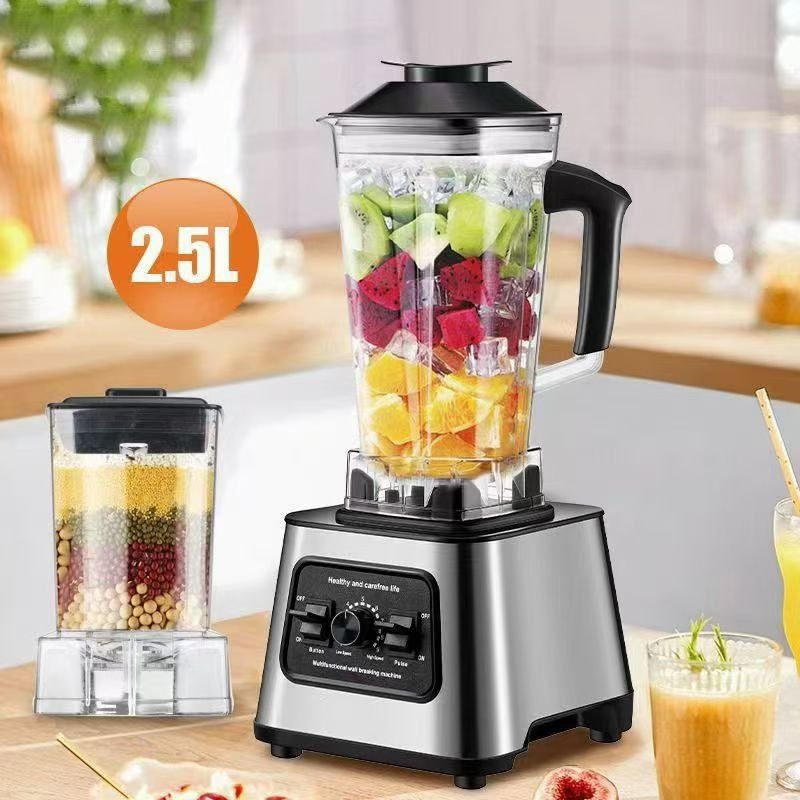
Jars and lids are visible, heavily handled and exposed to transport or user damage. Confirm whether replacement supply refers to the jar only, jar with handle, jar with blade assembly, or a complete jar-and-lid set. The service team needs the same definition used by the factory.
Glass and plastic jars have different packing risks. Replacement jars should be packed to prevent contact and movement, and their freight cost should be considered. A part with a low unit cost may be uneconomic to ship individually over a long distance.
Control Blade Assemblies and Seals Carefully
Blade units, seals and jar-base assemblies affect leakage and operation. Importers should confirm whether service parts are supplied as separate components or approved assemblies. Replacement work should follow the product's service direction and local safety practice.
Do not mix seals or blade units between models without a compatibility confirmation. Small dimensional differences can cause leakage, poor engagement or unstable operation. Keep sharp components protected and clearly labeled during storage and dealer distribution.
Track Coupler Compatibility by Both Sides
The jar-side and motor-side couplers work as an interface. A service request should identify which side is affected and which model revision is involved. Replacing only one side with an incompatible profile can create rapid wear or poor engagement.
Record clear photos and operating evidence before deciding that a coupler is the root cause. Misassembled jars, damaged blade units or incorrect use can produce similar symptoms.
Separate External Service Parts from Internal Repairs
Some parts can be replaced through normal accessory handling; internal electrical or motor repairs require different technical capability and safety controls. The importer should decide whether local service centers, distributors or dealers are qualified to perform internal work.
A box of internal parts is not an after-sales system. Service documentation, model identity, trained personnel and safe procedures matter. Where local repair is not practical, the commercial response may need a different case-specific solution.
Confirm Cord, Plug, Switch and Control Versions
Power cords and plugs are market-specific. Switches, control panels and printed markings can also vary by model. Any replacement direction must match the approved electrical and visible configuration. Do not substitute a different plug or control part based only on similar appearance.
For repeat orders, keep rating-label and market-version records connected to the relevant parts. The blender plug and voltage guide helps prevent market configurations from becoming mixed in warehouse stock.
Set Spare-Part Quantity from Risk and Service Reality
There is no universal spare-parts percentage for every blender order. The quantity should reflect the model, order size, service network, local freight, expected handling, previous failure data and parts that can be replaced safely. First orders may use a cautious plan that is adjusted with real market evidence.
Do not request random parts simply to create the appearance of protection. Prioritize items that are compatible, storable, identifiable and useful to the actual dealer or service process.
Spare Parts Do Not Replace Quality Control
Extra jars or couplers cannot justify an uncontrolled production issue. The approved model, pilot output, in-process checks and pre-shipment inspection remain the primary controls. Spare parts address practical service needs and isolated cases, not a known systemic defect.
Use the blender quality control guide to verify jar fit, blade assembly, coupler engagement, controls, leakage, plug, accessories and packing before shipment.
Prepare Dealer and Warehouse Records
When goods arrive, the importer should record model and carton quantities, separate visible transport damage and retain sample units where useful. Dealers need a simple method to identify the model, describe the symptom and send evidence without dismantling the product unnecessarily.
Spare parts should be stored by code and compatible model, not in an unlabeled mixed box. Record issues and parts issued so the buyer can see whether one model or batch is creating repeated demand.
Collect Complete Claim Evidence
A useful claim normally identifies the model, batch or shipment, affected quantity, carton condition, product appearance, operating symptom and when the issue occurred. Clear photos and a short operating video can help separate missing accessories, transport breakage, leakage, control failure and user-assembly problems.
One photo without model or quantity context cannot support a batch conclusion. Organize evidence by case and keep original records. Avoid combining unrelated dealer complaints into one unsupported total.
Separate Transport Damage from Product Failure
A broken jar with a crushed carton needs a different review from a jar that leaks through an assembly point in an undamaged box. Container opening and warehouse receiving evidence can show whether damage was visible on arrival. The packing system and handling path should be reviewed before assigning cause.
The container arrival guide explains seal checks, opening proof, carton count and visible damage records.
Compare Claims with the Approved Reference
Use the order specification, golden sample, component record and inspection result to understand whether the reported unit differs from the approved product. This protects both sides from memory-based arguments and helps identify whether the issue is isolated, batch-related or caused after delivery.
Retaining a controlled reference can be especially useful when the market reports a noise, fit, color or control difference. Review the golden sample guide for reference management.
Turn Repeated Issues into Corrective Action
If the same symptom appears across multiple verified cases, identify the affected batch and investigate material, assembly, test method, packing or handling. The response should connect the finding, probable cause, action and verification in the next production.
Sending a few spare parts may close individual dealer cases but does not prevent recurrence. Use the quality claim and corrective action guide to carry market evidence back into production control.
Agree Commercial Resolution Case by Case
Replacement parts, credit, replenishment, rework support or another response depends on the agreed terms and verified cause. Importers should not assume that every complaint produces the same remedy, and factories should not dismiss complete evidence without review.
Record the accepted resolution and which future order or shipment it affects. This prevents the same case from being reopened because commercial follow-up was not traceable.
Protect Continuity When a Model Changes
If a jar, blade platform, motor base or control system is replaced, review remaining product stock, spare-part stock and dealer needs before moving fully to the new version. A new model may require separate service parts even when its appearance is similar.
The model replacement guide explains how to manage old and new inventory, packing identity and market communication.
Use After-Sales Data to Improve the Next Order
Track verified cases by model, symptom, quantity, dealer, date and resolution. Compare the number of sold units with reported issues rather than looking only at complaint count. This helps identify whether a model, component, packing method or user instruction needs attention.
Use the data to adjust spare-parts allocation, inspection focus, manual content, dealer training and second-order model mix. After-sales evidence becomes a sourcing asset when it changes the next production decision.
Blender After-Sales Planning Checklist
- Exact model and production revision remain traceable
- Compatible jars, lids, blades, seals and couplers mapped
- Market-specific cord, plug and control versions identified
- Spare-part quantity based on real service capability and risk
- Parts labeled and stored by model and code
- Dealers know what model and evidence to report
- Claims include batch, quantity, carton and operating evidence
- Transport damage separated from product or usage issues
- Cases compared with approved sample and inspection records
- Repeated issues lead to root-cause and corrective-action review
- Commercial resolution recorded against the actual case
- After-sales data used to improve the repeat order
After-Sales Planning Supports Long-Term Distribution
A distributor protects its dealers by responding quickly, but speed depends on accurate model identity, useful parts and complete evidence. A factory protects repeat quality by connecting verified market issues with component, process and packing records. Both sides benefit when after-sales work produces better decisions rather than only arguments.
Zhongshan Yaoyuan Electric Appliance Co., Ltd. discusses blender spare-parts and after-sales requirements according to the selected model, quantity, market and commercial agreement. MOQ starts from 1000 PCS. Wholesale only. Send model, quantity, country, sales channel, required parts and destination port for review.