Importers and Distributors
Companies assigning exact cooking-appliance SKUs to Buenos Aires, provincial wholesale networks or specialist appliance dealers.
Argentina Electric Cooking Appliance Sourcing Plan
Convert a single- or double-burner catalog option into one traceable Argentina import SKU. Confirm portable or fixed use, heating construction, exact electrical identity, the current Resolution 16/2025 route, declaration and certificate evidence, TAD records, Argentine Spanish sale files, inspection and receiving controls before comparing private quotations.
Wholesale only. MOQ starts from 1000 PCS. No public prices, retail orders or one-piece orders.
Direct Buyer Answer
Not reliably. First lock portable or fixed use, burner count, heating construction, electrical identity, plug and cord, Argentine Spanish sale files and the importing entity. Qualified Argentine parties then determine the current conformity, TAD, customs and consumer-information route. Yaoyuan can coordinate the available sample, rating-label data, packing files and factory evidence, but cannot replace that local determination. The same approved identity should follow the sample, documents and inspection. Wholesale only; MOQ starts from 1000 PCS, with a private quotation after the decision file is complete.
Commercial Fit
Companies assigning exact cooking-appliance SKUs to Buenos Aires, provincial wholesale networks or specialist appliance dealers.
Buying teams that need one stable barcode, Spanish sale unit, importer identity, carton plan and receiving rule for every released model.
OEM buyers ready to approve the construction, ratings, controls, artwork, manual, retail box and master carton as one revision.
Importers combining ceramic hobs with air fryers, blenders, fans, rice cookers or water pumps while keeping every category independently releasable.
Importer Decision File
A useful request begins with the importing company and CUIT, sales region, named channel, intended use and target receiving period. It then identifies portable or fixed installation, burner count, exact catalog route, quantity, heating construction, controls, finish, voltage, frequency, rated input, current where applicable, plug, cord, Argentine Spanish content, destination, trade term, sample, conformity questions, inspection and service handoff.
The same identity must continue through the sample, signed specification, bill of materials, rating label, Declaration of Conformity, supporting certificate or report, artwork, invoice, packing list, inspection record and receiving sheet. Yaoyuan Electric can organize available factory-side samples, specifications, component records, artwork and production evidence. The Argentina importer and qualified local parties own legal scope, conformity route, customs classification, tax, consumer information and final release decisions.
Company and CUIT / sales provinces and channels / portable or fixed use / single or double burner / exact route / quantity / heating construction / rated input / voltage / frequency / plug and cord / controls and finish / Argentine Spanish files / destination / trade term / target receiving period / Resolution 16/2025 and classification questions / sample, inspection and service scope.
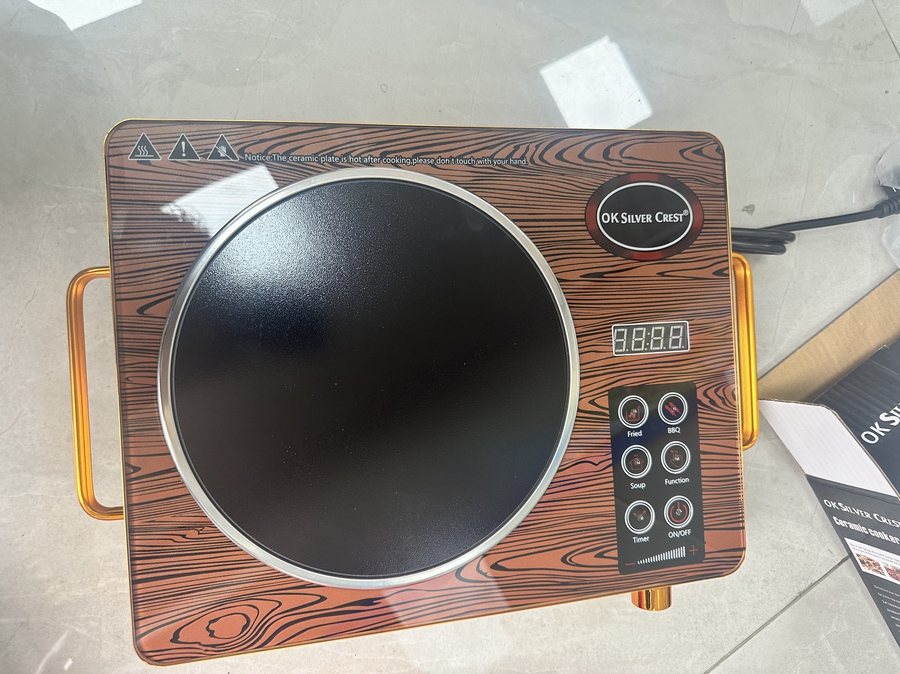
A portable single-burner unit may serve supplemental cooking, smaller spaces or an entry assortment. A wood-grain finish may support a presentation-led retail line, but it also creates a separate sample and artwork identity. A double-burner design changes counter space, simultaneous-use testing, connection review, carton density, receiving and service exposure. These differences should be decided before artwork or production allocation begins.
Record the user problem, intended channel, shelf or online presentation, expected assortment position, reorder trigger and replacement relationship for each proposed SKU. Remove a route that duplicates another without a meaningful difference in function, electrical identity, controls, appearance or landed economics. A controlled range is easier to document, inspect, receive and reorder than a collection chosen from photographs.
Four public routes are available for buyer comparison. They help identify questions but do not establish a completed Argentina specification, conformity status, current availability or guaranteed container load. Final production needs a current sample, signed specification, rear rating label, approved packaging bill and destination review. Loading references must be recalculated after the carton and model mix are approved.
The public page lists 2400W, AC220-240V, LCD panel, 8 units per carton and a 40HQ reference of 4950. Confirm the current heater, thermal protection, controls, glass, plug, cord, label and packing.
The public page lists 2400W, AC220-240V, LCD panel, 8 units per carton and a 40HQ reference of 4950. Treat its surface finish, panel and artwork as a separate approval route.
The page text shows 2400W, AC220-240V, LCD panel, 8 units per carton and a 40HQ reference of 4950; source imagery visibly shows ALP-13 and 3500 watts. The discrepancy remains open.
The page publishes no model code, wattage or voltage and lists 3 units per carton with a 40HQ reference of 1680. Source imagery shows SC-7038 and 3500 watt, conflicting with the separate single-burner SC-7038 route.
P69 has a text-versus-image identity and wattage conflict. P70 reuses a code associated with another construction. Do not silently repair either record. Resolve the current sample, rear label, panel, carton and signed specification before a buyer releases artwork or a purchase order.
Resolution 16/2025 establishes Argentina's technical regulation for electrical equipment within its defined scope. Annex II lists household and similar electrical appliances and distinguishes product families and applicable standards. For portable grills, toasters and analogous cooking appliances, the annex identifies IEC 60335-2-9, IRAM-NM-IEC 60335-2-9 and EN 60335-2-9 routes together with the relevant general standard. For fixed ranges, cooking plates, ovens and similar appliances, it identifies IEC, IRAM and EN 60335-2-6 routes.
A product photo is not enough to choose between those routes. Confirm whether the exact appliance is portable, intended for fixed installation or supplied with an installation relationship that changes its classification. Record mounting, connection, intended use, dimensions, controls, heating construction and manual statements. The importer, certification body and qualified Argentina parties should confirm the exact legal and standards scope before evidence is commissioned or reused.
Use the official Resolution 16/2025 text and its official Annex II. Do not treat this page as a classification, certification or approval statement for any displayed model.
Resolution 16/2025 requires manufacturers and importers within scope to guarantee compliance through a Declaration of Conformity and the applicable conformity procedure. The declaration should be connected to the exact product or family, responsible economic operator, model identity, electrical version and evidence route. A declaration for a different heater, PCB, cord, plug, rating or enclosure does not automatically cover the ordered SKU.
Prepare a model-family table before the conformity file is assembled. Include model code, commercial name, product type, portable or fixed use, burner count, voltage, frequency, rated input, controls, protection parts, plug, cord, enclosure, glass, critical component list, test evidence and artwork revision. The Argentina importer should decide, with qualified parties, which variants can legitimately share one family and which require separate treatment.
The regulation also gives downstream distributors, wholesalers and retailers a responsibility to keep a simple paper or digital copy of the declaration. Plan that handoff before shipment. The factory package can organize the agreed model records; the Argentina operator decides what must be retained, presented and updated locally.
The current regulation and annex describe conformity procedures and recognized evidence conditions. Those conditions are specific. A CE mark, supplier declaration, component mark, old report or certificate for another construction is not automatic proof that an Argentina route is complete. Even where international evidence may be considered, the responsible parties must confirm the issuing route, scope, validity, surveillance, model coverage and current legal treatment.
Annex II includes defined certificate routes and states that, for one foreign route, only the CB Scheme is accepted. That does not mean every CB document, every certificate or every product is automatically accepted. Match the document to the final model, production site, critical components and electrical identity, then let the qualified Argentina party determine how it can be used.
Do not publish claims such as Argentina certified, approved for Argentina or compliant with all Argentina requirements unless the exact current product file supports them and the responsible local party authorizes the claim. During quotation, use evidence-status language: available, requested, under review, gap identified, accepted by responsible party or not applicable with a recorded reason.
Argentina's technical-regulation procedures explain that products requiring certification need the applicable conformity mark, including the seal and QR connection to the declaration or certificate. The mark must follow the current rules for visibility, permanence and legibility. This is not a decorative logo to place on a draft box before the conformity path is known.
Use the official technical-regulation procedures page to review the current process. The Argentina buyer should supply or approve the final mark data, QR destination and operator information after the declaration and evidence route are confirmed. The factory should lock those fields to the same artwork revision inspected before shipment.
The official Argentina service for electrical equipment identifies importer-side requirements including CUIT, an eligible ARCA fiscal key and the Trámites a Distancia platform. The declaration can be created and managed through the official workflow, and changes to the product must be updated. These are responsibilities of the Argentina operator, not a substitute service performed by a foreign catalog page.
Review the official electrical equipment quality and safety service. Assign who will hold the declaration, submit through TAD, coordinate the certification body, answer authority questions, retain evidence and update changes. Put the responsible name and completion gate into the purchase calendar.
Any post-approval change to heater, thermostat, thermal fuse, relay, PCB, display, enclosure, glass, plug, cord, label, instructions or manufacturing route should trigger a documented review. The responsible Argentina party decides whether the declaration, certificate, test evidence or marking must be updated before shipment or sale.
SC-7031, SC-7038 and P69 publish AC220-240V. P70 publishes no voltage. None of those fields establishes the required Argentina frequency, plug, cord, current, protection system or market suitability. The buyer must state the exact target electrical identity. The factory confirms whether that construction exists, requires development or needs new evidence.
Create a separate internal SKU for every electrical version. Verify heater, control board, relay, thermostat or sensor, thermal protection, internal wiring, grounding or insulation construction, plug, cord, strain relief and rating label as one controlled bill. A plug substitution alone does not establish a destination-ready appliance.
Use one rated-data table across the signed specification, rear label, declaration, certificate, manual, retail box, invoice description, packing list and inspection checklist. If current-sample results differ from an old catalog field, the approved current file controls the order and the public discrepancy remains disclosed until the source is corrected.
Customs classification should follow the exact heating method, construction, burner count, portability, rated data and principal function. Do not copy a tariff code from a competitor, a different cooking technology or a previous shipment with another construction. The supplier can provide technical records, but the importer and customs professional own the Argentina classification and declaration.
ARCA provides an advance classification route through SITA and MUELA. Its official guidance lists supporting material such as a sample, technical sheet, photographs, plans, catalogs, technical report and brochures. Use the official advance classification guidance when a binding decision is commercially important.
Record the selected tariff identity, reason, responsible adviser, decision date and source in the SKU file. Align it with the commercial invoice, packing list, declaration, artwork and technical description. Reopen the decision if the product's heating construction, installation route or other classification facts change.
The sale unit should be understandable and traceable for the intended Argentina channel. Build one controlled package containing product name, model, rated data, intended use, warnings, operating steps, cookware guidance, cleaning, storage, importer information supplied by the buyer, origin statement, barcode and service contact. The Argentina importer confirms all mandatory wording and local consumer-information duties.
Argentine Spanish is not merely a translation step at the end. Keep terminology consistent across the rating label, manual, box, inserts, online listing and dealer materials. Claims about power, cooking speed, safety, compatibility, energy use, warranty or certification must be supported by the signed product file and accepted evidence.
Use a release table for every printed and digital file. Record document name, language, owner, revision, approval date, linked model and barcode. A distributor should not receive artwork that points to a different model, electrical version, certificate or declaration.
The sample gate should confirm the physical product and the document route together. Verify burner count, heating construction, surface, feet, handles, control panel, display, settings, timer or lock direction where applicable, heater response, plug, cord, strain relief, rating label, Spanish manual, box, accessories and barcode. Photograph the front, rear label, panel, plug, cord, box and carton in the same record.
Agree a repeatable cookware demonstration. Define cookware material, base diameter, flatness, starting condition, setting, duration and observations. The demonstration compares the approved sample and production units; it does not prove universal performance for every pan, home or operating condition.
P69 and P70 need an additional identity gate because their public source records conflict. They should not move to artwork, conformity or production release until the current sample and signed records agree. Any later component change should reopen the affected evidence and inspection gates.
Pre-shipment inspection should use the purchase-order revision and approved sale unit. Check model identity, construction, finish, controls, functional samples, voltage, frequency, rated input, plug, cord, rear label, declaration reference where applicable, conformity mark and QR where applicable, Spanish files, barcode, accessories, retail box, carton and shipping marks.
The inspection report should record test supply, sample quantity, model, batch, result, photographs, nonconformities, containment and release authority. Do not close an electrical or identity discrepancy with a carton relabel unless the responsible technical and Argentina parties have accepted the entire change.
For mixed-model shipments, sample and record each SKU separately. A passing SC-7031 result does not release P69 or P70. A correct box cannot release a product with the wrong rear label, and a correct product cannot release a carton containing an unapproved version.
Resolution 16/2025 places document responsibilities beyond the importer. Build a digital handoff folder that the Argentina buyer can adapt for distributors, wholesalers and retailers. It can include the controlled declaration copy, certificate or evidence references where applicable, product identity sheet, Spanish manual, approved images, barcode map, batch traceability and service escalation route.
At receiving, compare carton count, marks, visible damage, sampled model, barcode, electrical version, Spanish sale unit and accessories with the approved file. Quarantine mixed identities, unexplained label changes or damaged cartons. Record receiving findings by batch so repeat orders can address verified issues.
Define how dealers and customers report damage, functional failure, electrical mismatch or use questions. Spare parts and diagnosis guidance must match the approved construction. Do not promise generic parts coverage for an unresolved model family.
Start with the date stock must be received and allocated to the buyer's channel. Work backward through product-scope review, classification, sample, evidence route, declaration, Spanish artwork, purchase-order release, production, inspection, cargo handoff, port operations, customs, inland delivery and receiving.
Assign an owner and completion condition to every gate. A supplier production estimate is only one part of the calendar. Conformity questions, TAD actions, evidence review, artwork corrections, component changes, inspection findings and logistics can change the result. No universal arrival or delivery promise is made on this page.
If the target period cannot absorb unresolved technical or document work, reduce the model range or move the commercial date. Shipping an uncontrolled version to protect a calendar creates a larger customs, channel and service risk.
A comparable buyer model includes private factory quotation, OEM setup, sample, testing or evidence work, certification or local procedures where applicable, inspection, inland logistics, freight, insurance, customs treatment, taxes, broker charges, destination handling, inland delivery, storage, service allowance and working-capital time. Qualified Argentina parties provide current local values.
SC-7031 and SC-7038 publish 8 units per carton and a 40HQ reference of 4950. P69 shows the same references but retains identity and wattage conflicts. P70 publishes 3 units per carton and a 40HQ reference of 1680 without public page wattage or voltage. These are planning references, not guaranteed loads. Recalculate after approved dimensions, weight, pallet decision and model allocation.
Compare quotations only when model identity, electrical construction, conformity responsibilities, packaging, inspection, trade term and destination inputs are equivalent. A lower number attached to an incomplete file is not a lower controlled landed cost.
An Argentina container may combine ceramic hobs with air fryers, blenders, electric fans, rice cookers or bottled-water pumps. Each SKU still needs its own identity, electrical construction, regulatory conclusion, declaration or evidence route where applicable, Spanish files, carton, inspection and receiving line. A container booking cannot close an unresolved product file.
Use the South America mixed-container route only after the individual Argentina SKUs have release status. Allocate quantity, cartons, volume, weight, readiness and contingency by SKU. Remove or defer a route that cannot close before booking rather than shifting its risk into the entire shipment.
Use ARGENTINAHOB1000 in WhatsApp or the formal quotation request. Wholesale only. MOQ starts from 1000 PCS. No public prices.
No blanket approval claim is made. The exact product, version, scope and conformity route must be confirmed by the importer and qualified Argentina parties.
The answer depends on the exact portable or fixed construction and legal scope. Annex II identifies different cooking-appliance routes; qualified parties must confirm the model.
No. A foreign mark or document is not automatic Argentina acceptance. Confirm the current evidence and certificate route for the exact model.
The official service identifies Argentina importer-side requirements. Assign the local responsible party, CUIT and workflow before commercial release.
SC-7031 and SC-7038 have clearer page data. Every route still needs current sample confirmation; P69 and P70 retain disclosed conflicts.
No public price is provided. A private trade-term quotation follows after the exact SKU, quantity, evidence responsibilities, packing and destination inputs are confirmed.
Wholesale Only
Long-Term Market Development
Use this route when your team can share channel evidence, target landed-cost logic, inventory and service constraints, and a repeat-order plan. Yaoyuan can coordinate the selected ceramic hob version, OEM files, supplier resources, inspection and replenishment decisions. Demand, exclusivity, delivery, sales volume and margin are not promised before both parties review the evidence and responsibilities.