Direct Answer
Start with one of the eleven real milk frother catalog routes: KD319, B02, B03, KD306, KD307, KD309, B04, B05, B06, KD311 or KD313. Obtain a current labeled sample and record its exact charging connector, input, supplied cable, battery identity, control sequence, whisk construction, shaft, detachable parts, storage tube or stand where applicable, instructions and retail-box contents. Then run one buyer-agreed operating test and freeze the same version for OEM artwork, inspection and repeat ordering. The public catalog does not establish runtime, speed, foam time, waterproofing, universal beverage results or final production accessories.
Why a catalog reference is only the starting point
The source catalog uses the same broad USB / Type-C wording for all eleven records, but that wording does not establish which connector is present on a current sample or whether cable, adaptor, battery and charging input are identical. Quotation, manual, transport file and inspection should therefore follow one labeled version rather than a generic rechargeable description.
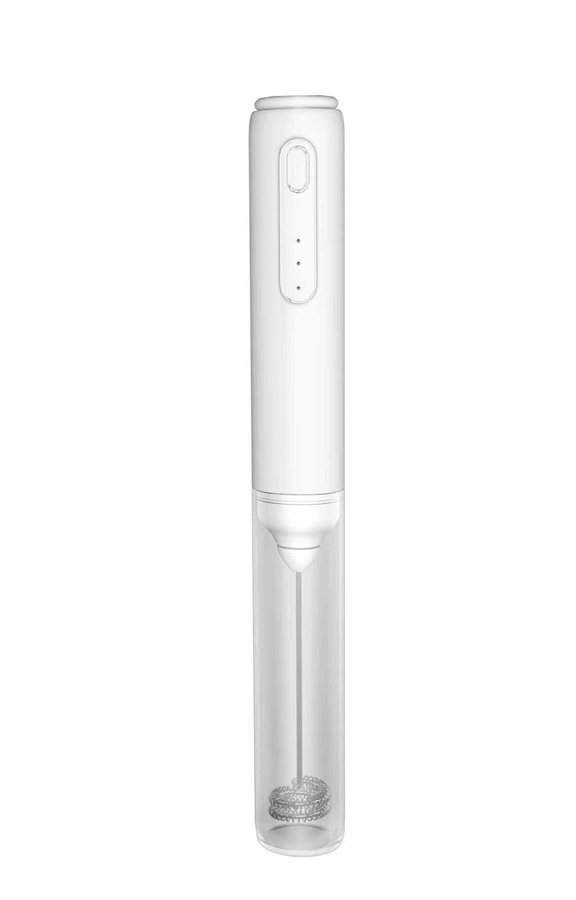
The visible models also use different body and whisk directions. B04 shows a balloon-style whisk, B05 and B06 show protective-tube concepts, and other routes use open-coil presentations. Those differences can affect the complete sale unit, instructions, cleaning, display, packing and replacement-part identity. They should remain explicit in the buyer's specification.
Select
Choose one named model and sales-channel role from the eleven catalog routes.
Verify
Record the labeled sample, connector, input, cable, battery, controls, whisk and included parts.
Test
Run a buyer-agreed operating method and document the sample and observable result.
Release
Freeze the technical version, OEM files, packing, inspection and repeat-order revision.
Real catalog records that can begin the approval discussion
These Yaoyuan catalog records provide model-discovery evidence. They do not replace confirmation of the current sample, final order version and destination-market requirements.
| Catalog route | What the record establishes | What the buyer must approve |
|---|---|---|
| KD319 / KD306 / KD309 / KD313 | Four named catalog routes with individual body, control and indicator presentations | Keep each model identity separate and approve its connector, charging input, battery label, controls, whisk, shaft, cable, instructions and packed contents on the current sample. |
| B02 / B03 | Two separate records connected to similar retail-artwork directions | Determine the actual technical and appearance difference before assigning buyer SKUs. Treat every printed performance or compliance statement as a claim requiring evidence. |
| KD307 / B04 | KD307 shows a separated whisk assembly; B04 shows a balloon-style whisk direction | Approve attachment retention, shaft, whisk geometry, material wording, included quantity, cleaning instructions and protection inside the retail box. |
| B05 / B06 / KD311 | B05 and B06 show protective-tube concepts; KD311 carries selected dimension artwork | Confirm tube closure, drainage and protection, model-specific construction, measured dimensions, connector, complete box contents and final packing rather than transferring facts between similar presentations. |
Accuracy rule: missing fields remain open questions. Product photographs, names and published values must not be expanded into unsupported claims.
USB-C charging: approve the connection, not just the socket
The eleven frother catalog records do not establish a finished charging system. Even after the selected sample's connector is confirmed, keep connector identity separate from charging capability. The USB-IF terminology guidance distinguishes USB Type-C from USB Power Delivery: the connector alone does not establish PD support. Do not turn the broad catalog wording into a fast-charging claim.
For a version confirmed to use a Type-C connector, prepare separate evidence rows for the connections the buyer intends to support. A-to-C means a cable with a Type-A plug at the power-source end and a Type-C plug at the appliance end; C-to-C means Type-C plugs at both ends. These descriptions identify the connection, not a result for any Yaoyuan model.
- Supplied connection: identify the exact cable and any included power adaptor. If the box contains a cable only, record the supplier-confirmed external power-source requirements without implying that an adaptor is supplied. The demonstration setup and retail-box contents must be distinguished.
- A-to-C connection, if intended: record the source model and port, its output label, the cable reference and both ends, and the exact frother revision. Keep the observation attached to that combination; it is not evidence for a different source or cable.
- C-to-C connection, if required: request separate evidence using the agreed source and cable within the appliance's confirmed input requirements. An A-to-C observation does not establish C-to-C operation. Conversely, an unresolved C-to-C observation does not by itself identify a faulty cable, battery or circuit.
Each row should identify the labeled sample, documented input requirements, source port, cable, starting battery condition, agreed procedure, date, tester, charging observations and evidence reference. Distinguish not tested, observed under that setup, and requiring clarification. Use only source-and-cable combinations permitted by the manufacturer's instructions for the selected appliance; obtain clarification before testing if suitability is unclear. Have qualified personnel assess charging behavior under the agreed method; an indicator alone does not establish charging rate or completion. Do not force a voltage, modify wiring or open a battery enclosure to obtain a result.
If a required connection is unresolved, ask the supplier to investigate before releasing the corresponding compatibility claim or order version. A working setup can be recorded without approving every charger. USB-IF's cable guidance also makes clear that a certified cable does not add capabilities to, or certify, the connected product. This buyer record is not USB compliance certification.
Carry the agreed connection scope into the manual, listing, cable or adaptor packing line and repeat-order reference. Keep unsupported PD, fast-charging and universal-charger claims out of artwork. Initial wholesale inquiries can include open charging questions; this record is not an extra mandatory RFQ field.
What the final order specification should control
Model and current sample identity
Record the full model, catalog reference, current sample photographs, body color and finish, controls, indicators, dimensions, production revision and supplier approval date. Similar housings do not create one interchangeable SKU.
Charging and battery version
Confirm connector, rated charging input, supplied cable, adaptor scope if any, battery label, charging indication and required battery or transport evidence. Broad USB / Type-C catalog wording remains a starting point only.
Whisk, shaft and detachable parts
Photograph and list the exact whisk geometry, shaft, attachment method, retention, included quantity, material wording, storage tube, stand and any optional part. Approve the complete sale unit, not only the motor body.
Operating test and claims
Define liquid or test medium, volume, container, starting condition, control sequence, duration, repetitions and observable result. Do not publish RPM, runtime, foam time, noise, waterproofing or universal beverage claims without an agreed method and evidence.
OEM files and instructions
Connect logo, color box, manual language, barcode, importer information, cleaning instructions, charging warnings and every product claim to the approved sample and complete BOM before artwork release.
Packing, inspection and repeat order
Freeze unit protection, accessory placement, retail box, carton quantity, dimensions, weights and marks. Inspection and repeat production should reference the same sample, specification, artwork and change-control revision.
Test one complete frother version under one recorded method
A useful test record identifies the model, sample label, connector, cable, battery label, whisk and shaft, liquid or test medium, volume, container, starting condition, control sequence, operation time, repetitions and observable result. Photograph the complete unit and supplied parts before and after the test. If the buyer requires a numeric limit, agree the measuring method and acceptance range before testing.
One successful observation does not prove every beverage, volume, container or production revision. If the motor, control board, battery, connector, whisk, shaft, body, accessory set, instructions or packing changes, determine whether the sample test, artwork and buyer approval must be repeated.
Milk frother samples: separate foam amount from foam retention
A photograph of a full cup does not tell an importer which foam outcome was approved. The eleven Yaoyuan frother catalog records identify product routes, not measured foam results. Before comparing a proposed sample report or releasing a box claim, separate how much foam was recorded initially from what remained at a specified later reading.
Name the quantity and denominator
Ho and colleagues' research distinguishes initial foam divided by starting milk volume from later loss relative to initial foam. Its heated, reconstituted-skim-milk experiment is not a test of these handheld products. For a buyer sheet, distinguish:
- Initial foam ratio: initial foam volume divided by starting liquid volume.
- Foam retained: later foam volume divided by initial foam volume, expressed as a percentage.
- Foam lost: initial minus later foam volume, divided by initial foam volume, expressed as a percentage.
Retention is a complementary buyer calculation, not the paper's named measure. Ratios require positive denominators. If initial foam volume is zero, retention and loss percentages are undefined; record the observation without calculating those percentages. Identify the foam layer rather than substituting total liquid-plus-foam volume. Record when the initial reading occurs relative to the end of frothing, and measure the later interval from that reading.
Read the remaining amount alongside the percentage
Arithmetic illustration only, not product data or a recommended test volume: both records start with 80 mL of liquid. A records 160 mL of initial foam and 120 mL later; B records 100 mL initially and 90 mL at the same elapsed time. A retains 75%; B retains 90%. B has the higher retention percentage, but A has more foam remaining. Neither percentage alone answers both purchasing questions.
Close only the supported purchasing question
Add these outcome fields to the complete sample record above. Define what the buyer's intended claim or acceptance decision actually requires, and agree the reading method, timing and any limits before comparing samples. Keep the same units and quantity definitions across records. A percentage labelled only "foam stability" is unresolved until its calculation is identified: a larger loss percentage and a larger retention percentage point in opposite directions.
If the requested evidence concerns retained foam but the report contains only an initial photograph or amount, request the missing later observation; do not treat the requirement as approved. Connect the accepted evidence to the exact sample revision and wording allowed in artwork. These distinctions are not a universal test protocol, a pass threshold or a ranking of Yaoyuan models. Initial wholesale RFQs can include open performance questions without adding a mandatory foam-results field.
Inspection should verify the approved charging, whisk and packed-unit revision
Inspection can verify model identity, quantity, appearance, sample label, connector, charging indication, supplied cable, battery label where accessible, controls, whisk and shaft, detachable parts, accessory count, operating sampling, instructions, retail box and carton marks. The buyer should define the sampling plan and release authority for the exact order.
For repeat orders, retain the approved labeled sample, charging record, whisk and accessory photographs, test method, BOM, artwork and packing layout. Any component or file change should create a traceable revision before production rather than silently changing the buyer's program.
Continue the controlled sourcing plan
Private B2B quotation
Send one exact product and market version
Include the catalog route or model, quantity, destination country, plug and voltage, OEM scope, packing, destination port and trade term. Wholesale only; MOQ starts from 1000 PCS.