Importers and Distributors
Companies able to identify the importing entity, destination states, channels, model role, Portuguese file owner, battery-document owner and replenishment process.
Brazil Compact Beverage Accessory Partnership
Build a controlled Brazilian milk frother program from eleven real catalog routes. Define the state, channel, retail role and price architecture first; then freeze one model, charging construction, battery identity, whisk assembly, Portuguese files, box contents, transport evidence, inspection and repeat-order scorecard.
Wholesale only. MOQ starts from 1000 PCS. No public prices, retail orders or one-piece orders.
Buyer Qualification
Companies able to identify the importing entity, destination states, channels, model role, Portuguese file owner, battery-document owner and replenishment process.
Teams that require shelf-ready presentation, barcode, Portuguese instructions, controlled box contents, master-carton discipline and repeat delivery.
Buyers prepared to approve one exact body, whisk, charging system, battery label, accessory set, artwork revision, sample test and inspection standard.
Importers using beverage accessories as a measured addition to a coffee, kitchen-tool or mixed-appliance range, then sharing sell-through, return and reorder evidence.
Direct Buyer Answer
A decision-ready Brazil inquiry identifies the importing company, destination state or sales region, buyer channel, intended retail role, competing products, target commercial position, selected catalog model, quantity, required charging package, Portuguese OEM scope, destination port and inspection method. A supermarket shelf item, coffee-channel accessory, gift program and mixed-container filler do not need the same presentation or evidence file.
The eleven public records establish model and appearance routes. They do not automatically establish battery capacity, motor, speed, runtime, foam time, waterproofing, food-contact conformity, charger, certification, carton data or Brazilian import treatment. Those fields remain open until a current sample, written specification and destination review close them. Similar housings must not be merged into one generic SKU.
The catalog image shows a white body, power control, multiple indicators and an open coil whisk. Confirm the current connector, speed logic, body dimensions, whisk and complete box contents.
B02 is linked to shared retail-box artwork with B03. Treat every performance, battery and conformity statement printed on that artwork as a claim requiring evidence, not as an automatic product fact.
B03 shares the catalog artwork direction with B02. Confirm whether the difference is color, housing, internal construction or another controlled field before assigning a Brazil SKU.
The image shows a straight white body with a dark control panel and multiple indicators. Connector, battery, speed behavior, shaft, whisk and supplied items remain sample decisions.
The catalog photo shows the body and whisk assembly separated. Confirm attachment retention, installation method, spare-part identity, shaft straightness and packed protection.
The source image shows a faceted white body, button and indicator direction. Do not infer speed count, runtime or charging details from the visible indicators.
The image shows a metallic-look body and balloon-style whisk rather than the open coil used on other routes. Test it as a separate attachment and use case.
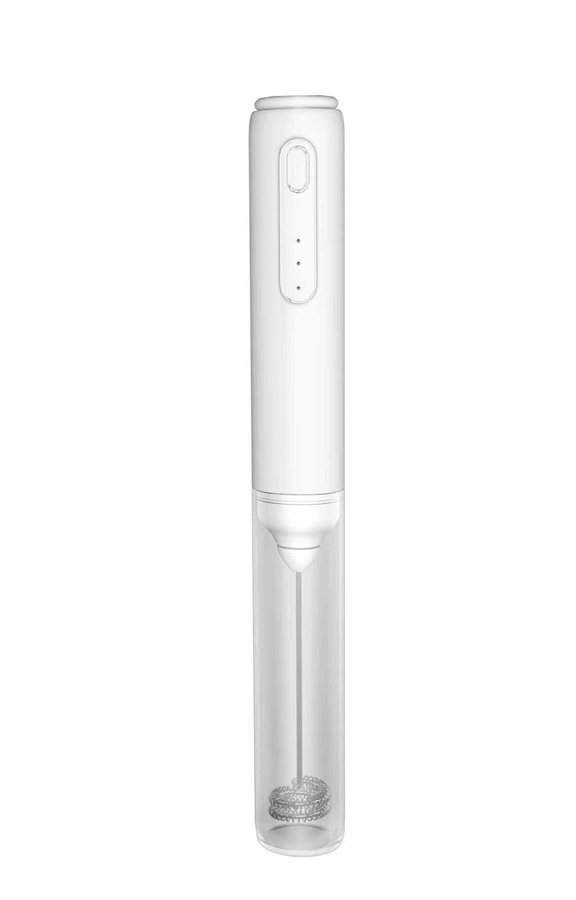
The white B05 image shows a clear lower storage tube around the whisk. Confirm how the tube closes, cleans, drains and protects the shaft in retail and transport use.
The dark B06 image uses a similar protective-tube concept. Confirm whether it shares the B05 construction or only a visual idea; keep color and component identities separate.
The public image indicates an overall 250mm direction, 35mm body width and 25.2mm whisk width. Reconfirm production dimensions and tolerance on the current sample.
The image shows a sculpted white body, control and indicators with an open coil whisk. Freeze the actual finish, control logic and included charging items before artwork.
The source library uses USB or Type-C wording at category level, but that wording does not prove that every model uses both connectors or that the cable and adaptor are included. The approved model, connector, rated input, cable specification and package contents must agree in the purchase order, manual, box and inspection file.
The Brazil partner contributes importer identity, destination states, channel access, competitor and price observations, target retail role, local landed-cost inputs, Portuguese review, local regulatory and customs specialists, service route, launch forecast, stock plan and sell-through evidence. Yaoyuan contributes catalog access, current samples, component and packaging coordination, OEM files, production follow-up, inspection support, mixed-container planning and replenishment preparation.
Keep one shared register with model, open questions, sample revision, whisk and charging construction, battery identity, destination responsibilities, Portuguese files, carton revision, inspection method, owner and due date. A question closes only when evidence is recorded. Strategic cooperation means using actual market and production information to improve the next order, not repeatedly negotiating one photo price.
Give each decision an evidence type. A catalog image can open a model route, but it cannot close a technical field. A signed sample sheet can close appearance and agreed test fields for one revision. A component record can identify the battery, cable, whisk or housing used in that revision. A released artwork file can close printed content only after the Brazilian partner approves the Portuguese wording and local company data. An inspection record can show whether the shipment matched the approved unit; it does not replace the buyer's import or market-release decision.
Record changes instead of overwriting them. If the cell, connector, whisk, cable, box insert or supplier changes, create a new revision, identify the affected evidence and decide whether another sample or focused test is needed. This gives both companies a usable history for claims, receiving checks, service questions and repeat orders.
For supermarkets, compare shelf footprint, hanging or standing presentation, Portuguese box clarity, barcode location, visible included parts and master-carton handling. For coffee and beverage channels, focus on repeatable use, whisk fit, cleaning, shaft protection and replacement support. For gifts and promotions, confirm artwork deadlines, presentation, color, quantity split and delivery window. For mixed-container programs, compare carton efficiency and range role without using compact size as an excuse to add an unapproved SKU.
Create a shortlist of no more than three routes with a written reason for each. A protective-tube design may support cleaner shelf presentation. A detachable whisk may support service or packing decisions. A balloon whisk is a different use direction. A slim open-coil design may fit another commercial position. These are hypotheses to test with the buyer, not promises of local demand or superior performance.
Define the liquid, fat content or formula, volume, vessel diameter, starting temperature, immersion depth, selected mode, operating time, rest time and observable result. Record splashing, shaft movement, whisk deformation, motor behavior, control response, temperature rise and cleaning outcome. Use the same method when comparing shortlisted samples.
A successful buyer test supports the tested construction and method only. It does not prove universal foam time, professional results, quiet operation, waterproofing or suitability for every beverage. Do not print RPM, runtime, cycle-life, noise or beverage-result claims unless the exact version has a defined method and supporting evidence.
Record connector type, rated charging input, cable ends, cable length, cable marking, battery chemistry, battery model and capacity, protection circuit, charging indicator, full-charge behavior, operating modes, low-battery behavior and instructions. State clearly whether the retail box includes a cable only, an adaptor, both or neither. A connector photograph does not define the complete charging package. Category wording does not prove every model uses both connectors, and it does not prove that any cable or adaptor is included.
If an external adaptor is included, treat it as a separately identified component with its own rating, plug, supplier and destination evidence. The importer and qualified local parties should determine the Brazilian requirements that apply to the exact package. A generic travel adaptor or reused image is not a released Brazilian power solution.
Identify the installed cell or battery and connect it to the proposed product revision. Request the applicable test summary and transport documents from the responsible supplier and freight parties. The UN Manual of Tests and Criteria includes subsection 38.3 for lithium cells and batteries, but a reference to UN 38.3 is not proof that the battery inside a current sample has a matching test summary. A generic report or a test-summary filename does not prove the selected cell or battery passed the applicable test; model identity and revision must match.
Confirm battery state, quantity, packing method, terminals, unit protection, carton labels, declarations and carrier requirements with the appointed forwarder before shipment. Air, sea and courier routes can require different operational checks. Reconfirm the file after a battery supplier, model, capacity or packing change.
Record every part that can contact the beverage or receive splash: whisk wire, shaft, attachment interface, protective tube where present and any removable accessory. Confirm material identity, surface finish, sharp edges, corrosion observations, cleaning method, immersion limits, drying and storage. Do not describe the complete appliance as washable or waterproof unless the approved construction and evidence support that wording.
Anvisa explains that materials in contact with food include equipment and utensils made from materials such as plastics and metals. The importer should map the applicable Brazilian requirements to the exact contact parts and intended use. Supplier declarations or reports should identify the material and model revision; evidence for a different whisk, shaft, coating or plastic part is not automatically transferable. A stainless-steel description or visual appearance does not prove that the actual whisk material is food-contact compliant for the proposed use.
Prepare the product label, charging information, color box, manual, barcode, buyer-supplied importer details, warnings, claims and master-carton marks for the exact model and revision. The buyer should approve Portuguese wording, local consumer information and every performance claim before printing. Yaoyuan can coordinate the approved files but should not invent legal statements, conformity marks or third-party company data.
Use a release sheet with filename, revision, approval date and approver. Inspect printed samples before mass packing. B02 and B03 artwork images display performance and conformity language; those graphics are references, not automatic authorization to reuse claims or marks. Replace unsupported statements before buyer approval.
The Brazilian importer and qualified customs parties should classify the exact product and review current NCM attributes, tax and administrative treatment. Siscomex states that its administrative-treatment information is informative and that the official simulator should be used for the treatment applicable to each import operation. A name such as milk frother or kitchen accessory is not a customs classification decision.
Complete the import file with exact product description, charging construction, battery information, material, intended use, package contents, value basis, origin and destination details. Recheck the treatment before shipment because systems and requirements can change. Yaoyuan supplies factory-side records; the Brazilian importer owns the final importer, customs, tax and market decisions with its qualified advisers.
Normalize model, charging package, whisk and accessories, individual box, inserts, units per carton, carton dimensions, gross and net weight, quantity, inland handling, export basis, freight, destination charges, duties or taxes assessed by qualified parties, local transport, inspection, finance, service reserve and promotion cost. A lower unit quote can lose its advantage if the carton, evidence or claims require rework.
For mixed-container planning, reconcile cartons, units, CBM and weight for every SKU. Compact accessories can use residual container space only after their own MOQ, version, artwork, evidence and inspection are approved. Published carton or loading references must be reconfirmed against the production-intent packing before freight comparison.
The inspection file should cover model and revision, appearance, dimensions, finish, button and indicator behavior, charging connector, cable and adaptor scope, battery label, whisk type, shaft alignment, attachment retention, operation under the approved test, abnormal sound or heat, included items, Portuguese files, barcode, retail box, master carton, quantity and marks. Protective tubes on B05 and B06 need opening, closing, drainage and packing checks. KD307 needs attachment and retention checks. B04 needs its balloon whisk identified separately.
Define sampling, acceptance criteria, defect handling, reinspection responsibility and release authority before production is presented. Keep an approved sample and inspection record for repeat orders. If the motor, battery, PCB, connector, whisk, shaft, housing, finish, cable, adaptor or packing changes, review the affected tests, evidence, files and inspection criteria before release.
Start with an assortment hypothesis and a controlled first commercial order, not an unsupported promise of demand. At receiving, record carton condition, quantity, barcode, model identity, appearance, charging and functional sample results. During sales, record sell-through by model and channel, buyer objections, returns, charging complaints, whisk or shaft issues, packaging damage and service parts used.
Use the review to keep, correct or remove a route. A strategic repeat order can increase the proven model, revise packaging, rebalance colors, improve instructions or combine categories using measured evidence. This is how factory resources and local-market knowledge create shared value beyond a one-time transaction.
Before requesting the final quotation, create a compact index for every shortlisted SKU. It should name the current catalog route, sample code and date, body and color, whisk type, attachment method, connector, charging input, cable and adaptor scope, installed battery identity, package contents, Portuguese artwork revision, barcode owner, current unit box, master-carton data, destination port, inspection method and every open evidence item. The index prevents a commercial price from being compared across different constructions.
Separate the index into four statuses: published source, current sample confirmed, document received and matched, and buyer or qualified local party decision pending. Do not use “confirmed” for a field that appears only in a picture or generic category sentence. Do not use “compliant” when the available file belongs to another component, revision or market. This status language lets the importer see what Yaoyuan can coordinate and what still requires its own customs, conformity, language or channel decision.
Use the same index at the quotation, purchase-order, pre-production, inspection and receiving stages. When the buyer receives the goods, compare sample identity, charging package, box contents, Portuguese files, carton marks and visible condition against the released index. Add service observations, returns by reason, stock by channel and sell-through by week. The next order should change only the fields supported by this evidence, making the partnership more accurate with every cycle.
Use BRAZILFROTHER1000 in your formal quotation request or WhatsApp message. It routes the inquiry to the Brazil rechargeable milk frother decision process. Wholesale only. No public prices or retail orders.
No such blanket claim is made. Connector, charging input, cable and adaptor scope must be confirmed for the selected current sample.
No. Marks or claims on a catalog artwork image do not prove valid evidence for the proposed Brazil model. Review the exact file and authorization before use.
Yes, after the buyer supplies or approves controlled Portuguese text, importer details, barcode, warnings, artwork and permitted claims for a qualified order.
Yes, after model MOQ, charging version, cartons, battery file, CBM, quantity, artwork and inspection are reconciled by SKU.
A B2B quotation depends on model, quantity, charging package, accessories, OEM files, packing, inspection, port and trade term. A public photo price does not define those inputs.
No. Yaoyuan coordinates factory-side evidence and production resources. The importer and qualified Brazilian parties own customs, tax, regulatory, channel and final market decisions.
Wholesale Only
Importers, distributors, wholesalers, supermarket buyers and private-label customers. MOQ starts from 1000 PCS.
Model, whisk, charging system, battery, Portuguese files, box contents, transport evidence and inspection must describe one order.
Send the complete RFQ before comparing price. Retail, one-piece orders and public consumer prices are not supported.