What does the liter capacity tell a buyer?
A capacity field identifies the volume stated for a catalog record. It does not, by itself, explain the measurement method, the shape of the cooking space or the food load recommended for a particular recipe. Ask what the stated capacity describes and which parts were installed when it was determined.
Basket dimensions answer a different buying question: what can be placed inside the selected configuration? A top opening, a narrower base and a raised cooking plate are separate measurement references. Rounded corners or projections can also affect fit. Record the actual geometry instead of treating every basket as a rectangular box.
Keep external product dimensions in a separate field. They describe the appliance's overall size, not its basket interior. Neither external dimensions nor a simple length-by-width-by-height calculation establishes an approved food quantity or a new “usable liters” claim.
The basket measurement checklist
Start with a cool, unplugged sample and only the parts intended for normal user removal. Identify whether the supplied assembly uses a separate basket, pan, crisper plate, tray or another arrangement. Use the same units and measurement points for every candidate. Protect coated surfaces from the measuring tool and remove all gauges before reassembly or operation.
- Inside opening
- Record the clear width and front-to-back depth at the opening. For a round opening, record the inside diameter. Show the tool's start and end points in a photograph. Note any rim, handle mounting or projection that reduces the opening through which a dish must pass.
- Food-supporting surface
- Identify the surface on which food normally rests in the approved setup. Measure its width and depth, or diameter, with the required plate or tray installed. Photograph the outline, rounded corners and raised features. A measurement across the widest points alone may not describe the area available for a particular food arrangement.
- Internal height and installed tray position
- Record the height from the identified food-supporting surface to the basket rim, stating exactly which points were used. If the manufacturer permits more than one tray position, record each separately. Keep this dimension separate from the permitted food height or fill level.
- Clearance instructions
- Request the model's instructions for maximum filling, food placement and clearance above and around the load. Record a fill mark if one is present. Where closed-appliance clearance needs clarification, request the manufacturer's drawing or explanation; do not infer it from an open drawer measurement.
- Accessory fit
- For each proposed accessory, record its full outside dimensions, including handles, feet and rim. Check that it passes through the opening, sits as instructed and allows normal drawer closure and removal. Obtain confirmation that the accessory is suitable for use with the selected model; physical fit alone is not approval to cook with it.
Label the measurement photos with the model, sample identifier, date and installed parts. A sketch with named reference points is useful when the supplier and buyer measure the same sample in different locations.
Compare the shape against the intended food
Define the intended cooking example before deciding which dimension matters most. For pieces intended to sit beside one another, review the food-supporting surface and the required spacing. For a taller item, review the permitted loading height. For a baking dish or other accessory, review the opening, the base fit, its installed height and the instructions for using it.
These checks make the comparison specific. “Basket looks large” gives the purchasing team little to verify. “The agreed arrangement fits on the installed tray, with the spacing required by the manual” gives the team a repeatable sample observation.
Do not force every food into the same loading arrangement. Obtain instructions for the food and model being evaluated. Record any required turning or shaking as part of that test, rather than assuming that one sample photograph represents every cooking use.
Use the exact catalog model when requesting dimensions
The following Yaoyuan records provide named starting points for a sample request. Their published capacities are catalog fields; the linked pages do not publish the basket measurement set described above.
- JD-888 — 4L Glass Model Air Fryer: published capacity 4L.
- JD-389 — 6L Air Fryer: published capacity 6L.
- 21-3 — Smart Stainless Steel 10L Air Fryer: published capacity 10L.
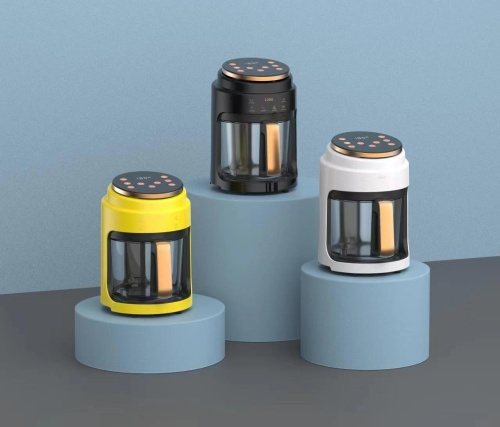
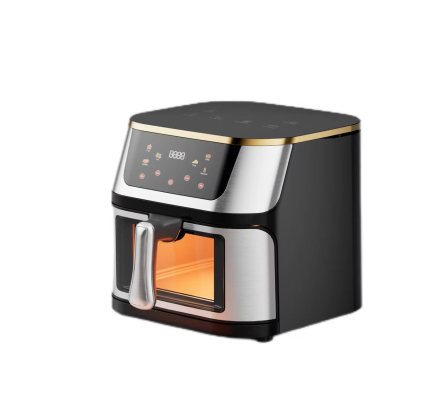
Request separate measurements for each candidate. Do not transfer a basket dimension, accessory fit or permitted food load from one record to another. These examples are not a ranking of cooking space or performance.
For a broader model shortlist, use the air fryer model selection guide. The 4L, 6L and 10L buying matrices compare the published configurations within each capacity group.
Build a measurement record another person can repeat
Keep the factory's stated measurement, your sample measurement and the agreed acceptance requirement in separate fields. A difference is a reason to check the reference points, installed parts and sample revision before deciding whether the product is outside the agreed specification.
Use one record for each model and basket assembly:
- Model and catalog link; sample identifier and date
- Basket, pan and tray identifiers; supplied accessories; installed tray position
- Opening width and depth or diameter, with photo references
- Food-supporting surface dimensions and outline
- Height reference points, measured height and applicable loading instructions
- Measuring tool, units, method and the person recording the result
- Buyer requirement, agreed tolerance and any unresolved difference
Leave unknown fields open. Agree the measurement method and tolerances with the supplier before using this record as an inspection requirement. If the basket or tray changes later, update the dimensions and recheck any accessory or food-fit conclusion affected by the change.
Separate a fit check from a cooking trial
A fit check records placement and handling. A cooking trial records the result under defined operating conditions. Both can be useful, but a successful fit check alone does not establish even cooking, preparation time or an acceptable batch size.
For a repeatable cooking comparison, agree the food type, piece dimensions, quantity or weight, starting condition, arrangement and installed accessories. Record the model and electrical version, settings, time, any turning or shaking, and the result against the agreed criteria. Follow the selected model's operating and loading instructions throughout.
Keep before-and-after photographs with the test record. If a retail claim concerns a specific food quantity, use evidence for that exact claim and configuration. Avoid converting the catalog's liter value directly into a household serving count. The air fryer sample approval guide covers the wider process for approving the finished product.
What to include in a basket-dimensions request
Send the selected model references and explain what the measurements must help you decide. For example, identify the food arrangement or proposed accessory your buying team intends to evaluate. Request a dimensioned drawing or clearly marked photographs of the current basket and installed cooking parts.
Ask the supplier to confirm:
- What the published capacity describes and the measurement basis used
- The inside opening, food-supporting surface and height reference measurements
- Which basket, tray and accessories are supplied with the quoted version
- The applicable fill limits, clearance and loading instructions
- The sample and specification references to retain for order approval
For a private quotation, also provide quantity, country, plug type, voltage, packing request, OEM request and destination port. Yaoyuan Electric offers factory direct supply for wholesale buyers, with MOQ starting from 1000 PCS. Retail and one-piece orders are not accepted.
Prepare an air fryer wholesale quotation request with your candidate models and the basket measurements still needed. Confirm the current sample and agreed specification before using dimensions or food-capacity claims on OEM artwork.