Direct Answer
Start by separating the compact pump-style routes from the elongated Z-K03 bar-type route. Then identify the intended food-storage system and approve the current labeled sample together with its compatible consumable or container, operating sequence, electrical or charging identity, included items, instructions, OEM files and packing. Run a buyer-agreed test on that complete system before production. The public catalog does not establish vacuum pressure, sealing width, bag compatibility, cycle time or universal food-preservation performance.
Why a catalog reference is only the starting point
The word vacuum sealer can describe different systems. A compact pump may depend on a valve, port, container or reusable bag interface. A bar-type machine may depend on a particular textured bag or roll construction and a defined sealing area. Similar category labels therefore do not make the machines, consumables or commercial programs interchangeable.
Machine price is only one part of the buyer's decision. Consumable availability, replacement behavior, instructions, claim control, accessory completeness, retail presentation and repeat-order identity can determine whether the route is practical for a distributor. Those items should be approved before artwork, loading and landed-cost calculations are released.
Classify
Choose a compact pump-style or bar-type route and state the intended use.
Match
Identify the exact bag, roll, valve, container or interface used for approval.
Test
Operate the complete system under one buyer-agreed and recorded method.
Release
Freeze the machine, consumables, accessories, files, packing and inspection revision.
Real catalog records that can begin the approval discussion
These Yaoyuan catalog records provide model-discovery evidence. They do not replace confirmation of the current sample, final order version and destination-market requirements.
| Catalog route | What the record establishes | What the buyer must approve |
|---|---|---|
| K01 (P278) | Compact cylindrical catalog route with selected charging, battery, material, size and carton fields | Confirm intended application, compatible interface, charge input, battery label, operation, included parts, measured size and final packing. |
| K02 (P279) | Separate compact cylindrical route with a visibly different top and selected published fields | Do not infer a different result from appearance. Approve its own interface, compatible system, electrical identity, operation, accessories and packing. |
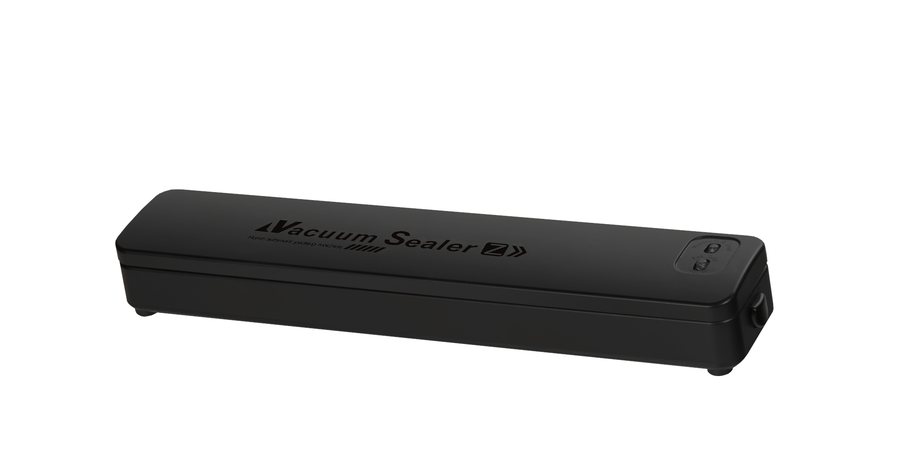
| Z-K03 (P280) | Elongated bar-type catalog route | Confirm compatible bag or roll construction, usable sealing area, operating sequence, controls, rated label, test method, cord or charging route and included items. |
| K15 / K15B | Two compact pump-like catalog routes with different published electrical fields | Keep the two versions separate. Do not transfer nozzles, battery, light, performance or artwork claims from one route to the other. |
Accuracy rule: missing fields remain open questions. Product photographs, names and published values must not be expanded into unsupported claims.
What the final order specification should control
Machine format and identity
Record catalog reference, model code, current sample photographs, rating or charging label, dimensions, housing, controls and production revision. Use separate specifications for compact pump-style and bar-type formats.
Consumable or container system
Name and photograph the exact bag, roll, valve, lid, container, nozzle or adapter used for approval. Record interface dimensions and supplier references where available. Compatibility remains limited to the tested combination.
Operating and sample test
Agree product preparation, starting condition, closing or connection method, control sequence, observation period, repetitions and failure handling. Record the result for the approved sample without converting it into unsupported universal pressure, speed or preservation claims.
Electrical or charging version
Confirm mains or rechargeable route, voltage, frequency, rated input, battery label where applicable, charging connector, cable, destination plug, cord, rating label and warnings on the exact sample.
Included items and OEM files
Freeze every nozzle, adapter, bag sample, roll, cable, manual and other included item in a signed BOM. Connect logo, claims, barcode, manual language, color box and carton marks to that same version.
Packing and replenishment
Approve internal protection, consumable placement, color box, carton quantity, dimensions, weights and marks. Keep machine and consumable identities stable so replacement supply and repeat orders can be compared against the original approval.
Test the complete machine-and-consumable system, not the machine in isolation
A useful sample test identifies the machine, consumable or container, contents or test medium, starting condition, connection or sealing method, control sequence, observation points and test date. Photograph the machine label, interface, supplied parts and resulting closure or vacuum condition. If the buyer needs a numeric acceptance limit, the method and instrument should be agreed in writing before the test.
A successful result with one bag, valve or container does not prove compatibility with every consumable sold in the destination market. If consumable construction, valve geometry, sealing area, firmware, pump, heater, battery, power board or accessory changes, review whether the sample test and buyer approval must be repeated.
Separate seal strength, package leaks and film barrier evidence
For a bar-type machine-and-bag project, a report saying only "seal test passed" leaves an important purchasing question open: what was measured? The force needed to separate a seal, leakage from a finished package and oxygen passing through a film are different questions. The Z-K03 catalog record does not publish results for any of them. Do not use a result for one question as proof of the others.
Seal strength: identify the specimen and result
The public ASTM F88/F88M-23 scope describes measuring the force needed to separate a strip containing a seal and identifying how the specimen fails. For a proposed report, ask which machine-produced seal, bag construction, sample location and test technique it represents. Keep the reported units and result definition visible. A seal-force value is not an oxygen-transmission measurement or, by itself, a complete-package leak assessment.
Package leaks: record the method's limits
A leak report should identify the package, contents or test medium, preparation, method and detection limits. The public ASTM D3078-02(2021)e1 scope concerns gross leaks in flexible packaging containing headspace gas and warns that small leaks may escape detection. Ask a qualified laboratory whether a proposed method fits the actual package; do not assume that this example applies to every vacuum-packed bag. Record "not detected under the stated method" without upgrading it to "no possible leak."
Film barrier: keep material data separate from package approval
The public ASTM D3985-24 scope addresses oxygen transmission through plastic film and related structures. Its guidance also says oxygen transmission alone does not determine packaging performance. Link any film report to the supplied material reference, construction and stated test conditions. A film result does not establish the integrity of the finished seams, valve or closure, and none of these measurements alone establishes a food-preservation duration.
Turn the difference into a purchase decision
For each evidence type relevant to the project, record the question being approved, the exact tested item and report, and the remaining decision with its responsible reviewer. If a quotation supplies film data while package-leak evidence is requested, mark that requirement unresolved instead of treating the document as a substitute. Ask the laboratory and project reviewer to agree applicable methods and acceptance criteria; the examples above are not universal testing requirements or Yaoyuan test claims.
Initial wholesale inquiries can proceed while evidence questions remain open. Send the model, quantity, country, plug, voltage, packing, OEM request and destination port, and identify any proposed bag or container reference. Keep unresolved packaging-performance claims separate from approved artwork and instructions.
Inspection should verify the approved system and packing revision
Inspection can verify machine identity, quantity, label, charge or electrical version, controls, included accessories, approved compatible consumable sample, appearance, functional sampling and packing. The buyer should define the sampling plan, operation method, acceptance observations and release authority for the exact order.
For repeat orders, retain the approved labeled sample, consumable reference, test record, BOM, artwork and packing layout. A machine component, interface, consumable, accessory or claim change should create a traceable revision before production release instead of silently changing the program.
Continue the controlled sourcing plan
Private B2B quotation
Send one exact product and market version
Include the catalog route or model, quantity, destination country, plug and voltage, OEM scope, packing, destination port and trade term. Wholesale only; MOQ starts from 1000 PCS.