Two Published Routes
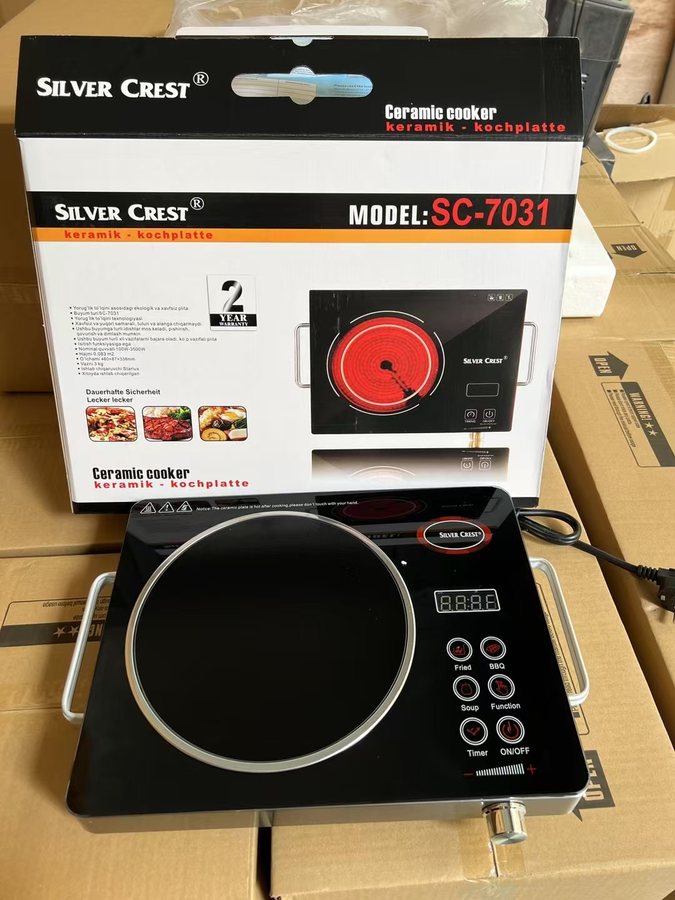
P67/SC-7031 and P68/SC-7038 are distinct catalog identities. Shared 2400W, AC220-240V, LCD panel, loading and carton-quantity fields do not authorize substitution.
Ceramic hob wholesale
Single-burner ceramic hob models are practical when buyers need compact electric cooking products with simple shelf explanation and flexible distribution.
Wholesale only. MOQ starts from 1000 PCS. Model, electrical version, packing, evidence and inspection scope must be confirmed for the current order before release.
Procurement Answer
Single-burner ceramic hob catalog routes P67/SC-7031 and P68/SC-7038 each publish 2400W, AC220-240V, LCD panel, 4,950-unit 40HQ loading and 8 PCS/CTN in the current source catalog. These shared fields do not prove that the products, glass, controls, components, packing or current order versions are identical. Approve one route, one current sample, one electrical label, one cooking test, one packed version and one inspection plan before release.
Buyer decision points
P67/SC-7031 and P68/SC-7038 are distinct catalog identities. Shared 2400W, AC220-240V, LCD panel, loading and carton-quantity fields do not authorize substitution.
Define cookware range, intended cooking task, control preference, channel, destination version and expected service responsibility before comparing samples.
Check glass, heating zone, controls, cable, plug, label, feet, ventilation, included parts and packed protection on the exact current sample.
Wholesale only; MOQ starts from 1000 PCS. The buyer validates local requirements, market demand, selling price and inventory exposure.
Source Catalog Candidates
Ceramic Hobs
Ceramic Hobs
A single-burner format can be considered when a buyer needs one electric cooking zone, but format alone does not prove suitability for a country, cookware set or retail channel. Begin with a use brief: cookware materials and sizes, cooking tasks, operating frequency, target channel, service expectation and destination electrical requirements.
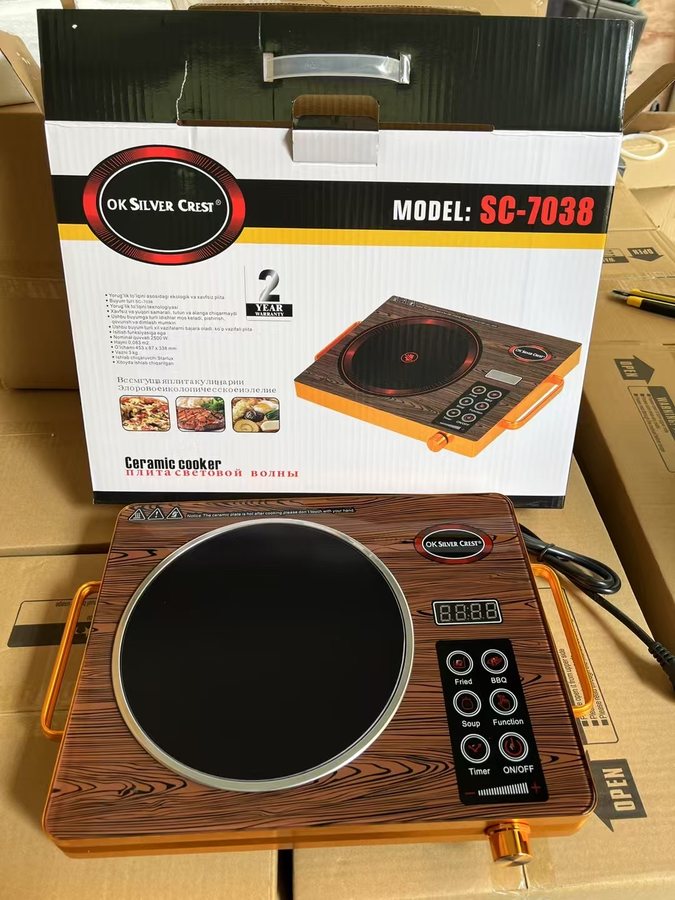
The current catalog exposes two named routes. P67/SC-7031 is described as a black single-burner ceramic hob, while P68/SC-7038 is described as a wood-grain single-burner ceramic hob. Both publish 2400W, AC220-240V, LCD panel, 4,950-unit 40HQ loading and 8 PCS/CTN. Those fields are catalog data and require current-order confirmation.
Do not approve the route from color or panel appearance alone. Verify the heating-zone geometry, glass condition, control sequence, timer or safety behavior actually supplied, cable and plug version, rating label, underside construction, ventilation and packed protection. Any claim used on the box or manual needs evidence for the selected version.
For repeat orders, retain a signed specification and reference sample. If the glass, heater, control board, cable, plug, label, artwork or packing changes, the supplier should disclose the change before production release so the buyer can decide whether re-approval is required.
Release one single-burner route only after the following record is complete:
The two routes share several published values, but the source does not establish identical glass, controls, heater, board, dimensions, certificates, accessories or packing. Keep the routes separate until current samples and documents support equivalence.
The buyer should define cookware, fill level, starting condition, operating sequence and acceptance observation. The result belongs to that sample and test condition; it should not be converted into a broad market or performance promise.
The approved sample, specification, artwork and packing form the repeat-order baseline. A later order should reference the same revision or clearly list approved changes before production.
A useful request identifies the catalog route or model, quantity, destination country and port, buyer channel, cookware use, plug, voltage, frequency where applicable, packing, OEM scope, evidence request and inspection expectation. Public prices are not shown because the order basis must be defined first.
Related Decision Records