Availability
For Importers, Distributors, Retail Groups and OEM Brands
Annual Small Appliance Procurement Planning with a China Factory
Build a purchasing calendar that connects local selling seasons, quantity by SKU, approved product versions, OEM deadlines, inspection, shipment data and replenishment. This page is for buyers managing recurring wholesale demand, not one-time retail purchases.
Wholesale only. MOQ starts from 1000 PCS. Private quotation after the order basis is confirmed.
Direct Buyer Answer
What should an annual appliance procurement plan include?
An annual small appliance procurement plan should identify the buyer company, market, sales channels, target selling months, product categories, forecast by exact SKU, current and in-transit inventory, order-release dates, required warehouse dates, electrical versions, OEM scope, inspection responsibility, destination route and replenishment rules. The plan should separate confirmed requirements from forecasts and should be updated when real sales, freight or production information changes.
The purpose is not to force one large annual purchase. It is to divide demand into controlled order waves that protect product availability without creating unnecessary stock, outdated packaging or cash tied up in weak models. The factory can then review model availability, sample and artwork milestones, packing data and production assumptions for each release instead of treating every order as an unrelated transaction.
Commercial Value
A forecast becomes useful only when it changes purchasing decisions
Cash Discipline
Release inventory in justified order waves
Connect order quantities to stock cover, channel demand and remaining selling time instead of ordering every SKU at the same depth.Version Stability
Keep samples, specifications and artwork aligned
An annual plan needs a controlled product identity so a repeat order does not silently change plug, component, accessory or packing files.Freight Readiness
Confirm carton data before booking decisions
Master-carton dimensions, quantity, gross weight and CBM must match the approved packing version used for the shipment.Market Learning
Use first-batch evidence to revise later waves
Sell-through, dealer questions, returns, carton damage and after-sales evidence should influence the next purchase.Supplier Coordination
Expose deadlines before they become delays
Model selection, sample approval, artwork release, inspection and shipment booking each need an owner and a decision date.SKU-Level Forecast
Do not send one annual number without the data behind it
A top-line annual forecast does not tell the factory which exact versions are required or when the buyer needs them. Build one row for every controlled SKU and update it by order wave.
| Field | Buyer decision it supports | Risk when missing |
|---|---|---|
| Exact SKU and revision | Connect model, plug, voltage, accessory set, color and packing to one identity. | Similar products are quoted, inspected or reordered as if they were identical. |
| Opening and in-transit stock | Calculate the real available inventory before releasing another order. | Pipeline inventory is ignored and warehouse stock becomes excessive. |
| Sales or dispatch by period | Separate fast, stable, seasonal and weak models. | Historic purchase volume is mistaken for market demand. |
| Target selling month | Work backward to the warehouse-ready date and factory decision gates. | Goods arrive after dealers, campaigns or weather-driven demand need them. |
| Quantity by order wave | Balance MOQ, stock cover, cash requirement and replenishment timing. | One oversized release transfers all forecast risk into inventory. |
| Final carton data | Prepare CBM, freight and mixed-container allocation using the approved packing. | Freight quotations and loading plans use old or incomplete measurements. |
| Approval status | Show whether sample, specification, artwork, manual and barcode are released. | Production dates are discussed while important buyer decisions remain open. |
Portfolio Architecture
Give every appliance SKU a commercial role
Core Line
Stable models for continuous distribution
Protect repeatability, service knowledge and sufficient order depth. Changes require written review because these models carry the buyer's regular demand.Seasonal Line
Products tied to a defined selling window
Electric fans, promotion items or other seasonal directions need an arrival deadline and an exit plan for remaining stock.Test Line
Controlled market learning
Define what the first batch must prove, how results will be measured and which evidence permits expansion.Premium or Channel Line
Specific models for a specific sourcing plan
A chain-store, online or brand-led product may need different appearance, content, packaging and support from a general wholesale model.Exit Line
Stop weak or conflicting SKUs deliberately
Prevent slow models, old packaging or unsupported versions from returning through an automatic repeat order.Service Line
Preserve after-sales and spare-part references
Keep version, claim and replacement records after the final sale so old and new product identities remain traceable.Reverse Procurement Calendar
Start with the required selling date and move backward
Do not copy generic lead-time numbers into a purchasing calendar. Build the sequence for the selected model, approved order and current route. Each stage below produces evidence needed by the next stage.
| Planning stage | Decision or evidence required | Owner to confirm |
|---|---|---|
| Market selling window | Dealer release, store launch, campaign or seasonal demand date. | Importer, distributor or retail team. |
| Warehouse-ready date | Receiving, open-carton checks, allocation and internal distribution buffer. | Buyer logistics and warehouse teams. |
| Destination movement | Current customs, port, inland and handoff assumptions for the selected route. | Importer and appointed forwarder or broker. |
| International transport | Booking, cut-off, carrier route, transit basis and disruption buffer. | Appointed forwarder and buyer. |
| Inspection and release | Approved sample, checklist, sampling scope, evidence and release authority. | Buyer, inspector and factory. |
| Production and packing | Order-specific schedule after commercial, technical and artwork decisions are released. | Factory after confirmed order scope. |
| Sample and OEM approval | Final version, specification, artwork, manual, barcode, color box and carton marks. | Buyer approval owner and factory coordinator. |
| Product and market decision | Channel, target position, quantity by SKU, plug, voltage and required compliance route. | Buyer procurement and market teams. |
Timing boundary: this framework does not promise a production or arrival date. Dates must be recalculated for the selected product, order quantity, approval status, inspection, booking and current logistics route.
Order-Wave Design
Choose a release pattern that matches how your market sells
Quarterly Waves
Regular review points for a broad appliance line
Useful when the buyer can update stock, sales and category priorities several times per year instead of locking all demand at once.Seasonal Build
One main window with controlled replenishment
Use an initial order for the defined season, then permit a repeat only if the remaining selling window and arrival plan support it.Continuous Replenishment
Stable core models with revision discipline
Appropriate when the sales route, approved version and reorder evidence are mature enough to support recurring purchases.Mixed-Container Waves
Combine category timing without losing SKU control
Allocate carton volume by commercial priority, but keep each SKU's identity, packing data and approval status separate.Four Decision Gates
Do not release an order because the calendar says it is time
Gate 1: Market
Demand and channel fit
Confirm the intended customer, price position, sales channel, selling window and reason for the planned quantity.Gate 2: Technical
Exact product identity
Confirm model, sample, specification, plug, voltage, frequency, accessories, labels and market requirements.Gate 3: Commercial
Comparable private quotation
Align quantity, configuration, OEM scope, packing, inspection, trade term, payment basis and delivery assumptions.Gate 4: Release
Production and shipment authority
Release only against approved files, agreed inspection evidence, final shipment data and named decision owners.Monthly and Quarterly Review
Replace assumptions with current market and order evidence
| Review signal | Question for the next order wave | Possible controlled action |
|---|---|---|
| Sell-through by exact SKU | Which models are selling to end channels rather than only moving into dealer stock? | Increase depth, maintain, reduce or stop by evidence. |
| Stock cover and pipeline | How long will available and confirmed in-transit units support current demand? | Change the release date or quantity before creating a gap or overstock. |
| Claims and returns | Are issues linked to instruction, packing, transport, component or product version? | Correct the defined cause and update the controlled revision. |
| Dealer and customer questions | Does the product, manual or packaging communicate the right use and value? | Improve approved content without adding unsupported claims. |
| Freight and landed-cost change | Does the current route or carton version change the commercial decision? | Recalculate with the appointed forwarder and compare the same trade basis. |
| Remaining selling window | Will the next shipment become saleable while sufficient demand remains? | Advance, reduce, reallocate or cancel the planned wave. |
Execution Proof
Connect the annual plan to real order-control evidence
Factory and Product Review
Review showroom evidence
Use real product display as a starting point, then confirm the current selected sample and specification.Customer Verification
See a real factory visit
Buyer visits help verify the company, discuss products and connect commercial requirements with physical evidence.Complete Order Cycle
Follow one customer order process
Factory visit, commercial discussion, follow-up, cargo receiving and carton opening are connected in one evidence route.Shipment Release
Review container loading
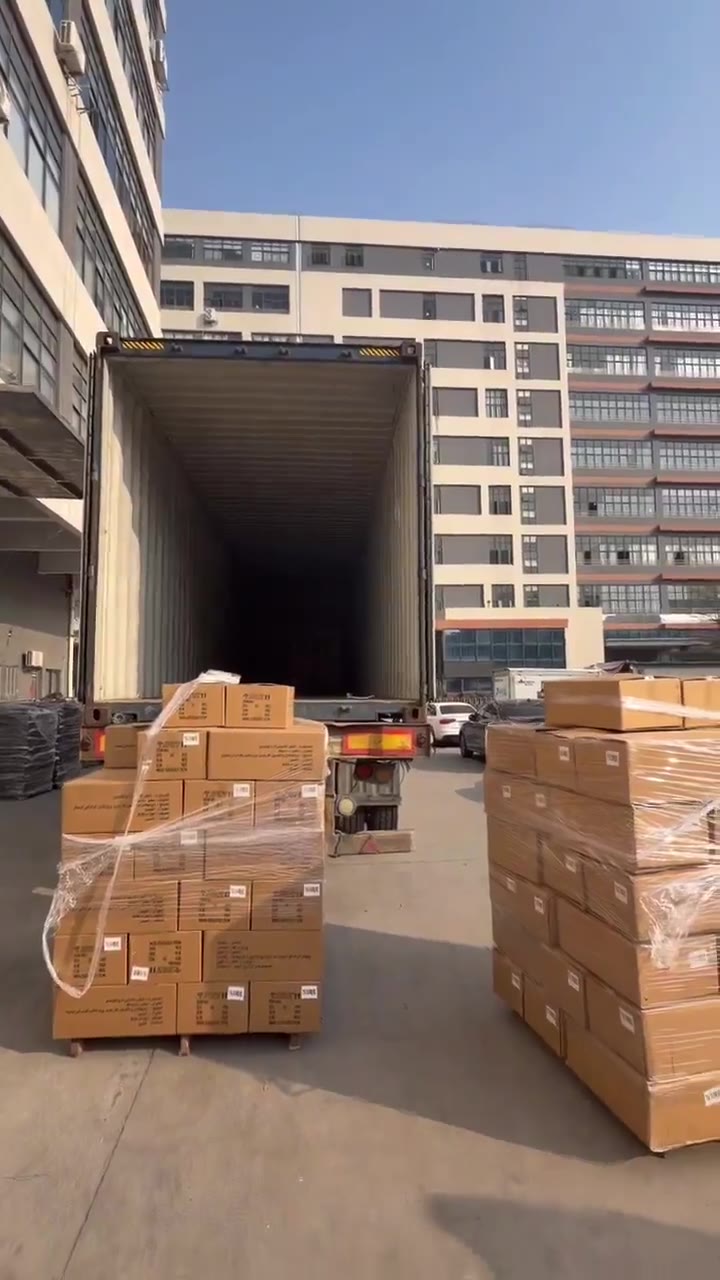
Loading evidence supports the final handoff but must remain connected to the approved SKU, packing and shipment documents.Annual Procurement Brief
Send a plan we can evaluate by product and order wave
Company and buyer type: importer, distributor, wholesaler, retail group, project buyer or OEM brand.
Market and channels: country, dealer network, supermarkets, online bulk sales, projects or other route.
Annual categories: air fryers, blenders, electric fans, rice cookers, pumps or other selected appliances.
Forecast by exact SKU: estimated annual volume and quantity for each proposed order wave.
Inventory evidence: current stock, in-transit stock, recent sales or dispatch and desired stock cover.
Selling and warehouse dates: target market windows and the date each wave must be ready in your warehouse.
Technical requirements: model, plug, voltage, frequency, color, accessories and market requirements.
OEM scope: logo, artwork, manual languages, barcode, color box, carton marks and approval owner.
Inspection and logistics: inspection scope, release authority, destination port, trade term and appointed forwarder status.
Forecasts are planning inputs, not confirmed purchase orders. We will identify which products and dates can be reviewed immediately, which require current samples or packing data, and which assumptions must be confirmed by the buyer, factory or logistics provider.
Annual Procurement FAQ
Questions from recurring wholesale buyers
Do I need to place the full annual quantity at once?
No. An annual forecast can be divided into justified order waves. Each confirmed order still requires an agreed model, quantity, version, packing, commercial basis and release process.
Can you reserve production capacity from a forecast?
A forecast helps identify possible demand and decision dates, but it does not reserve capacity by itself. Production timing must be confirmed against the selected products, approved order, payment status, materials, packing and current schedule.
Can the annual plan include several appliance categories?
Yes, for qualified wholesale buyers. Keep one controlled row per SKU and packing version so mixed-container planning does not hide technical, carton or inspection differences.
How should a distributor revise the plan after the first shipment?
Review sell-through by exact SKU, stock and pipeline, dealer collection, claims, returns, carton condition, customer questions and remaining selling windows before changing the next release.
Do you publish annual contract prices?
No. Pricing is private and depends on the confirmed model, quantity, version, OEM scope, packing, inspection, trade term and current order conditions. A forecast is not a price guarantee.
What is the minimum order?
MOQ starts from 1000 PCS. The final basis depends on the selected model, category, color, packing and OEM requirements. Retail and one-piece orders are not supported.
Strategic Wholesale Cooperation
Turn annual demand into controlled, reviewable purchase decisions
Send the product forecast, market windows and order-wave plan. We will respond to the actual scope rather than sending a generic catalog price list.
Buyer Scope
Recurring wholesale demand
For importers, distributors, retail groups, project buyers and OEM brands with defined markets and purchasing responsibility.Order Boundary
MOQ starts from 1000 PCS
Final order basis depends on model, version, quantity, packing and OEM requirements. No retail or single-piece orders.Private Response
WhatsApp or company email
WhatsApp: +86 186 3896 6870. Email: sales@yaoyuanfactory.com.From Annual Plan to Order Release
Turn each approved order wave into a controlled PO pack
When an annual order wave is approved, connect its exact SKU, sample, OEM files, carton data, inspection, trade term, shipment documents and change authority before production release.