How large-capacity ovens support appliance distributors
Large-format oven sourcing is not solved by choosing the highest liter number. The buyer should define usable tray and cookware dimensions, food load, kitchen or countertop constraints, channel, accessory expectation, service plan and destination electrical requirements. A nominal capacity may help shortlist a route, but it does not establish usable space or cooking performance.
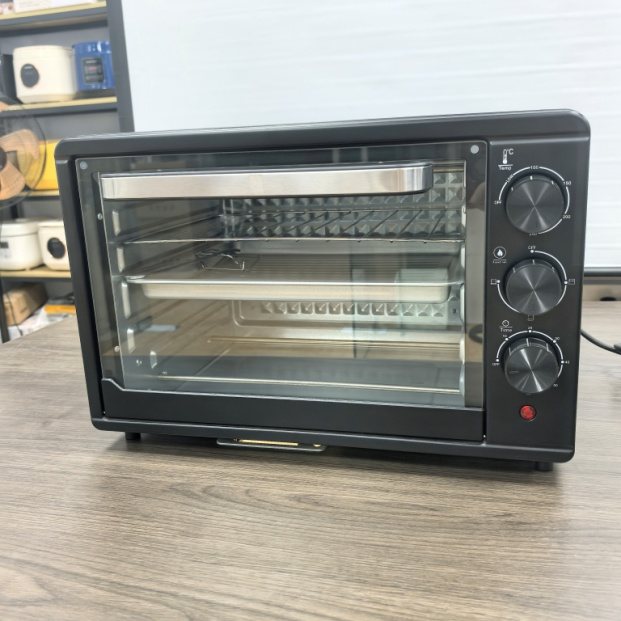
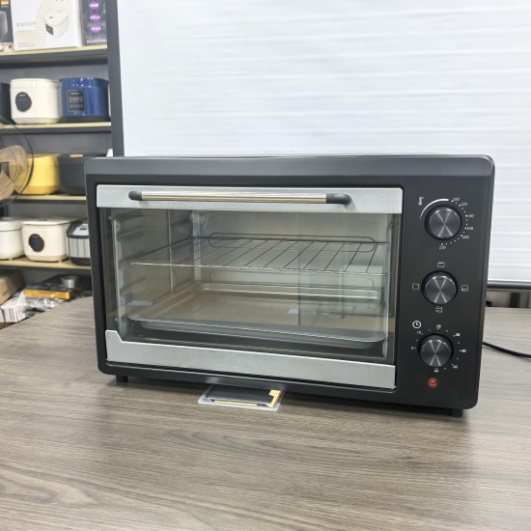
P75 and P76 are sparse records. P75 is named 48L and P76 is named 56L, and both publish 725 units per 40HQ. The public catalog does not publish their wattage, voltage, material, dimensions, accessory set, control functions or certificates. Those fields must stay open until the current sample and order documents support them.
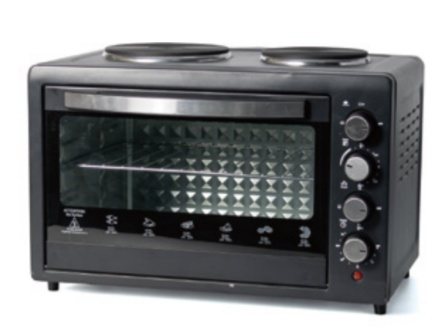
P77 provides a stronger starting record: it publishes 55L, 2400W, AC220-240V, stainless steel plus glass and 756 units per 40HQ. Even so, the 2400W field is an electrical input, not proof of heating speed, efficiency or food result. The material description does not define every component, and the loading reference is not final freight data.
Because large-format ovens expose more glass, volume and accessory movement, packing validation matters. Approve door restraint, glass and corner protection, tray and rack restraint, inner supports, color box, master carton and handling test. Measure the final packed version before calculating container quantity, landed cost or warehouse space.
Large-Format Oven Product and Packing Gate
Release P75, P76 or P77 only after the following evidence belongs to one approved version:
- Catalog route and model code or controlled temporary reference
- Current sample, external dimensions and measured usable cavity
- Tray positions, cookware or food load and exact accessory list
- Heater layout, control behavior, door, glass, ventilation and feet
- Rated input, voltage, frequency where applicable, cable, plug and label
- Buyer-defined simultaneous-heater or cooking-task test where applicable
- Door restraint, glass protection, inner supports, color box and master carton
- Measured packed dimensions, gross weight, QTY/CTN and loading recalculation
- Inspection plan, destination evidence and repeat-order change control
Nominal Capacity Versus Usable Space
Capacity wording should be checked against the current cavity and buyer's tray or cookware. A larger number does not by itself prove a better fit for the intended load, counter space or retail channel.
- Measure cavity
- Confirm tray dimensions
- Run buyer load test
- Approve the supported claim
Do Not Copy P77 Fields to P75 or P76
P77 publishes wattage, voltage and material fields that are absent from P75 and P76. They cannot be borrowed because the routes sit in the same category or appear visually related.
- No borrowed wattage
- No borrowed voltage
- No borrowed material
- No borrowed accessory set
Large-Carton Handling Review
Use the approved packed sample to check glass, door, corners, accessories and product movement under buyer-defined handling conditions. Then update the logistics worksheet with measured data.
- Packed sample
- Handling test
- Measured carton
- Recalculated loading
Complete Oven, Breakfast Maker or Steamer RFQ
A useful request identifies the catalog route or product URL, quantity, destination country and port, buyer channel, intended use, electrical version, included accessories, packing, OEM scope, model-specific evidence and inspection expectation. Public prices are not shown because the exact order basis must be defined first.
- Catalog route, model or controlled temporary reference
- Quantity, with MOQ starting from 1000 PCS
- Country, buyer type, channel and destination port
- Cooking task, load, usable cavity or vessel and accessory expectation
- Plug, voltage, frequency where applicable and label language
- Neutral packing, factory box or OEM artwork requirement
- Current sample, document, inspection and change-control expectations