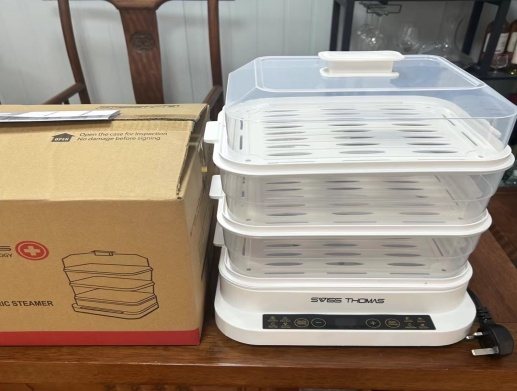
What buyers should confirm for electric steamer orders
An electric steamer order should begin with the buyer's use brief, not an assumed tray count or cooking claim. Define food load, vessel arrangement, number of usable levels, refill and water-management expectations, operating sequence, cleaning responsibility, channel and destination electrical version. The current sample must support the selected architecture and every published claim.
P71 is the only current electric steamer route in the catalog. It publishes 2400W, AC220-240V, Plastic PP, 2,267-unit 40HQ loading and 1 PC/CTN. The public record does not publish a model code, capacity, dimensions, tray count, lid material, plug, frequency, controls, certificates or food result. Those fields remain open and must not be invented from the photograph or another appliance.
Create a temporary controlled model reference for the RFQ. Tie the current photographs, sample, vessel, trays, lid, heater, control system, cable, plug, label, included parts and manual to that reference. The buyer should define a test load, starting water condition, operating sequence, observation points, shutdown behavior and acceptance criteria.
Plastic PP is a published catalog material field, but it does not identify every product or food-contact part and does not establish temperature performance or compliance. The material map, supported documents and destination responsibilities must be checked for the exact order version before claims are printed.
P71 Electric Steamer Evidence Closure
Close or clearly record every open field before quotation comparison, artwork or production release:
- Temporary controlled reference linked to catalog route P71
- Current sample photographs, dimensions and signed specification
- Vessel, steam path, tray count, lid and included-part identity
- Water condition, heating element, controls and shutdown behavior
- Rated input, voltage, frequency where applicable, cable, plug and label
- Material map for heated, food-contact and removable parts
- Buyer-defined steam, load, leakage, cleaning and appearance tests
- Manual, supported claims, inner packing, carton data and loading recalculation
- Inspection plan, destination evidence and repeat-order change control
Input Rating Is Not a Cooking Guarantee
The catalog's 2400W field cannot be converted into a steam-up time, food result, efficiency or market-fit promise. Only a buyer-defined test on the approved sample can support a limited observation.
- No inferred speed
- No inferred capacity
- No inferred efficiency
- No inferred compliance
Tray and Water-System Test
Define the number of loaded levels, food or test load, starting water quantity, operating sequence, observation period and acceptance limits. Check tray fit, lid fit, condensation path, leakage and shutdown behavior.
- Known load
- Known water condition
- Recorded operation
- Signed acceptance
Packing Recalculation
The public loading reference belongs to the catalog route. Approve how trays, lid, cable and product are restrained, then measure the packed carton and recalculate QTY/CTN, gross weight and loading for the final version.
- Accessory restraint
- Measured carton
- Gross weight
- Updated loading basis
Complete Oven, Breakfast Maker or Steamer RFQ
A useful request identifies the catalog route or product URL, quantity, destination country and port, buyer channel, intended use, electrical version, included accessories, packing, OEM scope, model-specific evidence and inspection expectation. Public prices are not shown because the exact order basis must be defined first.
- Catalog route, model or controlled temporary reference
- Quantity, with MOQ starting from 1000 PCS
- Country, buyer type, channel and destination port
- Cooking task, load, usable cavity or vessel and accessory expectation
- Plug, voltage, frequency where applicable and label language
- Neutral packing, factory box or OEM artwork requirement
- Current sample, document, inspection and change-control expectations